Numerology Journal
Planes of Expression in Numerology: How to Calculate Them
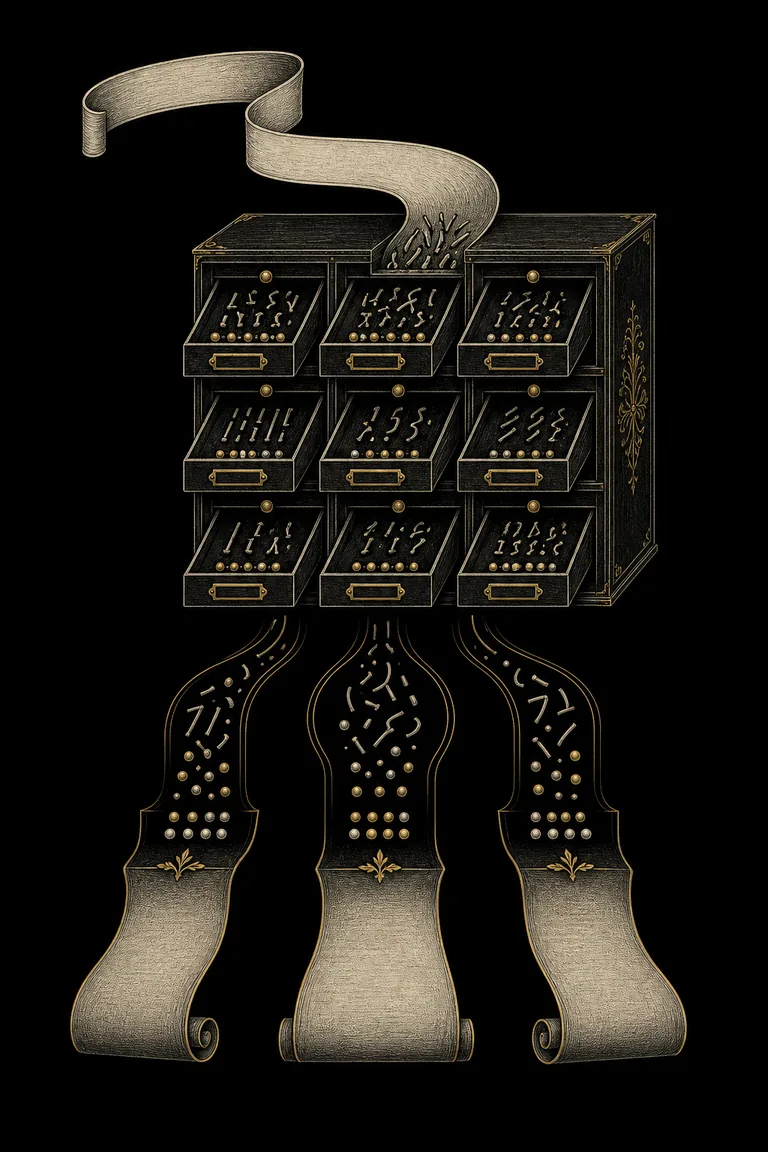
Planes of Expression sort the letters of a full birth name into physical, mental, emotional, and intuitive groups, creating an auditable secondary name profile.

Planes of Expression are an advanced Pythagorean numerology technique that groups every letter in a full birth name by a symbolic mode of response: physical, mental, emotional, or intuitive. The worksheet records both how many letters occupy each plane and the reduced sum of their standard Pythagorean values.
This method does not measure intelligence, fitness, emotional health, or spiritual ability. It is a symbolic classification, and published schools sometimes use different labels or calculation details. Choose one table, show every letter, and keep the convention consistent. The guide below uses the common four-plane table described explicitly in the calculation section.
Take the next insight with you
Explore personalized Numerology guidance in Veritas, available for iOS and Android.
 Scan with your phone
What are the four Planes of Expression?
The physical plane symbolizes action, practical contact, the senses, and material response. The mental plane concerns thought, analysis, language, and strategy. The emotional plane concerns feeling, relationship, imagination, and affective response. The intuitive plane concerns pattern recognition, inward perception, inspiration, and meaning that may arrive before a step-by-step explanation. Every person uses all four capacities regardless of the name chart.
Compare the pattern with your full profile
Open your numerology profile in Veritas and keep the Planes of Expression beside your core name numbers rather than treating one secondary technique as the whole reading.
The letter groups used in this guide
Using the common English Pythagorean four-plane table, physical letters are D, E, M, N, V, and W. Mental letters are A, H, J, Q, S, and Z. Emotional letters are B, C, F, K, L, O, T, U, and X. Intuitive letters are G, I, P, R, and Y. Together these groups contain all twenty-six letters exactly once. Some sources call the intuitive plane spiritual. If your reference uses a different table, do not combine its groups with these interpretations.
How to calculate Planes of Expression
- Write the birth name
Use the complete name recorded at birth and state how hyphens, suffixes, and non-English letters are handled.
- Sort every letter
Place each occurrence in exactly one of the four plane groups, preserving repeated letters.
- Count each plane
Record the number of letters in each row so the distribution remains visible.
- Add letter values
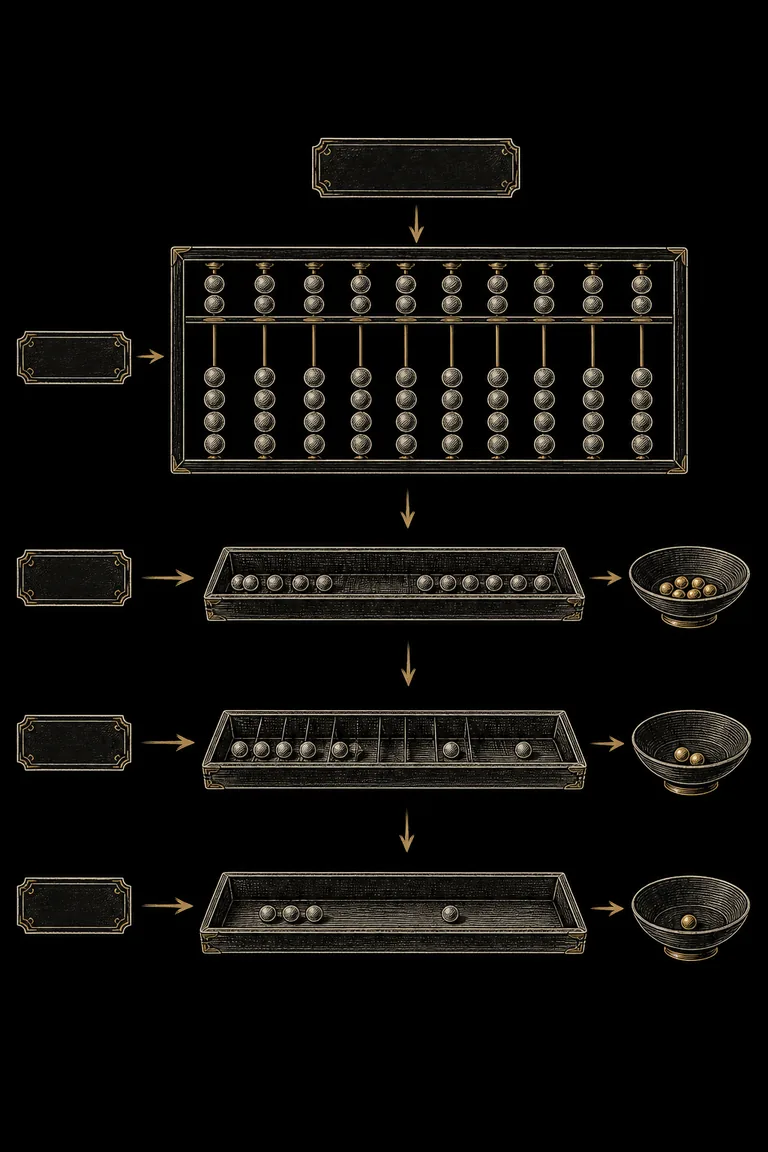
Apply the usual Pythagorean values 1 through 9, total each plane, and reduce according to one stated Master Number rule.
- Check the worksheet
Plane counts must equal the total name length, and the unreduced plane sums must recombine to the full Expression total.
Worked example: Nora Bell
For the teaching name NORA BELL, remove the space but keep repeated letters. Physical contains N and E: 2 letters with values 5 + 5 = 10, reduced to 1. Mental contains A: 1 letter worth 1. Emotional contains O, B, L, and L: 4 letters with values 6 + 2 + 3 + 3 = 14, reduced to 5. Intuitive contains R: 1 letter worth 9. The counts total 8 letters, and the unreduced plane sums total 34, matching the full name total before reduction.
Keep the calculation visible
Use Veritas for your core numerology profile, then build this secondary worksheet with every letter shown so another reader can reproduce the result.
Physical Plane of Expression
The physical plane is read as a symbolic style of acting through the body, tools, routines, resources, and immediate conditions. A large count may suggest that concrete feedback feels familiar; a small count may invite more deliberate practice with implementation or maintenance. The reduced plane value adds a 1-to-9 theme to that mode. It cannot assess health, athletic ability, disability, stamina, or practical competence.
Mental Plane of Expression
The mental plane frames how thought, planning, comparison, language, and conceptual structure may be approached symbolically. More mental-plane letters do not prove higher intelligence, and fewer do not imply weak reasoning. Look for a preferred route rather than a rank. Compare the interpretation with how the person learns, checks evidence, explains decisions, and revises a position when new facts arrive.
Emotional Plane of Expression
The emotional plane concerns feeling, imagination, attachment, artistic response, and interpersonal sensitivity within this symbolic system. A strong emphasis is not proof that someone is irrational or emotionally skilled; a low count is not emotional absence. Ask how feelings are noticed, named, communicated, regulated, and integrated with action. Actual relationship behavior matters more than the letter distribution.
Intuitive Plane of Expression
The intuitive plane describes inward pattern recognition, inspiration, contemplation, and meanings that may be sensed before they are articulated. It does not validate psychic claims or make a person spiritually advanced. A prominent row can prompt questions about trust in first impressions and the need to test them. A quieter row may favor deliberately creating time for reflection without treating intuition as infallible.
Count versus reduced plane value
The count shows how much of the name occupies a plane, while the reduced value gives the familiar numerological theme produced by those letters. They answer different questions. In the example, the emotional plane has the largest count, while its value is 5. Report both instead of calling 5 the number of emotional letters. Preserve the unreduced sum as an audit trail before applying any reduction rule.
Dominant and least represented planes
A dominant count is often interpreted as a familiar mode of responding, while a least represented or empty plane becomes a prompt for conscious development. This is not a hierarchy. Long names naturally create larger counts, and close totals may be more balanced than a single winner suggests. Compare proportions, ties, and real behavior rather than declaring a permanent strength or deficiency.
How this differs from the Expression Number
The Expression or Destiny Number adds every letter in the full birth name into one overall total. Planes of Expression preserve four separate rows before reduction, showing how the same letters are distributed by category. The Soul Urge uses vowels, while the Personality Number uses consonants. None of these calculations should be substituted for another simply because they share the birth name.
Name changes and transliteration
Traditional practice usually treats the recorded birth name as the baseline and may calculate a current name separately as a changed social pattern. Do not merge the two worksheets. For names written outside the Latin alphabet, transliteration choices can move letters between planes and change totals. State the transliteration standard, preserve diacritics in the displayed name, and avoid presenting one English spelling as uniquely correct.
Common calculation mistakes
Frequent errors include dropping repeated letters, sorting Y by a vowel rule instead of the chosen plane table, counting a space or punctuation mark, mixing letter groups from different sources, reducing too early, and reporting only the winning row. Another mistake is turning counts into claims about intelligence, health, emotional maturity, or supernatural ability. A valid worksheet is reproducible and modest about what it can establish.
A practical four-plane review
Choose one current decision and write four questions. Physical: what action or resource is required? Mental: what fact or model needs checking? Emotional: what feeling or relationship condition needs naming? Intuitive: what pattern do I notice before I can fully explain it? Then test all four answers against consequences and feedback. This uses the planes as a balanced reflection tool instead of letting one symbolic emphasis control the decision.