Tarot Journal
How Long Does a Tarot Reading Take?
A Tarot reading can take five minutes or an hour. The useful length depends on the question, spread, depth of interpretation, and time needed to record a clear conclusion.
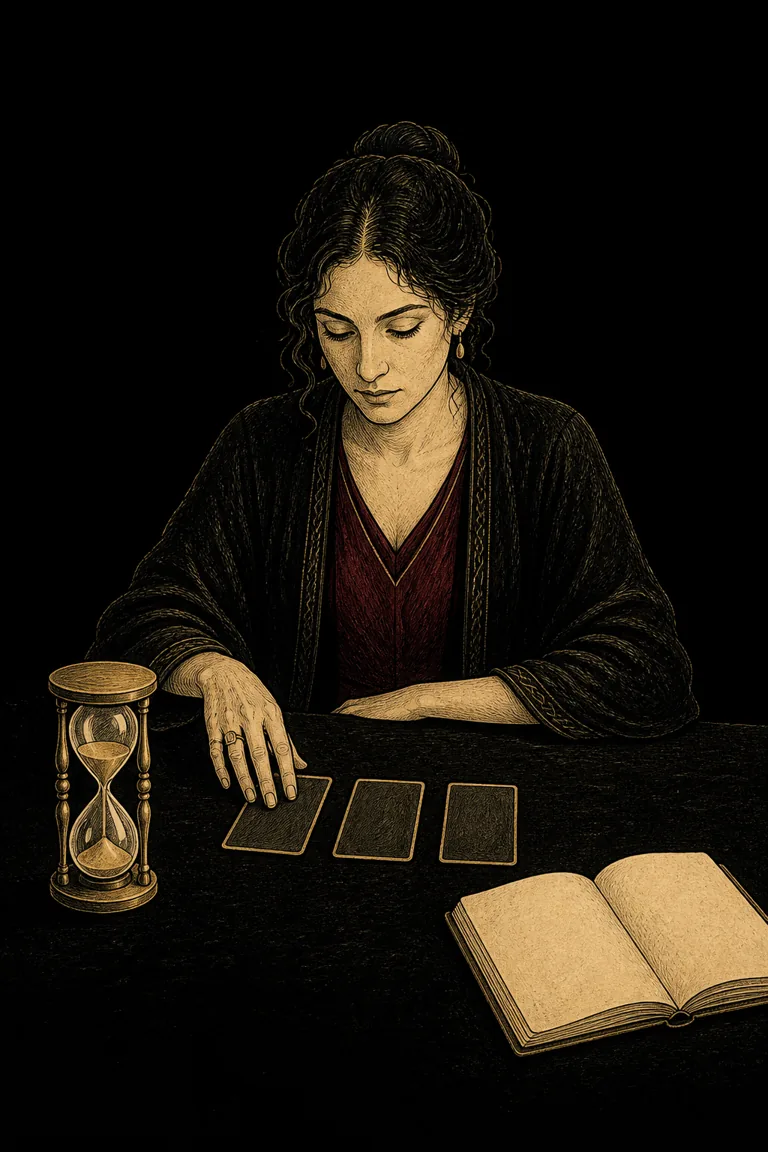
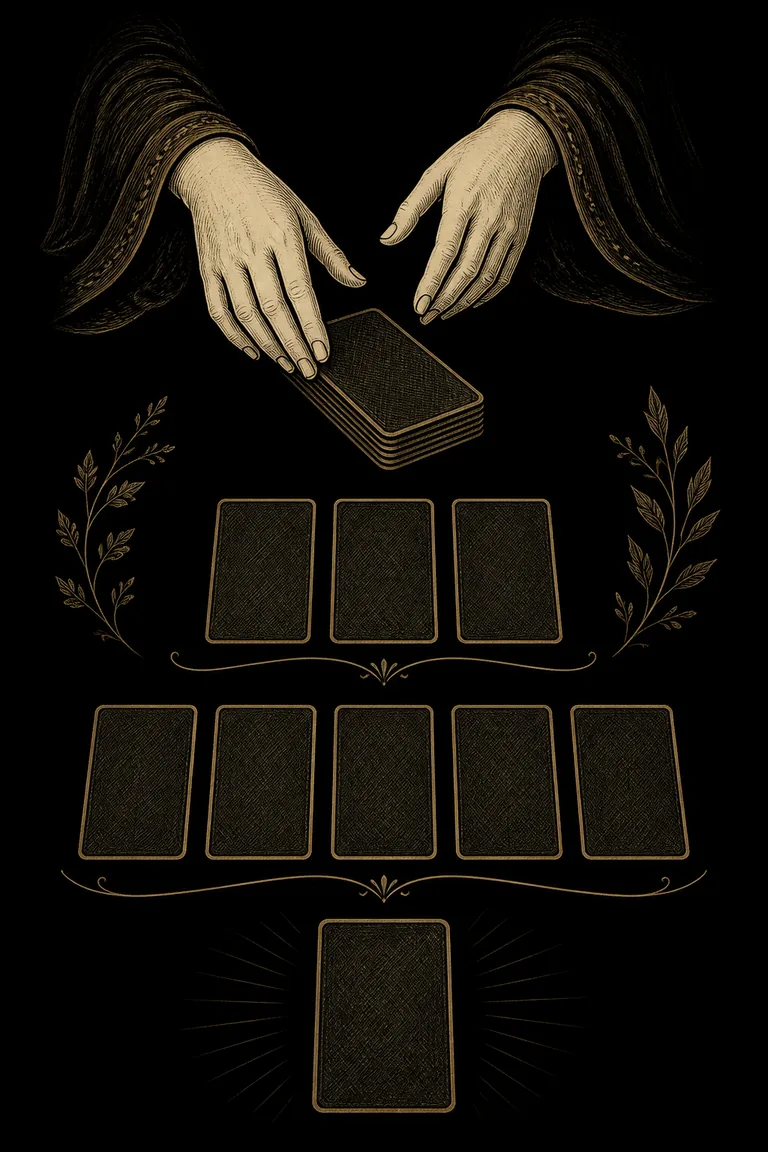
A focused one-card Tarot reading often takes 5 to 10 minutes, a three-card reading usually takes 15 to 30 minutes, and a larger spread such as the Celtic Cross may take 45 to 75 minutes. These are planning ranges, not rules. A reading is long enough when it has answered the stated question, produced a usable synthesis, and reached the stopping point chosen before the draw.
More time does not automatically produce more accuracy. Long sessions can become repetitive when every symbol creates another question or extra card. A shorter reading with a specific scope, careful notes, and one next action is often more useful than an hour of unstructured interpretation.
Take the next insight with you
Explore personalized Tarot guidance in Veritas, available for iOS and Android.
 Scan with your phone
Typical Tarot reading lengths
What actually changes the duration
Card count matters, but it is only one variable. A precise question with defined positions moves faster than a vague request for everything. Familiarity with the deck, use of reversals, the number of people or topics involved, accessibility needs, note-taking, and emotional pauses also affect the clock. Set the scope before choosing the spread so the time follows the work rather than the other way around.
Card count is not a measure of depth
One card can support a deep reflection when the prompt is narrow and the reader studies imagery, conventional meaning, context, and possible action. Ten cards can remain shallow if each receives an isolated keyword. Depth comes from making relevant connections and testing the interpretation against the question, not from keeping the table busy.
A simple time plan for a three-card reading
- Frame the question, 2 to 4 minutes
Name one decision, relationship, project, or period and define what the reading can reasonably explore.
- Choose positions, 1 to 2 minutes
Assign each position before drawing, such as situation, useful action, and constraint.
- Observe each card, 6 to 10 minutes
Note the relevant image, meaning, position, and evidence without trying to mention every possible association.
- Synthesize, 4 to 8 minutes
Read the cards as one response, including tension, repetition, and the most practical conclusion.
- Close, 2 to 5 minutes
Write one action or reflection, record uncertainty, and set a review point if the issue continues.
How long should a self-reading take?
For regular self-reading, a bounded 10 to 25 minute session is often sustainable. It leaves enough time to move beyond the first emotional reaction while reducing the temptation to keep drawing. If the subject is charged, write the question and positions first, use a timer as a container rather than a deadline, and wait before acting on a surprising interpretation.
How long should a professional reading take?
A professional session includes more than card interpretation. The reader needs time to confirm the topic, describe the method, protect privacy, invite questions, and close without rushing. A 30-minute appointment suits one focused concern. A 60-minute appointment can hold a broader spread or two clearly separated topics. Advertised length should include the opening and closing rather than promising that every minute contains new cards.
When a reading is taking too long
Warning signs include repeating the same point in new words, adding cards without a named ambiguity, changing the question mid-spread, searching for a preferred answer, or becoming too tired to compare interpretations. Pause when the original positions have been addressed. If a new question appeared, save it for a separate session rather than allowing it to consume the current reading.
When a reading feels too short
A brief reading is not incomplete just because the answer arrived quickly. Before adding cards, check whether you can state the central message, its basis in the spread, one alternative reading, and one proportionate next step. If one specific position remains unclear, a single predeclared clarifier may help. General dissatisfaction is not a useful clarifier question.
Example: a 20-minute decision reading
Suppose you are deciding how to approach a difficult work conversation. You spend three minutes defining the question, draw three cards for current dynamic, constructive approach, and boundary, then interpret for twelve minutes. The last five minutes go to a short synthesis and a sentence you can actually say. The cards do not decide whether to resign or accuse someone; they organize preparation for a real conversation.
Example: a 60-minute Celtic Cross
For a complex transition, ten positions may require time to distinguish present conditions, influences, perspectives, environment, hopes, and likely direction. Read structural groups instead of spending equal minutes on every card. Reserve at least ten minutes to integrate the spread. If interpretation reaches the outcome position at minute fifty-nine, the session was not planned to support a useful close.
Give every session a clean ending
Use Veritas to save the question, spread, start and stop time, conclusion, next action, and review date without extending the draw.
Accessibility and pacing
Readers may need more time for visual processing, translation, speech, writing, screen readers, breaks, or emotional regulation. These needs do not weaken the reading. Build pauses into the appointment, use fewer positions, send a written summary when appropriate, and avoid using a fast pace as proof of expertise.
A practical stopping rule
Before shuffling, write the question, positions, maximum card count, and session window. Stop when every position has one relevant interpretation and the cards can be summarized in two or three sentences. Record uncertainty instead of trying to erase it with more cards. Return only after new evidence, action, or a planned review point changes the question.
Limits of timing advice
No session length guarantees insight or prediction. Tarot is a symbolic reflection practice, not a substitute for medical, legal, financial, or mental health advice. For urgent safety concerns, use reliable information and qualified support rather than extending a reading.