Tarot Journal
One Card Tarot Reading: A Simple Daily Practice
A one card Tarot reading gives one image a clear job. Learn how to choose a focused question, interpret the card in context, and turn insight into one practical response.
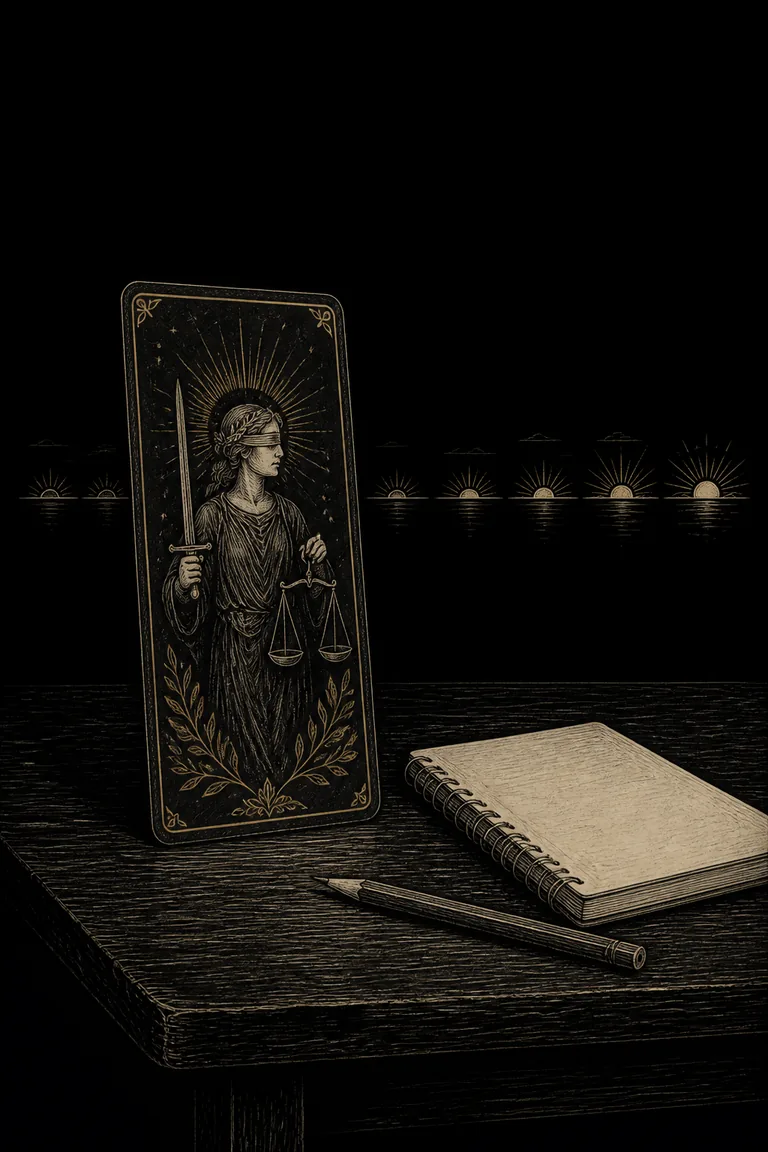
A one card Tarot reading is the smallest complete spread. You draw one card for one defined question, then read its image, established meaning, and orientation through that question. The limited format reduces noise and makes it easier to notice when interpretation drifts.
One card can support a morning check-in, clarify the next step in a decision, or focus reflection after an event. It cannot describe every cause, person, and outcome at once. Its strength comes from choosing one useful lens and staying with it.
Take the next insight with you
Explore personalized Tarot guidance in Veritas, available for iOS and Android.
 Scan with your phone
What is a one card Tarot reading?
A one-card spread assigns a single position to a single card. That position might be today’s focus, a resource, an obstacle, a perspective to consider, or a next action. Naming the position before drawing prevents the same image from being stretched across several unrelated jobs.
This format is beginner-friendly but not shallow. With only one image, there is nowhere to hide a vague interpretation. You must connect the card’s core action to the wording of the question and to evidence you already have.
Choose the card’s job before you shuffle
Focus
What deserves deliberate attention today?
Resource
What quality or support can I use in this situation?
Obstacle
What pattern may complicate the next step?
Action
What is one constructive response available to me now?
Reflection
What can I understand differently about what happened?
Begin with one card and one clear role
Open a Tarot reading in Veritas, choose a focused prompt, and give the card enough time to become specific before drawing again.
How to do a one card reading
- Write the question
Use a prompt about understanding, choice, preparation, or action. Add a realistic time frame when it helps.
- Shuffle with the question in mind
Stop by a consistent method, such as completing three shuffles or pausing when your attention settles.
- Observe the image
Notice posture, direction, objects, weather, color, and your first neutral description before consulting a guide.
- Name the core meaning
Summarize the card’s main function in one sentence, then connect it to the assigned position.
- Choose one response
Record a question to ask, boundary to state, task to try, or fact to verify.
A worked example
Suppose the question is “What will help me prepare for tomorrow’s difficult meeting?” and the card is Temperance. Its core themes include proportion, integration, patience, and combining different inputs. In this position, it may suggest preparing a measured proposal that acknowledges both priorities instead of rehearsing a victory.
A practical response could be to write the other party’s likely concern beside your own and identify one workable compromise. The reading does not predict the meeting. It changes how you prepare for it.
Read the image before the guidebook
Begin with what is visibly happening. A figure may be waiting, building, carrying, refusing, offering, or looking away. This creates a concrete verb. Then compare your observation with the card’s traditional range. Image and tradition should refine each other rather than compete.
How to use reversals with one card
Decide before shuffling whether reversals count. If the card appears reversed, keep its upright foundation and test one modifier: blocked, internal, delayed, excessive, or redirected. A reversed Three of Pentacles in a resource position might ask you to repair coordination before seeking more effort.
Should you draw a clarifier?
A clarifier is useful only when you can name what remains unclear. Ask a narrower follow-up such as “Where is cooperation needed?” Do not draw repeatedly until a preferred card appears. If the first card feels uncomfortable, describe the discomfort and return to known facts before adding more symbols.
One card for decisions
Do not ask one card to choose your future. Use it to examine a decision criterion: “What value should guide this choice?” or “What consequence am I underestimating?” For two genuinely distinct options, a balanced comparison spread is more suitable than assigning upright to yes and reversed to no.
A daily one-card check-in
For a brief daily practice, draw for a focus rather than a prediction. Write the card, your first observation, and one possible application. At the end of the day, note where the theme appeared and where it did not. This feedback is more instructive than forcing every event to match.
Common mistakes
Common problems include asking several questions at once, treating a difficult card as a forecast, drawing too many clarifiers, and producing an interpretation with no link to behavior. Another mistake is making the card so broad that any event counts as confirmation. Specific notes keep the practice honest.
Tarot is a symbolic reflective practice, not a scientifically validated forecasting method. Do not use one card to diagnose illness, establish another person’s motives, or replace medical, legal, financial, or mental health guidance.