Astrology Journal
Adonis in Astrology: Signs, Houses, Aspects, and Synastry
Adonis in astrology is a modern optional asteroid lens on attraction, visibility, renewal, and the costs attached to an idealized image.
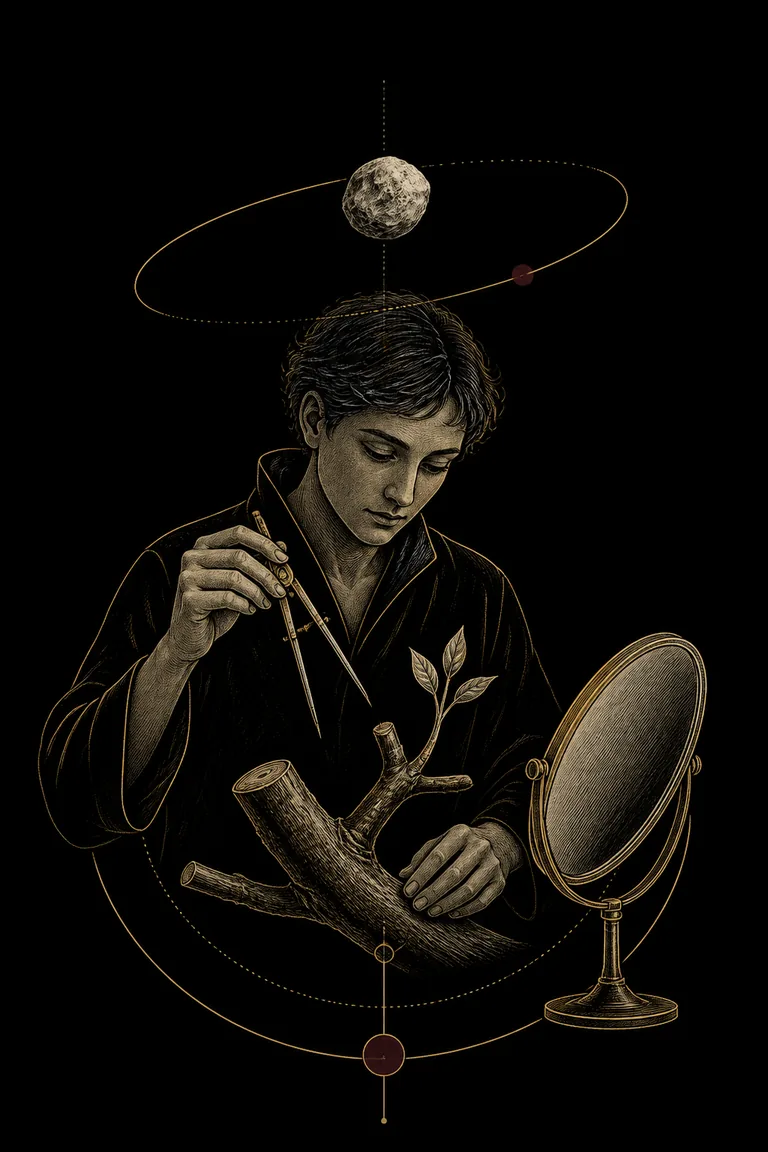
Adonis in astrology usually means asteroid 2101 Adonis, a near-Earth asteroid named for the mythic figure associated with beauty, desire, loss, and seasonal return. Modern astrologers who include it may explore how attraction, cultivated appearance, visibility, renewal, or being made into an ideal becomes active through a sign, house, and close aspect.
This is a recent symbolic practice, not an ancient chart doctrine or a scientifically validated measure of attractiveness. Adonis cannot define masculinity, rank beauty, prove mutual desire, or predict loss and return. Confirm asteroid number 2101, then place it behind Venus, Mars, the luminaries, personal planets, relevant houses, angles, and repeated chart themes.
Take the next insight with you
Explore personalized Astrology guidance in Veritas, available for iOS and Android.
 Scan with your phone
What Adonis means in astrology
Astrologers who use asteroid 2101 may connect it with visible appeal, the labor behind an image, cycles of attention, or the tension between a living person and an admired ideal. Its shadow can include objectification, rivalry, fragile validation, or repeating a costly pattern because its return feels romantic. The asteroid contributes a focused question. It does not replace Venus, Mars, the Ascendant, or the fifth, seventh, and eighth houses.
Place Adonis in the whole chart
Open your astrology profile in Veritas and compare asteroid 2101 with Venus, Mars, the relevant house, angles, and close major aspects.
Asteroid 2101 Adonis and object identity
Astronomically, 2101 Adonis is a physical near-Earth object in the Apollo group, discovered by Eugène Delporte in 1936 and recovered decades later. Those orbital facts are measurable. Astrological meanings are later symbolic associations built partly from the assigned mythic name. Enter the number 2101 in chart software because the name alone can be confused with a general myth reference or with another author's informal point.
How to find Adonis in a birth chart
- Add asteroid 2101
Search by number and confirm that the software returns the physical asteroid Adonis.
- Record the chart settings
Note zodiac, house system, coordinates, birth-time source, and ephemeris.
- Prioritize close contacts
Begin with narrow aspects to the luminaries, personal planets, Venus, Mars, and angles.
- Look for repetition
Keep the interpretation only when primary chart factors and lived experience support it.
The Adonis myth as a modern prompt
Versions of the myth differ, but recurring themes include exceptional beauty, competing desire, mortality, grief, and vegetation imagery tied to loss and return. Responsible interpretation does not assign those events to a chart owner. A safer prompt asks where attention gathers around an image, how that image is maintained, and what allows renewal after attention, desire, or a role changes. Myth supplies metaphor, not biography or fate.
Adonis through the signs
The sign can describe the style through which the Adonis theme is expressed. Aries emphasizes immediacy, Taurus cultivation, Gemini language, and Cancer familiarity. Leo favors performance, Virgo refinement, Libra proportion, and Scorpio privacy or intensity. Sagittarius seeks range, Capricorn disciplined form, Aquarius difference, and Pisces atmosphere. These are prompts about presentation and renewal, not beauty rankings or gender rules.
Adonis through the houses
The house suggests the life area where visibility or renewal becomes noticeable. The first concerns presentation; the second resources and value; the third communication; and the fourth roots and privacy. The fifth highlights creative display, the sixth maintenance, the seventh negotiated relationship, and the eighth shared consequence. The ninth broadens an image, the tenth public role, the eleventh group attention, and the twelfth private ideals or retreat.
Adonis aspects to planets and angles
A close Sun contact may connect visibility with identity, while the Moon can emphasize response and belonging. Mercury adds narrative, Venus taste and attraction, Mars pursuit or competition, Saturn discipline and limits, Uranus disruption, Neptune idealization, and Pluto power around projection. Near the Ascendant, Adonis may color first presentation; near the Midheaven, a crafted image may enter public work. The contacted planet or angle remains primary.
Adonis in synastry
In synastry, a close Adonis contact may be used to discuss admiration, attraction, image-making, creative renewal, comparison, or the experience of being idealized. It cannot prove chemistry, consent, fidelity, compatibility, or a destined bond. Ask whether attention is welcome and reciprocal, whether both people can remain complex, and whether the relationship can survive ordinary reality instead of requiring constant performance.
Adonis transits
A transit from asteroid Adonis can serve as a minor timing prompt when it closely contacts a natal planet or angle. Attention may turn to appearance, creative visibility, physical maintenance, a recurring attraction, or recovery after a role changes. Minor-asteroid contacts are frequent and do not guarantee romance, popularity, injury, loss, or a comeback. Track major transits and the observable event first.
Adonis compared with Venus, Mars, and Aphrodite
Venus and Mars are core planets with broad interpretive roles involving value, attraction, relating, desire, action, and conflict. Adonis is a narrower modern asteroid prompt about the visible ideal, cultivation, and renewal. Aphrodite can add a focused question about aesthetic presence and pleasure. Mythic overlap does not make these factors interchangeable, equal in weight, or evidence of a particular sexual orientation or gender expression.
Turn the image into an observable practice
Use Veritas to choose one Adonis prompt, then name the boundary, routine, creative decision, or recovery practice through which it can be tested.
Birth time and aspect orbs
Without an accurate birth time, house placement and angle contacts may be unreliable even when the asteroid sign and degree remain usable. Because a minor asteroid adds fine detail, many readers begin with narrow orbs of about one to three degrees and widen only when several chart factors repeat the theme. Record the exact degree, aspect, orb, birth-time source, object number, and calculation settings.
Common Adonis interpretation mistakes
Do not rate someone's body, prescribe masculinity, predict injury or death from myth, or treat admiration as consent. Do not present asteroid 2101 as an ancient chart factor or let it outweigh primary planets and lived behavior. Visibility can bring opportunity, pleasure, scrutiny, and projection at once. A responsible reading preserves agency and separates a person from the image others place upon them.
Questions for interpreting Adonis
- What image receives attention?
Name the quality, role, craft, appearance, or performance suggested by the placement.
- What maintains it?
Identify the real labor, routine, resource, or relationship behind the visible result.
- Where can idealization distort contact?
Separate admiration and projection from consent, character, and ordinary behavior.
- What permits renewal?
Choose a boundary or practice that lets the person change without losing all value.