Astrology Journal
Ceres in Astrology: Signs, Houses, and Aspects
Ceres adds a modern astrological layer about care, nourishment, separation, return, and the practical exchange of resources.
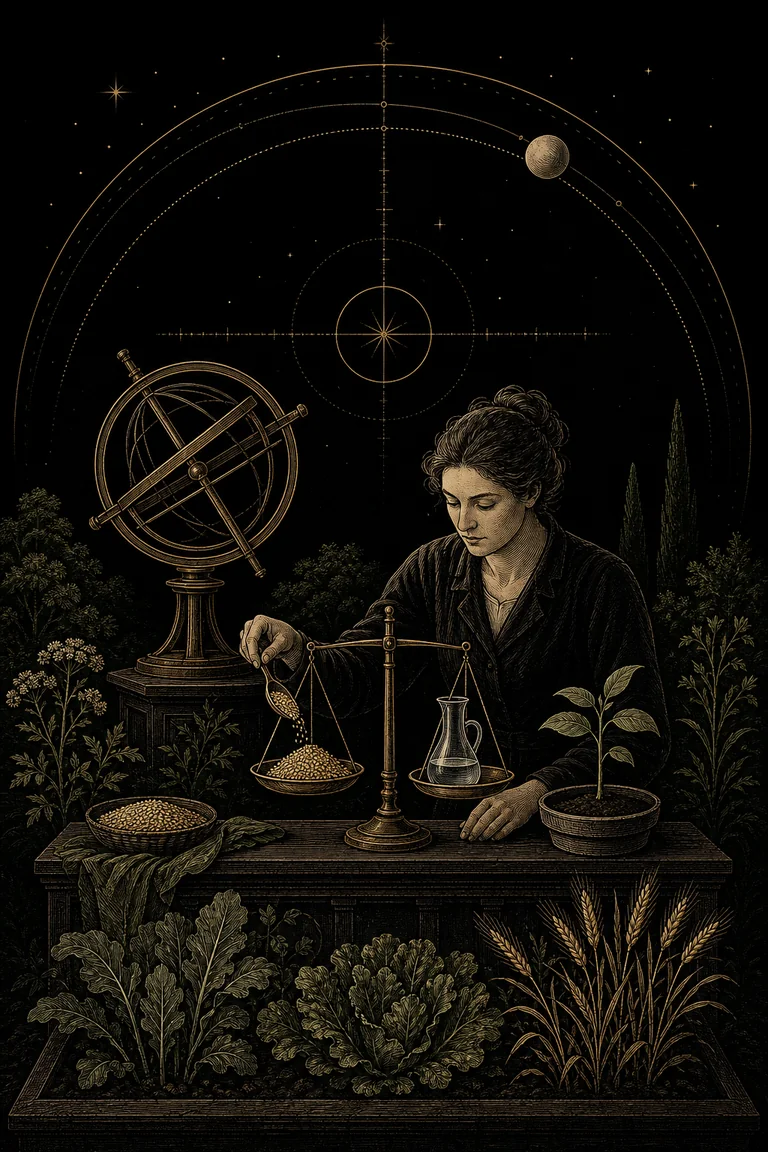
Ceres in astrology is a modern symbol used to explore nourishment, caregiving, resource cycles, separation, grief, and renewal. Astronomically, Ceres is a dwarf planet in the main asteroid belt and the first object discovered there, in 1801. Astrologers connect its name with the Roman agricultural goddess Ceres, but interpretations vary and many traditional systems do not use it.
A natal Ceres placement does not define who must provide care, predict fertility, diagnose eating patterns, or prescribe a family role. It can instead offer a focused question: what helps care become material and reciprocal? The sign describes a style, the house locates a life area, and close aspects show which other chart functions complicate or support the exchange.
Take the next insight with you
Explore personalized Astrology guidance in Veritas, available for iOS and Android.
 Scan with your phone
What Ceres represents in a birth chart
Ceres is commonly associated with food, land, caregiving, protection, loss, seasonal change, and the negotiation required when attachment and autonomy pull in different directions. The mythology includes both devoted search and an eventual shared arrangement. A careful reading therefore includes receiving, limits, grief, and distribution, not only selfless giving.
Place care inside the full chart
Use Veritas to compare Ceres with the Moon, Venus, Saturn, the fourth and sixth houses, and relevant aspects before drawing conclusions.
How to find your Ceres placement
Use a calculator that explicitly includes 1 Ceres and enter an accurate birth date, time, and place. The date establishes most of the zodiac position, while time and location are necessary for a reliable house and may matter near a sign boundary. Record the exact degree, house system, zodiac, and whether the chart uses tropical or sidereal coordinates.
Ceres in the fire signs
Aries Ceres may support care through initiative, advocacy, and respect for agency. Leo Ceres can emphasize encouragement, creative attention, and being visibly valued. Sagittarius Ceres may nourish through learning, movement, humor, or a wider perspective. Fire placements need enough room for choice, while care still requires listening rather than assuming that enthusiasm solves every need.
Ceres in the earth signs
Taurus Ceres may value steady comfort, touch, food, and material reliability. Virgo Ceres can focus on useful detail, routines, skill, and repair. Capricorn Ceres may express care through planning, provision, protection, and durable structure. Earth placements often make support concrete, but giving can become control or invisible labor when needs, capacity, and reciprocity are not discussed.
Ceres in the air signs
Gemini Ceres may nourish through conversation, curiosity, and adaptable information. Libra Ceres can emphasize fair exchange, calm surroundings, and negotiated participation. Aquarius Ceres may support through friendship, shared causes, or respect for difference. Air placements benefit when language leads to action and when intellectual understanding does not replace embodied or material support.
Ceres in the water signs
Cancer Ceres may value continuity, shelter, memory, and emotional responsiveness. Scorpio Ceres can engage trust, shared resources, grief, and repair after rupture. Pisces Ceres may nourish through compassion, imagination, and spiritual or creative presence. Water placements need boundaries that let empathy remain voluntary and prevent silent expectations from becoming a test of love.
Ceres through the houses
The house shows where care and resource cycles become visible. The first can connect them with identity; the second with material security; the third with communication; the fourth with home; the fifth with creative encouragement; the sixth with daily maintenance; the seventh with reciprocal agreements; the eighth with shared stakes and loss; the ninth with teaching or belief; the tenth with public provision; the eleventh with community; and the twelfth with private or unseen support.
Ceres aspects
A Ceres aspect links caregiving themes with another chart function. Sun contacts may involve identity and recognition, Moon contacts emotional regulation, Venus values and pleasure, Mars action and conflict, Jupiter growth and excess, Saturn duty and limits, Uranus autonomy and disruption, Neptune empathy and projection, and Pluto power, grief, or renewal. Prioritize close aspects and interpret them within the larger natal pattern.
Ceres versus the Moon and sixth house
The Moon is a foundational symbol for instinct, emotional needs, habit, memory, and belonging. The sixth house describes daily work, service, routines, health practices, and maintenance. Ceres adds a narrower modern lens on nourishment, caregiving exchange, separation, and return. It can echo those symbols, but it does not replace them or carry equal weight in every school.
Translate care into one workable action
Open Veritas and ask what kind of support, limit, request, or resource exchange would make care more concrete and reciprocal now.
Ceres in synastry
In synastry, close contacts to another person's Ceres may make themes of protection, provision, dependence, grief, or receiving especially noticeable. A contact does not prove compatibility, parental destiny, or emotional safety. Compare both natal charts, consent, actual caregiving behavior, material capacity, and whether help can be declined without punishment.
Ceres transits and returns
Ceres transits may time reflection on care arrangements, resources, seasonal routines, separation, or recovery, especially near a natal planet or angle. A Ceres return occurs when transiting Ceres reaches its natal degree. Treat asteroid timing as secondary to major planetary transits and real conditions. It is a prompt for review, not a forecast of illness, pregnancy, loss, or reunion.
A practical way to read Ceres
- Verify the placement
Record Ceres's sign, degree, house, zodiac, house system, and birth-time confidence.
- Describe the care style
Translate the sign into observable ways of giving and receiving support rather than a fixed role.
- Locate the exchange
Use the house to identify where resources, limits, loss, or renewal may need attention.
- Test the aspects
Begin with the closest contacts and compare the symbolism with lived behavior and available capacity.
Common Ceres interpretation mistakes
Avoid reducing Ceres to motherhood, fertility, food, or a single childhood story. Do not use mythology to romanticize coercive care, assume that giving is always healthier than receiving, or read a difficult aspect as a medical diagnosis. Keep the sign, house, and aspect distinct, and label uncertain birth-time data. Astrology is a symbolic practice, not scientific proof.
Questions for your Ceres placement
What kind of support can I actually receive? Which acts of care are sustainable for me to give? Where does help become control or obligation? How do I respond when a familiar source of nourishment changes? Which resource should be shared, protected, replenished, or requested more clearly?