Astrology Journal
Essential Dignities in Astrology: A Practical Guide
Essential dignities describe a planet's zodiacal resources in traditional astrology. They assess condition by sign and degree, not a person's worth, fate, or happiness.
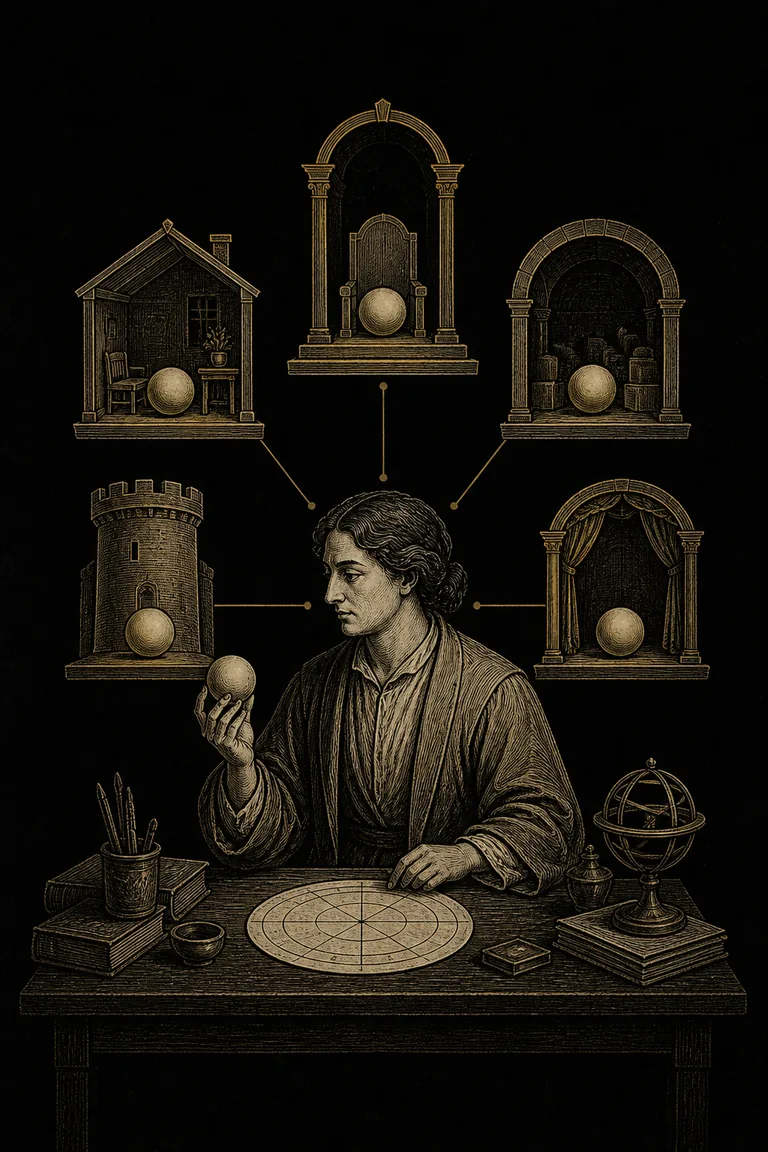
Essential dignities in astrology are traditional categories used to judge how readily a planet can carry out its own functions from a particular sign and degree. The five positive dignity types are domicile, exaltation, triplicity, bound or term, and face or decan. Detriment and fall describe contrasting debilities, while a planet with none of these dignities is often called peregrine.
Dignity is a technical layer, not a moral score. A dignified planet is not automatically kind, easy, or successful, and a planet in detriment or fall is not broken. Read planetary condition together with the house, aspects, sect, speed, visibility, reception, chart role, and lived evidence. Different traditions also use different rulers and tables, so name the system before applying it.
Take the next insight with you
Explore personalized Astrology guidance in Veritas, available for iOS and Android.
 Scan with your phone
What does essential dignity mean in astrology?
Essential dignity evaluates a planet through zodiacal placement alone. It asks whether the sign and degree provide familiar authority, honored support, elemental allies, a bounded area of control, or a modest foothold. The word essential distinguishes this sign-based condition from accidental factors such as angularity, house placement, motion, and aspects. The technique belongs to traditional astrology and is not a scientifically established measurement.
Read condition inside the full chart
Use Veritas to compare a planet's sign, house, aspects, and rulerships before deciding what an essential dignity contributes.
Domicile rulership and essential dignity
A planet has domicile dignity in a sign it rules: the Sun in Leo, Moon in Cancer, Mercury in Gemini or Virgo, Venus in Taurus or Libra, Mars in Aries or Scorpio, Jupiter in Sagittarius or Pisces, and Saturn in Capricorn or Aquarius in the traditional scheme. Domicile suggests access to the planet's own tools and priorities. It can act with familiarity, but that does not guarantee wise use of those resources.
What exaltation means
Exaltation describes a sign where tradition grants a planet an honored or elevated condition. Common examples include the Sun in Aries, Moon in Taurus, Venus in Pisces, Mars in Capricorn, Jupiter in Cancer, and Saturn in Libra. Mercury's exaltation in Virgo overlaps its domicile. An exalted planet may receive strong support for a particular mode of expression, yet can still overreach, lack context, or face difficult aspects.
Detriment and fall are not bad planets
Detriment occurs in the sign opposite a planet's domicile; fall occurs opposite its exaltation. These placements may require translation, negotiation, or borrowed resources because the sign prioritizes something different from the planet's default function. Venus in Scorpio, for example, may approach value and relationship through intensity, privacy, and entanglement rather than Venus's simpler forms of harmony. That describes a task, not a verdict on love or character.
Triplicity, bounds, and face
Triplicity rulers connect planets with the four elemental groups and often vary by day or night chart. Bounds, also called terms, divide each sign into unequal degree ranges governed by planets. Faces or decans divide each sign into three ten-degree sections. These are smaller dignities whose tables depend on the chosen tradition. They can give a planet limited assistance even when it lacks domicile or exaltation.
What is a peregrine planet?
In many traditional methods, a planet is peregrine when it has no domicile, exaltation, triplicity, bound, or face dignity at its exact degree. Peregrine does not simply mean being outside domicile, and it does not automatically mean powerless. The planet may gain substantial support through reception, an angular house, favorable aspects, sect, speed, or another accidental condition. Check the full table before using the term.
Do dignity scores tell the whole story?
Medieval-style point systems commonly weight domicile, exaltation, triplicity, bound, and face in descending order, but historical authors did not all rank or use them identically. Scores help organize a table; they do not turn a chart into a league table. Two planets with equal totals can have different jobs, aspects, houses, and receptions. Explain the testimony behind a number instead of presenting the total as a prediction.
Essential versus accidental dignity
Essential dignity concerns zodiacal resources. Accidental dignity concerns circumstances that make action more or less available, visible, direct, or timely. A planet can be essentially dignified but placed in a hidden or constrained house, or essentially debilitated yet angular and strongly able to act. The first describes the quality of its resources; the second describes the circumstances of using them. Both belong in interpretation.
Reception can change how a placement operates
Reception occurs when one planet occupies a dignity of another and can describe access, permission, or support between their functions. Mutual reception exists when the relationship runs both ways under the named dignity scheme. Reception may provide help to a planet in a difficult sign, but it does not erase every debility or aspect. Identify which dignity creates the reception and whether the planets can connect by aspect in the tradition you use.
Sect, houses, and aspects still matter
Day and night sect can alter triplicity rulership and the relative support available to planets. Houses show where a planet has responsibility, while aspects describe its relationships and constraints. A dignified Mars square Saturn is not the same as an unaspected Mars, and a planet ruling the Ascendant carries more chart responsibility than a minor background factor. Essential dignity refines the hierarchy; it does not replace it.
Worked example: Venus in Scorpio
Traditional rulership places Venus in detriment in Scorpio because Scorpio is ruled by Mars and opposes Venus-ruled Taurus. Begin with Venus topics such as value, attraction, agreement, and exchange, then ask how Scorpio's privacy, intensity, and shared stakes reshape them. Next inspect Mars, Venus's house, aspects, sect, and reception. The result could describe demanding relational standards or concentrated creative commitment, not an inevitable relationship problem.
Worked example: Mars in Capricorn
Mars is traditionally exalted in Capricorn. Its action, severing, and competitive force can receive structure, endurance, sequence, and accountability from Saturn's sign. That may support disciplined effort, but it can also make conflict highly organized or persistence excessive. The house shows the arena, Saturn shows the host's condition, and aspects show cooperation or friction. Exaltation supplies resources, not guaranteed virtue.
Traditional and modern ruler conventions
Essential dignity tables were built around the seven visible planets. Many modern astrologers use Uranus, Neptune, or Pluto as sign rulers, but traditional domicile, exaltation, triplicity, bound, and face schemes do not give those outer planets the same integrated status. State whether you are using traditional rulership, modern co-rulership, or a hybrid method. Consistency matters more than quietly switching tables to improve a result.
Document the method before the meaning
Open Veritas, note the exact degree and chart context, then record the dignity table, ruler convention, and one concrete way the planet gains support or needs adaptation.
A practical dignity workflow
- Verify the placement
Record the planet, sign, exact degree, chart sect, house, motion, and major aspects.
- Name the system
Choose the rulership, triplicity, bound, and face tables you intend to use.
- Describe resources
Translate dignity or debility into available tools, competing priorities, and required adaptations.
- Restore context
Read the dispositor, reception, house responsibility, aspects, and lived evidence before concluding.
Common essential dignity mistakes
Avoid calling domicile good and detriment bad, diagnosing personality from one planet, ignoring exact degrees for bounds and faces, mixing traditional and modern rulers without disclosure, or using a score as a fate prediction. Do not assume dignity means ease or debility means failure. The technique is most useful when it explains what a planet can access, what it must negotiate, and how the rest of the chart changes that condition.