Astrology Journal
Kassandra in Astrology: Asteroid 114, Signs, Houses, and Aspects
Asteroid 114 Kassandra is an optional modern chart factor used to explore perception, difficult messages, credibility, and the response an audience gives to a warning.
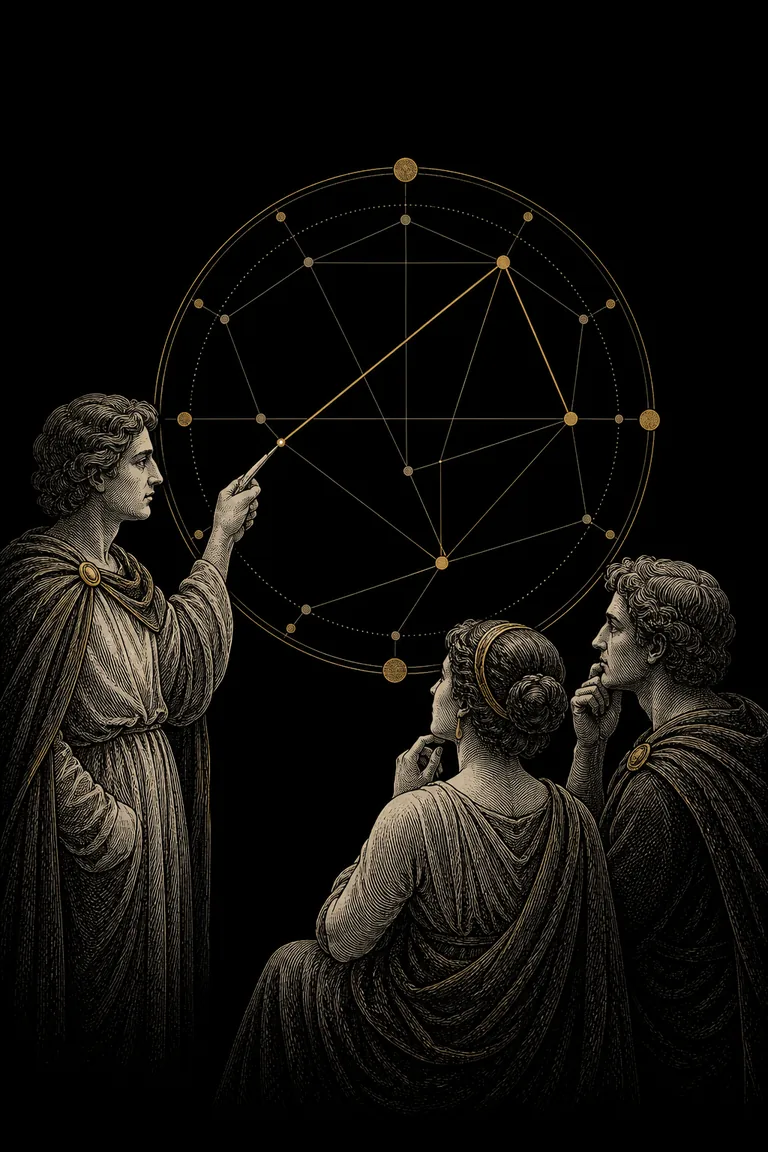
Kassandra in astrology usually refers to asteroid 114 Kassandra, a main-belt minor planet discovered in 1871 and named for Cassandra of Greek myth. Modern astrologers may use it as a narrow symbolic prompt about noticing a pattern, communicating an unwelcome conclusion, being believed or dismissed, and deciding what responsibility remains after a warning is given.
Kassandra is not a classical planet and does not prove prophecy, psychic ability, perfect intuition, victimization, or future catastrophe. Read the Sun, Moon, planets, angles, houses, and major aspects first. Then ask whether a close Kassandra placement adds a useful question that can be tested against evidence, communication, and real outcomes.
Take the next insight with you
Explore personalized Astrology guidance in Veritas, available for iOS and Android.
 Scan with your phone
What Kassandra means in astrology
The mythic Cassandra could foresee disaster but was not believed. In contemporary asteroid astrology, that story often becomes a symbol for credibility, warnings, disputed perception, and the painful gap between seeing a pattern and persuading an audience. A grounded interpretation does not assume the speaker is always right or the listener always negligent. It asks how information was gathered, how the claim was framed, what uncertainty remains, and what channel could make the message more useful.
Place the warning in the whole chart
Use Veritas to compare Kassandra with your planets, angles, houses, and major aspects before giving one minor asteroid interpretive weight.
How to find asteroid Kassandra
Use astrology software that accepts minor-planet numbers and enter 114 for Kassandra. Verify the object number, exact degree, zodiac, house system, aspect orb, and birth-time source. The sign and degree can usually be calculated without an exact birth time, but the house and contacts to the Ascendant, Midheaven, Descendant, and Imum Coeli may change. Avoid confusing Kassandra with similarly spelled names or interpreting an approximate house as certain.
Kassandra by sign
The sign can describe the style used to notice and communicate a concern. Fire signs may speak through urgency, action, or conviction. Earth signs may rely on material conditions, records, and practical consequence. Air signs may compare language, systems, and competing explanations. Water signs may notice emotional atmosphere, memory, loyalty, and subtle shifts. No element guarantees accuracy. The mature expression combines its preferred style with verification and a message the intended audience can evaluate.
Kassandra through all 12 signs
Aries may need to pace an urgent message; Taurus, revise a conclusion when material facts change; Gemini, distinguish a signal from noise; Cancer, separate protection from projection; Leo, speak without making credibility a performance; Virgo, document the pattern without chasing certainty; Libra, name disagreement without diluting the claim; Scorpio, disclose only what is responsible; Sagittarius, test the larger story; Capricorn, choose the correct authority channel; Aquarius, connect systemic risk with human impact; and Pisces, give intuition a form that evidence can challenge.
Kassandra by house
The house locates the life area where perception and audience response may become noticeable. The first can concern identity and credibility; second, resources and values; third, communication and local information; fourth, family narratives; fifth, creative or romantic judgment; sixth, routines, work, and health processes; seventh, agreements; eighth, shared risk and confidential facts; ninth, belief and education; tenth, public responsibility; eleventh, groups and future plans; and twelfth, private observation and unarticulated concern. These are areas for inquiry, not promised events.
Kassandra aspects
A conjunction can concentrate Kassandra themes around a planet or angle. An opposition may externalize disagreement between messenger and audience. A square can show pressure around timing, proof, or delivery, while a trine or sextile may make pattern recognition or communication more available without guaranteeing truth. With Mercury, the issue can center on wording and records; Saturn, standards and authority; Neptune, imagination and uncertainty; Pallas, strategy and pattern recognition. The planet remains the primary function.
Kassandra in synastry
In synastry, a close Kassandra contact may symbolize a relationship where one person's observations, cautions, or interpretation of consequences become unusually important. It can also show a recurring argument about who gets believed. This does not prove that one person is prophetic, dishonest, abusive, or destined to be ignored. Compare mutual behavior, consent, power, records, and the full synastry. In high-stakes situations, use appropriate professional and safeguarding channels rather than asteroid symbolism.
Kassandra transits
A Kassandra transit can be used as a minor timing prompt when it closely contacts a natal planet or angle. A warning, forecast, disclosure, audit, or credibility question may deserve attention. Minor-asteroid contacts are frequent and do not cause events. Record what was actually known at the time, what alternative explanations existed, and what later evidence showed. Slower planetary transits and current circumstances carry more interpretive weight.
Kassandra compared with Mercury and Pallas
Mercury is a core planetary function associated with language, exchange, learning, and interpretation. Pallas is a widely used asteroid associated with pattern recognition and strategy. Kassandra adds the narrower relational problem of a consequential perception meeting an audience that may accept, question, distort, or dismiss it. A Kassandra placement should not replace analysis of Mercury, the third house, Pallas, Saturn, Neptune, or the chart's broader communication pattern.
Make the message testable
Use Veritas to separate what you observed, what you inferred, how certain you are, who needs the information, and what action is proportionate.
Birth time and aspect orbs
Without a reliable birth time, avoid confident house interpretation and angle contacts. For a minor asteroid, many practitioners begin with narrow orbs around one to three degrees, expanding only when several chart factors repeat the same theme. State the orb and method. A wide contact chosen after an event can easily create hindsight bias, so record criteria before testing a transit or comparison.
A responsible warning framework
- Separate fact from inference
Write what was directly observed, then label the interpretation and the uncertainty around it.
- Choose the right audience
Identify who can verify the claim, who owns the decision, and which channel preserves a record.
- Scale the response
Match urgency to evidence, possible harm, reversibility, and the cost of acting too early or too late.
- Release the verdict
After communicating responsibly, allow new evidence and other people's agency to change the conclusion.
Common Kassandra interpretation mistakes
Do not use asteroid 114 to confirm psychic gifts, paranoia, inevitable disbelief, abuse, medical danger, betrayal, or disaster. Do not assume anxiety is foresight or that skepticism is persecution. Avoid telling someone that being ignored proves they are correct. Kassandra is most useful when it improves observation, documentation, delivery, and tolerance for uncertainty rather than turning a myth into a fixed biography.