Astrology Journal
Sappho in Astrology: Signs, Houses, Aspects, and Synastry
Sappho in astrology is an optional asteroid lens on poetic expression, aesthetic kinship, admiration, and bonds shaped by mutual recognition.
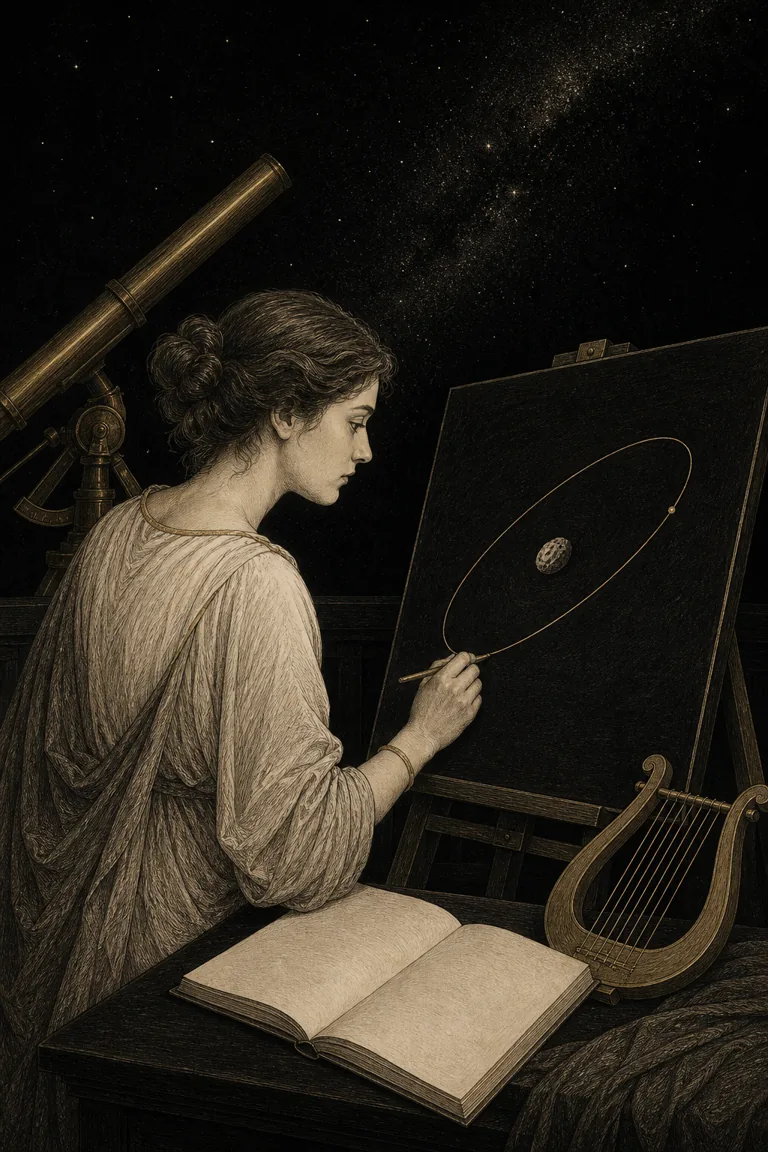
Sappho in astrology usually means asteroid 80 Sappho, a physical minor planet named for the ancient lyric poet. Some modern astrologers use it as a narrow symbol for poetry, creative sensitivity, admiration, intimate friendship, aesthetic exchange, and experiences of desire or identity translated into art.
This symbolism is interpretive rather than scientifically validated, and it should not be used to assign anyone a sexual orientation, relationship label, talent, or destiny. Begin with the object number and chart settings, then compare Sappho with Venus, Mercury, the Moon, the fifth and eleventh houses, aspects, and observed life. A minor asteroid adds detail only after the core chart is understood.
Take the next insight with you
Explore personalized Astrology guidance in Veritas, available for iOS and Android.
 Scan with your phone
What Sappho means in astrology
Astrologers who use Sappho often connect it with lyric expression, artistic response, admiration, equality in close bonds, and the meeting point between affection and creativity. It can describe where subtle feeling asks for a form such as language, music, image, ritual, or attentive friendship. It is not a replacement for Venus, a universal indicator of queer identity, or proof that another person shares an attraction.
Place the asteroid inside the whole chart
Open your astrology profile in Veritas and compare Sappho with Venus, Mercury, the Moon, relevant houses, and close major aspects before drawing a conclusion.
Asteroid 80 Sappho and its namesake
Asteroid 80 Sappho was discovered in 1864 and named after Sappho of Lesbos, whose surviving lyric fragments engage desire, beauty, memory, ritual, and relationships between women. Modern astrological meanings are later symbolic associations, not statements about the asteroid's physical effects. Naming the astronomical object and interpretive tradition keeps history, symbolism, and prediction from being blurred together.
How to find Sappho in a birth chart
- Add object 80
Use software that identifies Sappho by asteroid number so it is not confused with a name point or another object.
- Record the settings
Note zodiac, house system, coordinates, birth-time source, and the ephemeris used.
- Start with close contacts
Prioritize conjunctions and other narrow aspects to personal planets or angles before minor patterns.
- Return to the core chart
Ask whether major planets, houses, and repeated themes support the same interpretation.
Sappho through the signs
The sign can describe a style of appreciation and creative response. Aries may express it directly, Taurus through tangible beauty, Gemini through language, and Cancer through memory or care. Leo can be performative, Virgo precise, Libra relational, and Scorpio private or intense. Sagittarius seeks wider meaning, Capricorn durable form, Aquarius shared ideas, and Pisces imaginative permeability. These are prompts, not identity categories.
Sappho through the houses
The house suggests where aesthetic or relational recognition becomes noticeable. The first concerns self-presentation; the second values and materials; the third language; the fourth private roots. The fifth emphasizes creative play, the sixth craft and routine, the seventh exchange, and the eighth vulnerable trust. The ninth broadens study, the tenth public work, the eleventh friendship and community, and the twelfth private or unfinished expression.
Sappho aspects to planets
A close Sun contact may connect creative recognition with identity, while the Moon can emphasize memory and emotional resonance. Mercury highlights language, Venus aesthetic and relational appreciation, and Mars the initiative to pursue or make. Jupiter can widen an audience, Saturn demands form and limits, Uranus experiments, Neptune idealizes or imagines, and Pluto intensifies attachment or transformation. The natal planet remains primary.
Sappho in synastry
In synastry, a close Sappho contact may be read as mutual inspiration, admiration, creative collaboration, or a bond that resists a simple category. It cannot establish attraction, orientation, consent, or permanence. Compare both natal charts and the full synastry pattern, then ask whether the relationship actually supports equality, honest language, boundaries, and room for each person's independent work.
Sappho transits
A Sappho transit can be used as a reflective prompt when it closely contacts a natal planet or angle. The period may draw attention to writing, friendship, artistic exchange, longing, or the need to give feeling an intelligible form. Asteroids move through many contacts, so do not treat one as a guaranteed meeting, disclosure, creative breakthrough, or change in identity.
Sappho compared with Venus, Eros, and Psyche
Venus is a core planetary function involving values, attraction, pleasure, and relating. Eros is often used as an optional symbol for desire and creative charge. Psyche may add a lens on sensitivity, trust, and psychological integration. Sappho is most distinct when the question concerns poetic expression, aesthetic recognition, intimate friendship, or feeling made communicable through form. More factors do not guarantee a better reading.
Give recognition a practical form
Use Veritas to identify one Sappho theme, then choose a bounded act of writing, making, appreciation, or honest conversation that does not assume another person's response.
Birth time and aspect orbs
Without a reliable birth time, Sappho's house and angle contacts may be wrong even when its sign position remains usable. Because a minor asteroid adds fine detail, many readers begin with an orb of about one to three degrees and widen only when a repeated chart pattern justifies it. State the birth-time source, object number, orb, and aspect rather than presenting a vague contact as exact.
Common Sappho interpretation mistakes
Do not diagnose sexual orientation from one asteroid, treat admiration as consent, romanticize unequal attention, or claim artistic genius from a placement. Avoid using Sappho to overwrite Venus, Mercury, the Moon, houses, or lived experience. Historical Sappho and modern queer symbolism deserve more care than a stereotype. A useful reading expands language for experience without assigning a label to someone else.
Questions for interpreting Sappho
- What is being recognized?
Name the quality, person, craft, image, or idea that receives unusually careful attention.
- Which form can hold it?
Choose language, music, visual work, friendship practice, or another concrete medium.
- Where is projection possible?
Separate your experience of admiration from claims about another person's identity or feelings.
- What makes it reciprocal?
Look for consent, mutual contribution, boundaries, credit, and sustained behavior.