Astrology Journal
Venus Return Chart: Calculation and Interpretation
A Venus return chart is cast when transiting geocentric Venus reaches its exact natal zodiacal longitude, with every retrograde crossing and chart setting preserved.
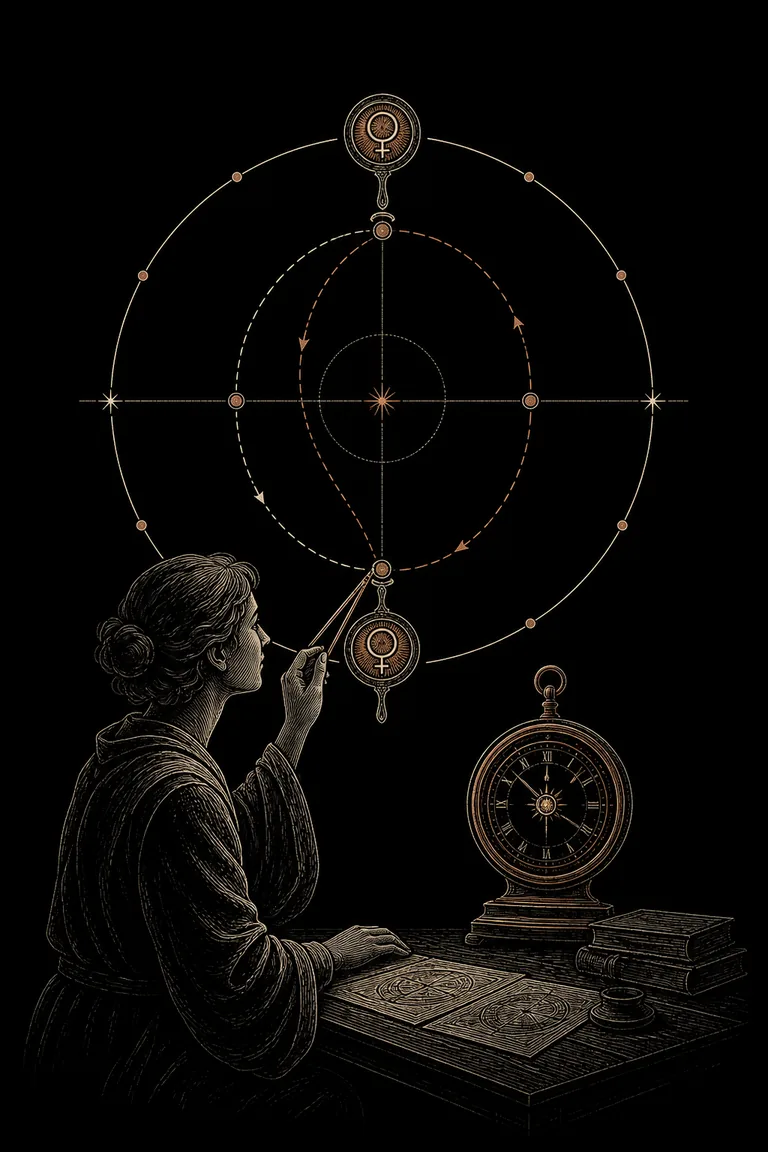
A Venus return occurs when transiting Venus reaches the same geocentric ecliptic longitude it held at birth in the same tropical or sidereal zodiac. It is not simply Venus entering the natal sign, and it is not the planet completing one 224.7-day orbit around the Sun. The calculation must search for the exact longitude match and catch any direct, retrograde, and final direct crossings.
Astrologers read the return as a symbolic frame for values, attraction, reciprocity, pleasure, aesthetics, money choices, and social agreements. The chart is not a validated forecast and cannot promise love, reconciliation, income, beauty, or a specific event. Reproducible settings and a later evidence review matter more than a flexible story that can fit anything.
Take the next insight with you
Explore personalized Astrology guidance in Veritas, available for iOS and Android.
 Scan with your phone
Venus return chart at a glance
What a Venus return chart is
Natal Venus has one longitude between 0 and 360 degrees. A return solver finds the later time when apparent Venus, viewed from Earth, reaches that coordinate again. Sign alone covers thirty degrees and cannot define the instant. The chart erected for that time includes angles, houses, and the positions of the other bodies according to declared settings.
Calculate the exact Venus return
Calculate natal Venus and transiting Venus with the same ephemeris, zodiac, reference frame, and coordinate type. Search a wide interval, compute the shortest wrapped angular difference from the target, identify every zero crossing or near-station tangency, and refine each bracket. Verify the final UTC timestamp by recalculating Venus within a stated tolerance.
Refine a twelve-hour bracket around natal Venus
Natal Venus longitude = 42.400 degrees
06:00 UTC transiting Venus = 42.100 degrees
18:00 UTC transiting Venus = 42.700 degrees
(42.400 - 42.100) / (42.700 - 42.100) = 0.5 of the bracket
0.5 x 12 hours = 6 hours, so first estimate = 12:00 UTC
The teaching example assumes direct motion and rounded values. Recalculate at 12:00 UTC and iterate until the longitude difference meets the chosen tolerance. Near a station, Venus speed changes quickly and linear interpolation can mislead. Fine sampling plus signed-speed checks prevents a solver from missing a shallow touch or counting one crossing twice.
Orbit, synodic cycle, and zodiacal return are different
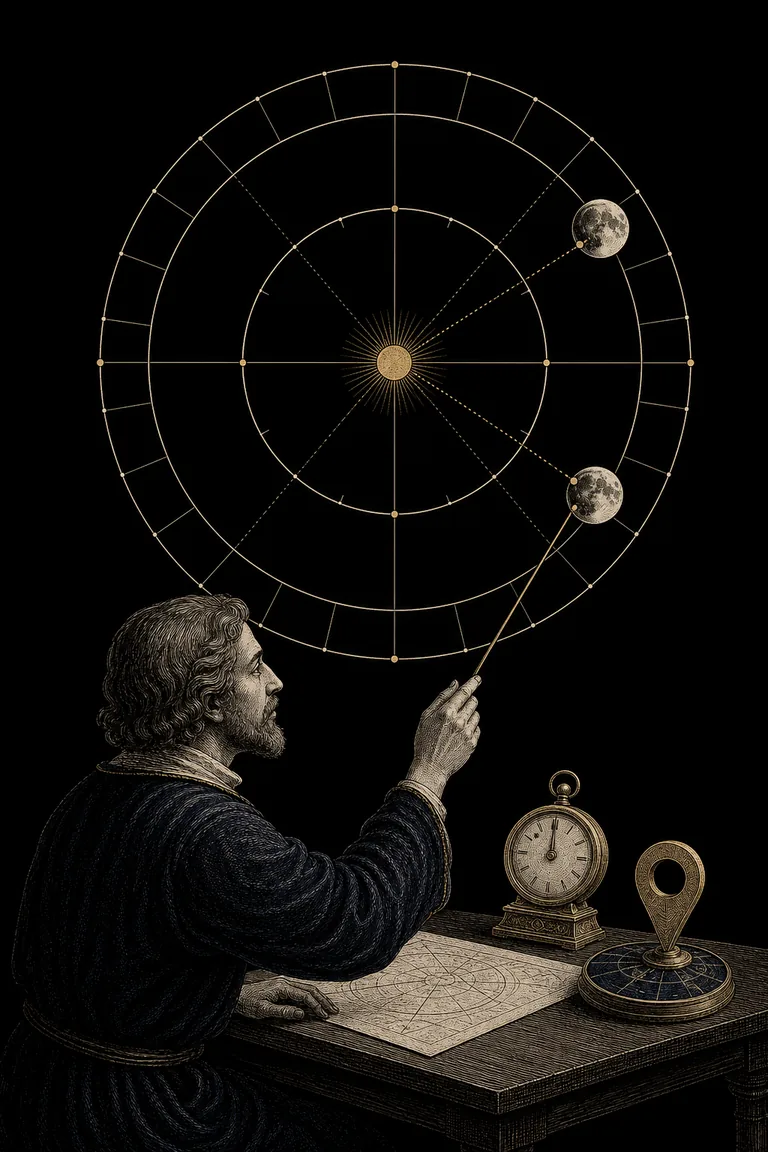
Venus takes about 224.7 Earth days to orbit the Sun. Its synodic cycle relative to Earth is roughly 584 days. A natal return chart uses apparent geocentric zodiacal longitude, so neither figure can be added mechanically to the birth date. Earth and Venus are both moving, and apparent retrograde motion can repeat the same degree within one passage.
Handle retrograde triple passes
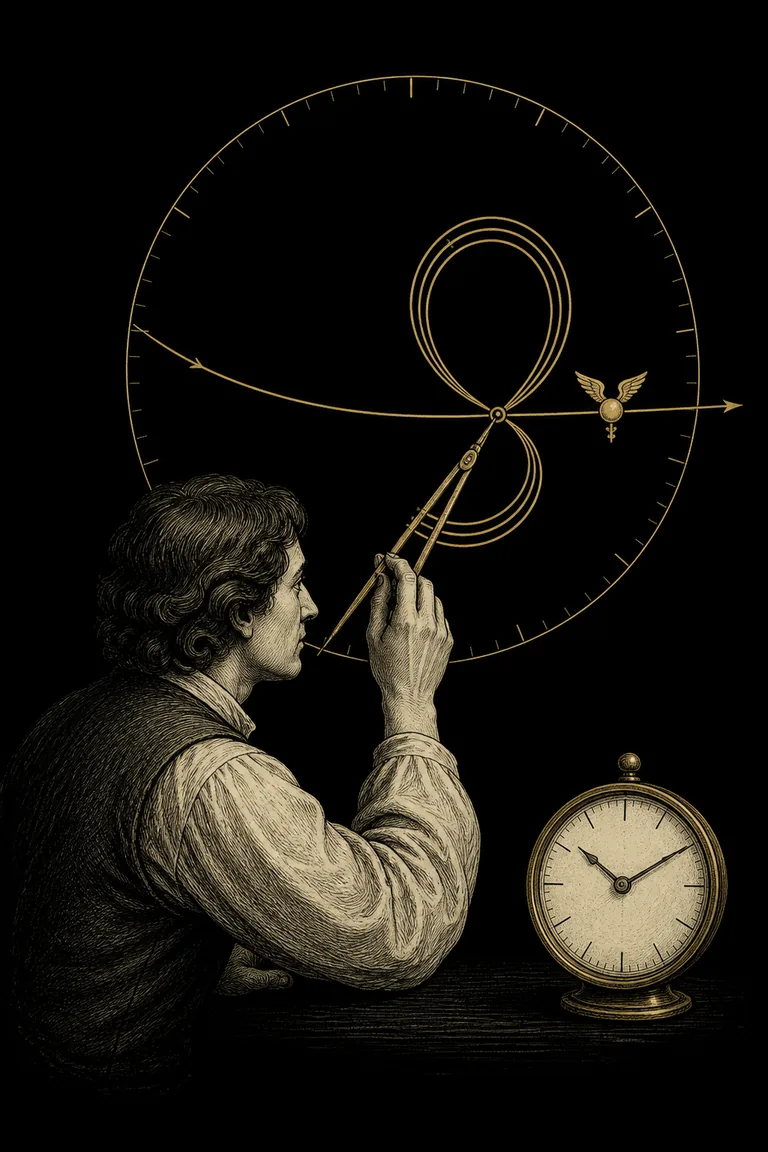
Venus may cross the natal longitude direct, station beyond it, cross it in retrograde motion, station again, and make a final direct crossing. Save all three exact timestamps and signed speeds. Do not quietly discard one pass because its chart is inconvenient. If an interpretive school prioritizes the first or final pass, write that rule before reading the charts.
Birth time and natal Venus precision
A recorded birth time gives the cleanest natal target and reliable natal houses. Venus generally moves slowly enough that a modest time uncertainty changes its longitude less than it changes the Ascendant, but the effect varies near stations and sign boundaries. With an unknown time, calculate a documented range or noon chart and omit exact natal angle and house claims.
Choose the return location before reading
The return instant is determined by Venus longitude and is the same worldwide. The Ascendant, Midheaven, and houses depend on location. Practitioners use birthplace, residence, or the actual place occupied at the return. Record the chosen coordinates and rule in advance. Relocating the chart after inspection to obtain preferred houses makes the method impossible to audit.
Audit a Venus return calculator
- Save the natal target
Record full Venus longitude, zodiac, UTC birth time, ephemeris, and motion state.
- Search a broad interval
Inspect stations and every longitude crossing instead of accepting the first result.
- Verify each timestamp
Recalculate Venus at the reported UTC time within a disclosed tolerance.
- Record motion and place
Save signed speed, coordinates, local time, and the return-location rule.
- Freeze chart settings
Declare houses, aspects, orbs, natal overlay, and the rule for multiple passes.
A practical interpretation order
Start with return Venus by house only when time and location are reliable. Note its sign, speed, station distance, angularity, and a short list of major applying and separating aspects. Then examine the return Ascendant and ruler, planets close to angles, and the natal house receiving the return Ascendant. A fixed order reduces selective emphasis.
Read Venus as values and exchange
Because Venus returns to its natal sign and degree by definition, the changing information lies in its house, motion, aspects, angles, and the rest of the chart. Interpretation can explore what the person values, attracts, spends, maintains, enjoys, negotiates, or reciprocates. It should not reduce Venus to romance or assume that pleasant symbolism guarantees an easy result.
Compare the return with the natal chart
Use a biwheel to distinguish return-to-return aspects from return-to-natal contacts. Record which natal houses receive return planets and apply the same aspect family and orbs chosen before interpretation. If the birth time is uncertain, exclude natal angles and house cusps. A close return contact can focus reflection without causing or guaranteeing an external event.
Love and relationship questions
A Venus return can organize reflection on reciprocity, attraction, boundaries, repair, pleasure, and shared values. It cannot establish another person's feelings, fidelity, consent, availability, or future choice. Phrase relationship themes as questions about observable behavior and direct communication. Do not use a return chart to advise waiting for an unavailable person or remaining in an unsafe situation.
Money, work, and creative questions
The chart may frame choices involving pricing, compensation, purchases, collaboration, aesthetics, or sustainable enjoyment. It cannot guarantee income, promotion, investment returns, sales, or artistic success. Pair the reflection with budgets, contracts, market evidence, professional advice, and explicit decision thresholds. Pleasant aspects do not remove financial risk.
Save the exact return, not just the theme
Use Veritas to record every return timestamp, signed motion, location rule, chart settings, natal contacts, limited claims, actions, and the evidence found at review.
How to review a Venus return
Before events unfold, save three to five specific interpretations, what would count as support, and what would count as a miss. Review on fixed dates without rewriting the original entry. Separate events from choices you made because of the reading. Compare repeated cycles using the same settings so broad language and hindsight do not create artificial accuracy.
Common calculation and reading errors
Frequent errors include matching only the sign, using a 224.7-day orbit as a return interval, missing retrograde crossings, mixing tropical and sidereal positions, changing location after seeing the houses, and using very wide aspect orbs. Interpretive errors include promising a partner, reunion, money, beauty, popularity, or creative success from one attractive placement.
Limits and responsible use
Venus returns are symbolic astrological techniques, not scientifically validated forecasts. A return chart cannot diagnose illness, determine fertility, establish consent, expose infidelity, guarantee love or income, value an investment, or replace legal, medical, financial, mental health, or safety advice. Use it to frame questions while allowing direct evidence and qualified experts to override the interpretation.