Tarot Journal
Eight of Pentacles Tarot Meaning: Practice and Skill
The Eight of Pentacles turns improvement into a visible practice: repeat the work, compare results, correct one detail, and protect the standard that matters.
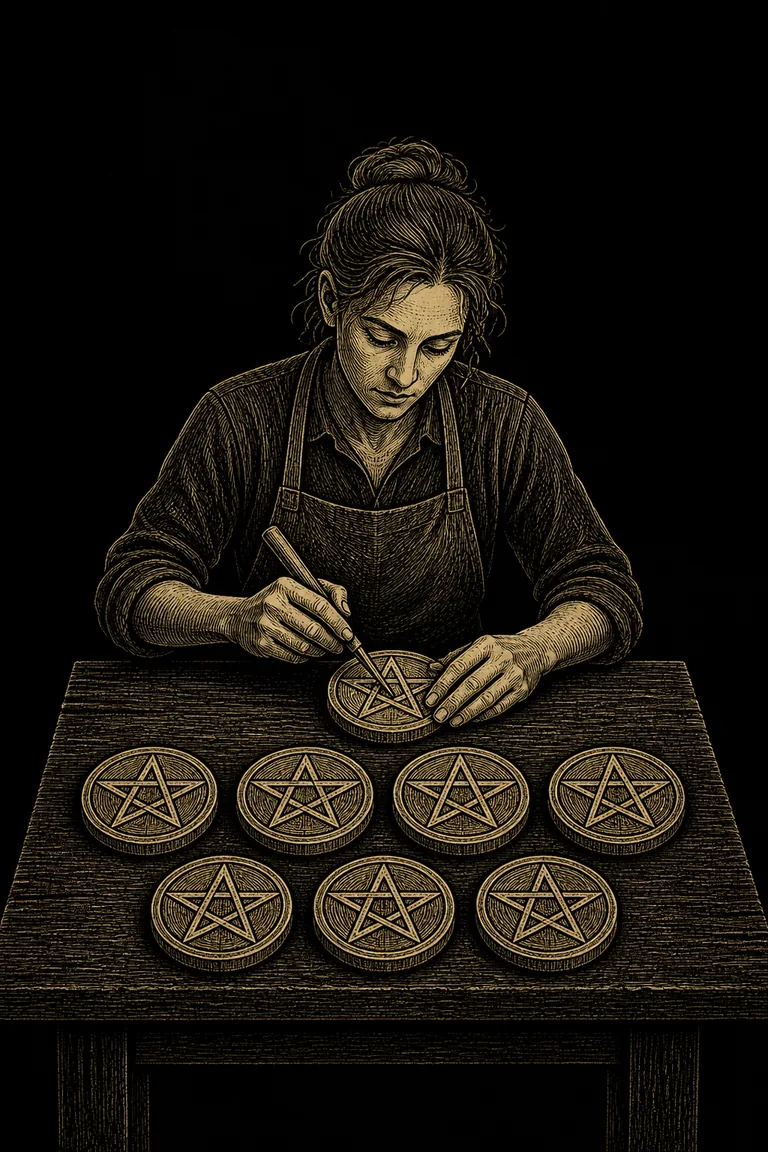
The Eight of Pentacles Tarot meaning centers on apprenticeship, repetition, concentration, and the quality created through deliberate practice. In the Rider-Waite-Smith image, a craftsperson works on one pentacle while completed pieces are displayed nearby. The scene is not simply about being busy. It shows a person producing comparable work, seeing the evidence, and refining a method over time.
Upright, the card often supports focused skill building, dependable workmanship, and a process that can be improved through feedback. Reversed, it can reveal careless repetition, perfectionism, boredom, weak standards, or effort disconnected from a useful result. Read it with the question and spread position before deciding whether the lesson is to practice longer, change the method, ask for review, or stop polishing the wrong thing.
Take the next insight with you
Explore personalized Tarot guidance in Veritas, available for iOS and Android.
 Scan with your phone
Eight of Pentacles meaning at a glance
Symbols in the Eight of Pentacles
The working figure suggests active learning rather than effortless talent. The tool makes method visible: improvement requires a way to shape, test, and correct the material. The finished pentacles create a record that can be compared, while the piece in progress shows that the standard is still being applied. The distant town may suggest temporary concentration away from distraction, but focus should not become permanent isolation from clients, teachers, teammates, or the people affected by the work.
Upright Eight of Pentacles meaning
Upright, the Eight of Pentacles favors practice with a feedback loop. It may describe training, revision, maintenance, an apprenticeship, or the patient production of reliable work. The strongest version of this card includes a clear target, repeated attempts, inspection, and adjustment. It does not promise mastery merely because many hours were spent. Useful repetition changes in response to evidence.
Reversed Eight of Pentacles meaning
Reversed, the card can show rushed work, inconsistent attention, low-value busywork, or a process repeated without review. At the other extreme, it can describe perfectionism that keeps a competent result from being delivered. Ask whether the standard is explicit, whether feedback arrives soon enough to help, and whether the next round will test a real correction. A reversed card is not proof of failure or incompetence. It is a prompt to inspect the learning system.
Eight of Pentacles in love and relationships
In love, the Eight of Pentacles can point to the repeated behaviors that make trust observable: keeping agreements, listening without rehearsing a defense, repairing specific harm, and sharing routine labor. It can also warn that one person is treating the relationship like a solo improvement project. Healthy practice requires consent and reciprocal participation. The card does not prove commitment, guarantee reconciliation, or require anyone to remain in an unsafe relationship.
Eight of Pentacles as feelings
As feelings, this card may suggest attention, willingness to learn, respect for competence, or a desire to become more dependable. Reversed, it may describe fatigue, self-consciousness, distraction, or reluctance to keep doing the work. A card cannot verify another person's private state. Compare the symbolic prompt with direct communication, consistent behavior, and the freedom to say no.
Career, study, and money
For work or study, the Eight of Pentacles supports deliberate practice, supervised training, quality control, documentation, and a portfolio of comparable results. Define the smallest unit of work, the acceptance criteria, the reviewer, and the next correction. For money, it may favor improving an earning skill or maintaining a sound process, but it cannot predict a raise, profitable client, or investment return. Check compensation, workload, fees, and opportunity cost rather than romanticizing unpaid practice.
Advice, yes or no, and timing
As advice, choose a repeatable exercise and make its result inspectable. In a yes-or-no reading, the card leans toward a conditional yes when the question is supported by training, sustained effort, and review, but it is not a guarantee. For timing, it describes a sequence of work cycles more reliably than a calendar date. Set a review point based on completed attempts or evidence rather than waiting for the card to name a deadline.
Eight of Pentacles combinations
With the Three of Pentacles, practice is strengthened by roles, standards, and informed feedback. With the Seven of Pentacles, review whether the chosen skill is producing enough value before adding more repetitions. With the Four of Pentacles, expertise may need protection from scarcity, rigidity, or refusal to share a method. With the Six of Pentacles, examine who funds the training, who performs the labor, and whether exchange is fair. Read the spread position and question before combining keywords.
Eight of Pentacles versus Seven of Pentacles
The Seven of Pentacles pauses to evaluate yield, timing, cost, and whether cultivation should continue. The Eight returns to the bench after that review and repeats a skill with closer attention. If the Seven asks, "Is this investment working?", the Eight asks, "What exact correction should the next attempt practice?" Together they form a useful cycle of work, evidence, review, and revision.
Make practice measurable
Use Veritas to record the skill, current baseline, quality standard, practice unit, feedback source, correction, evidence, and next review point.
A deliberate practice cycle
- Define the result
Name the concrete output and the person or purpose it must serve.
- Set one standard
Choose a quality criterion that can be observed or checked.
- Repeat a small unit
Practice one component often enough to compare attempts without hiding differences.
- Get useful feedback
Use a teacher, reviewer, test, customer response, or reliable measurement.
- Change one variable
Apply one correction and review whether the next result actually improved.
Limits and responsible use
The Eight of Pentacles can organize reflection about skill and effort, but it cannot certify competence, predict employment, calculate financial return, or justify exploitative labor. Use qualified instruction, safety standards, contracts, budgets, and objective assessment where the stakes require them. Rest, access, disability, tools, and working conditions also affect performance; effort alone does not explain every outcome.