Tarot Journal
Minor Arcana Meanings: A Practical Guide to All Four Suits
The 56 Minor Arcana cards describe how a Tarot theme becomes daily experience. Learn the four suits, the numbered sequence, and the court cards as one readable system.
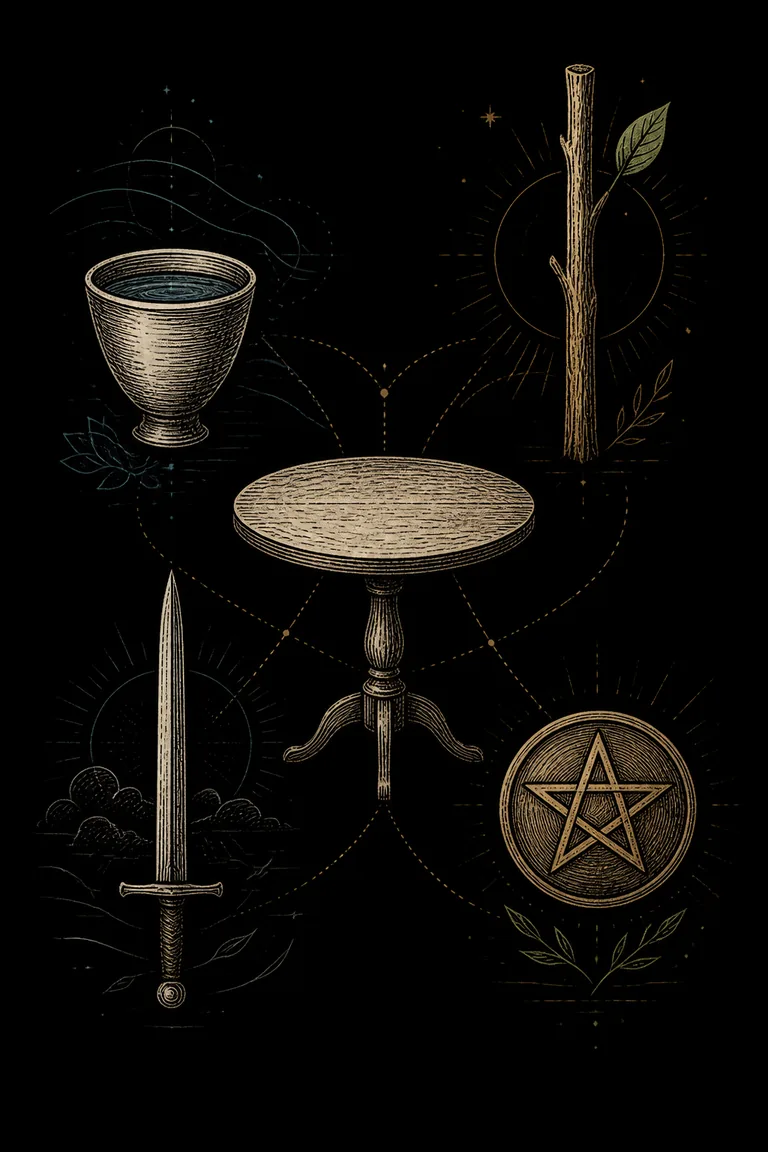
The Minor Arcana contains 56 cards divided into Cups, Wands, Swords, and Pentacles. These cards speak to ordinary but consequential life: conversations, feelings, effort, conflict, money, health, craft, and the choices that slowly become a pattern.
You do not need to memorize 56 isolated definitions. A Minor Arcana card can be read by combining three pieces of information: the suit shows the field of experience, the number or court rank shows the stage of development, and the spread position shows what job the card is doing in this reading.
Take the next insight with you
Explore personalized Tarot guidance in Veritas, available for iOS and Android.
 Scan with your phone
What is the Minor Arcana in Tarot?
A standard 78-card deck has 22 Major Arcana and 56 Minor Arcana. Each Minor suit contains ten numbered cards, Ace through Ten, plus Page, Knight, Queen, and King. The structure resembles a playing-card deck because both traditions share historical roots, though Tarot developed its own imagery and reading practices.
Major Arcana cards often name a broad turning point or developmental theme. Minor Arcana cards show the behavior, circumstance, resource, and emotional weather through which that theme is lived. A difficult conversation can carry a major lesson, and a simple routine can become the place where real transformation occurs.
The four Minor Arcana suits
Cups: feeling and connection
Cups concern emotion, attachment, intuition, imagination, relationship, and the capacity to receive. They ask what is felt, shared, desired, remembered, or idealized. Too many Cups can show emotional richness or a need for clearer boundaries and action.
Wands: energy and initiative
Wands concern desire, creativity, confidence, work in motion, and the spark that begins an undertaking. They ask where energy wants to go. Their excess can appear as impatience, burnout, competition, or excitement that never gains a durable form.
Swords: thought and conflict
Swords concern language, analysis, decisions, truth, perspective, and the tension created by competing ideas. They can clarify or divide. A Sword is not automatically negative; it asks how the mind and words are shaping the situation.
Pentacles: body and resources
Pentacles concern money, work, health, time, skill, home, and everything that must be maintained in the material world. They ask what is sustainable. Their shadow can include stagnation, scarcity thinking, overwork, or treating worth as a possession.
How numbered cards develop from Ace to Ten
The numbers give each suit a repeating sequence. Aces offer concentrated potential. Twos create a pair, choice, or balance. Threes develop through exchange and early growth. Fours stabilize. Fives disrupt. Sixes adjust after the disruption. Sevens test commitment or judgment. Eights intensify movement or skill. Nines approach completion. Tens show the result and the pressure of a full cycle.
This pattern is a framework, not a replacement for the card image. The Five of Cups and Five of Wands both contain instability, but one locates it in grief and emotional focus while the other locates it in competing energy. The Eight of Pentacles develops skill through repetition; the Eight of Wands accelerates movement and communication.
Turn suit and number into one clear reading
Open a Tarot reading in Veritas and explore how each Minor Arcana card changes with its position, neighboring cards, and the question you actually asked.
A practical meaning for every number
Ace: an opening
Raw capacity enters the reading. An Ace needs participation before it becomes a result, so ask what opportunity, feeling, thought, or resource is available to develop.
Two: relation and choice
Two introduces another force. It may show balance, partnership, contrast, indecision, or the need to hold two realities without rushing to erase one.
Three: development
A third element creates movement. Threes often concern collaboration, expression, early results, or the consequences of a pattern becoming larger than one person.
Four: stability
Four creates a container. It may offer rest and security or show a structure becoming too closed, depending on the suit, position, and surrounding cards.
Five: disruption
Five disturbs the established order. Loss, friction, scarcity, or conflict becomes visible, along with the need to respond rather than pretend the old arrangement still holds.
Six: adjustment
Six seeks a workable response after tension. It can show support, exchange, recognition, movement, or the attempt to restore proportion.
Seven: test and assessment
Seven asks what deserves trust and continued effort. It often brings strategy, patience, uncertainty, defense, or a moment of evaluating what has grown.
Eight: directed power
Eight concentrates energy through speed, discipline, thought, or limitation. The card shows what gains momentum and whether that momentum is skillful or constricting.
Nine: ripening
Nine stands near completion. It may show independence, endurance, satisfaction, worry, or the final effort required before a cycle reveals its full result.
Ten: completion and overflow
Ten carries the suit to its fullest expression. Completion can bring fulfillment, responsibility, burden, or the realization that a new cycle must begin.
How to read Page, Knight, Queen, and King
Court cards can describe a person, a role, a style of action, or a part of the reader. Pages learn, notice, and carry messages. Knights pursue the suit and show how its energy moves. Queens embody inward command and relational maturity. Kings direct the suit outward through decision, responsibility, or authority.
Avoid assigning a court card by age, gender, or appearance alone. The Queen of Swords may describe anyone using clear discernment and direct language. The Knight of Cups may be a person offering affection, the act of following an ideal, or advice to approach a conversation with emotional sincerity. Context decides.
Read suit, number, image, and position together
Suppose the Seven of Pentacles appears in an advice position. Seven suggests assessment, Pentacles locates the issue in effort or material results, and the image often shows someone pausing beside work already done. A useful sentence is: review what your effort is producing before investing more time.
If the same card appears as an obstacle, the issue may be impatience, sunk-cost thinking, or waiting without making a necessary adjustment. Meaning is not pulled from a fixed dictionary. It is assembled from stable symbols in relation to the question.
What repeated suits and missing suits can show
Several cards from one suit concentrate attention in that domain. Many Swords may show that language, worry, evidence, or competing perspectives dominate. Many Pentacles may emphasize practical demands and the body. This is emphasis, not proof that one area controls the whole future.
An absent suit can be worth noticing, but do not force a conclusion. No Cups in a relationship spread might suggest that feeling is not being named, or it may simply mean the selected cards are describing behavior and communication instead. Ask whether the absence adds clarity before treating it as a rule.
Reversed Minor Arcana cards
A reversal can show blocked, internal, delayed, excessive, or redirected expression. A reversed Three of Cups might describe social disconnection, private joy, or a group dynamic requiring boundaries. Choose a reversal method before the reading and use the image and position to decide which modification fits.
Reading every card upright is equally valid. The suits, numbers, positions, and combinations already create tension and nuance. Tarot is a symbolic reflective practice, not a scientifically validated prediction method. Do not use it instead of medical, legal, financial, or mental health advice.