Tarot Journal
Five of Cups Tarot Meaning: Grief, Regret, and What Remains
The Five of Cups names grief, disappointment, and the narrowed attention that follows a loss while keeping what remains honestly in view.

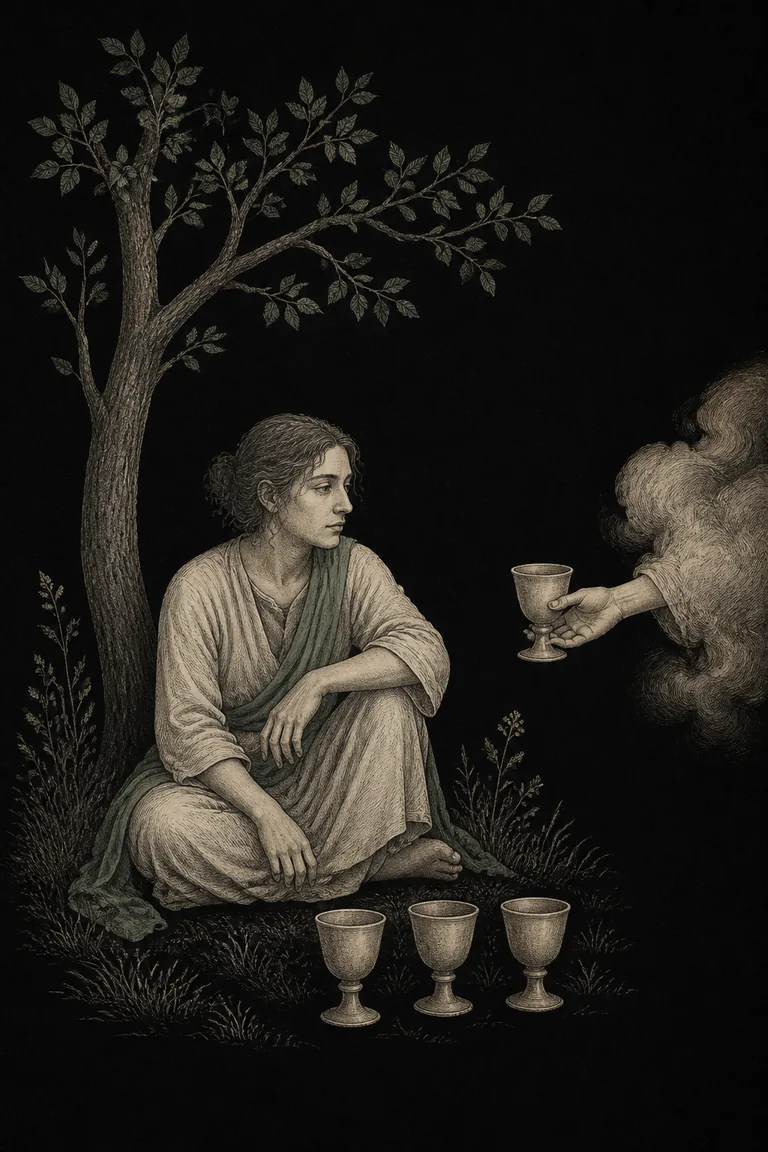
The Five of Cups is a Tarot card of grief, regret, disappointment, and emotional accounting. In the familiar image, a cloaked figure faces three spilled cups while two upright cups remain behind them. The card does not ask you to ignore what was lost. It asks you to mourn accurately enough that pain does not become the only fact in the scene.
A Five of Cups reading is not proof that a relationship will end, an apology will arrive, or sadness should pass on a schedule. It can mark a real loss, a painful expectation, or a temporary focus on what went wrong. Context comes from the question, spread position, neighboring cards, and observable events.
Take the next insight with you
Explore personalized Tarot guidance in Veritas, available for iOS and Android.
 Scan with your phone
Five of Cups meaning at a glance
Upright, the Five of Cups often points to grief, disappointment, remorse, missed expectations, or attention fixed on damage. Reversed, it may show a gradual return to connection, willingness to accept help, repeated avoidance, or pressure to move on before the loss has been processed. The card holds two truths together: something matters because it is gone or changed, and the whole field has not disappeared.
Read the loss in its full context
Open a Tarot reading in Veritas and compare the Five of Cups with its spread position and neighboring cards before deciding what needs grief, repair, or release.
Symbols in the Five of Cups
In the Rider-Waite-Smith card, three cups lie overturned and two remain standing. A river separates the figure from a distant building, while a bridge offers a possible route across. The black cloak makes grief visually dominant, yet the bridge and upright cups keep the scene from becoming total ruin. In another deck, notice what is lost, what survives, and whether the figure can reach either one.
Upright Five of Cups
Upright, this card can arrive after a rejection, broken plan, mistake, farewell, or outcome that cannot be restored exactly as imagined. The first task is accurate acknowledgment. Name the concrete loss instead of turning it into a global statement about your worth or future. Then ask which obligations remain, who can help, and what decision does not need to be made while emotion is at its peak.
Reversed Five of Cups
Reversed, the Five of Cups can describe re-entering life after a period of withdrawal. A person may be ready to accept support, make amends, or notice resources that grief had pushed outside awareness. It can also show feelings kept underground or a forced performance of recovery. Look for behavior: genuine healing usually allows both sadness and renewed participation, while avoidance keeps the same loss directing choices from the background.
Five of Cups in love and relationships
In love, the card may reflect heartbreak, unmet expectations, remorse after conflict, or mourning the relationship you hoped to have. It does not confirm separation, betrayal, or reconciliation. If repair is possible, it needs a specific account of harm, changed behavior, and consent from everyone involved. When safety or coercion is a concern, seek real-world support rather than using a reading to negotiate with danger.
Five of Cups as feelings
As feelings, the Five of Cups may suggest sadness, regret, disappointment, longing, or difficulty seeing a way forward. Tarot cannot verify another person’s inner state. Direct communication and consistent actions are better evidence. If you are reading for yourself, separate the feeling from the conclusion: feeling rejected is real, but it does not automatically prove that every future connection will repeat the same result.
Five of Cups for career and money
For career, the card can describe a lost opportunity, criticism, project failure, redundancy, or regret about a decision. A useful response is a factual review: what was outside your control, what can be learned, and which contacts or skills remain available? For money, it may mark a loss or disappointing result, but it is not financial advice. Confirm balances, deadlines, insurance, and professional options before acting.
Five of Cups as advice
Give the loss a defined place rather than demanding instant perspective. Tell one trusted person what happened, complete one necessary practical task, and postpone sweeping conclusions. When you are ready, turn toward the two upright cups: remaining relationships, skills, choices, routines, or sources of help. Noticing them does not cancel grief. It prevents grief from erasing information.
Find the next honest step
Use Veritas to ask what deserves mourning, what remains available, and which small action can support repair without denying the loss.
Five of Cups in a yes or no reading
The Five of Cups usually leans no for questions about an outcome matching the original hope. It can become a conditional yes when the question concerns accepting support, making a sincere repair attempt, or building from what remains. A better follow-up is: What expectation needs revising before I can choose clearly?
Useful card combinations
With the Three of Swords, a painful truth may need direct acknowledgment before repair. With the Four of Cups, grief may be narrowing attention so strongly that a current offer is hard to evaluate. With the Two of Cups, mutual support can survive disappointment if both people participate. With the Star, recovery is gradual and needs honest care. With the Tower, the loss may follow a structural rupture rather than a single emotional mistake.
A practical Five of Cups reflection
- Name what changed
Describe the specific person, expectation, opportunity, or condition that is no longer available.
- Separate pain from prediction
Write the feeling first, then remove any claim that it proves the whole future.
- Inventory what remains
List the people, abilities, choices, and practical supports that still exist without calling them replacements.
- Choose one next action
Take a small step toward care, information, repair, or closure that is possible today.
Common Five of Cups mistakes
Do not use this card to promise reconciliation, shame someone for grieving, or insist that gratitude should make pain disappear. Avoid treating regret as permanent guilt or the remaining cups as proof that the loss was unimportant. If grief is persistent, overwhelming, or affecting safety and daily functioning, a qualified mental health or grief professional offers support that Tarot cannot replace.