Tarot Journal
Three of Swords Tarot Meaning: Pain, Truth, and Recovery
The Three of Swords names painful information, grief, and separation while asking what is true, what needs care, and what response prevents a wound from directing every decision.
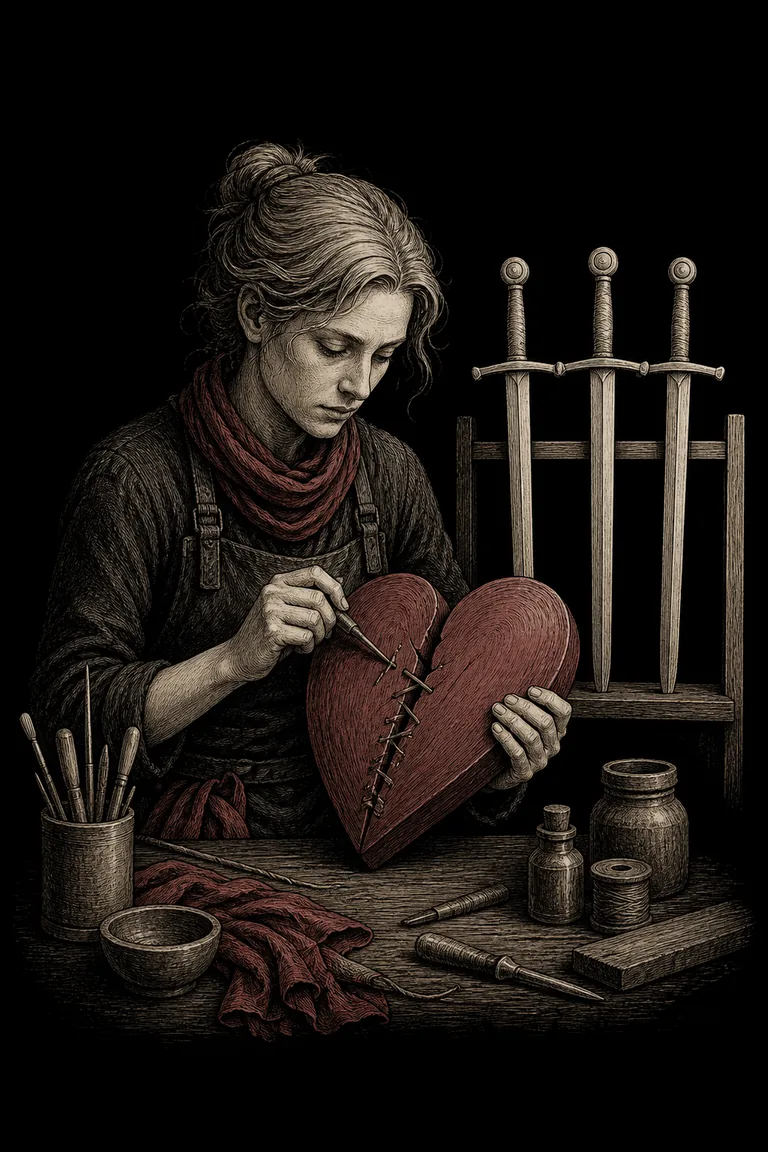
The Three of Swords is one of Tarot's clearest images of emotional pain: a heart crossed by three blades beneath a stormy sky. It can describe grief, disappointment, conflict, rejection, or a truth that changes how a situation feels. It does not automatically predict betrayal, a breakup, or permanent suffering.
As a Swords card, it belongs to thought, language, evidence, and decisions. Its challenge is to let painful information become specific enough to address. A useful reading separates the event from the interpretation, makes room for emotion, and identifies the boundary, conversation, or support that the next stage requires.
Take the next insight with you
Explore personalized Tarot guidance in Veritas, available for iOS and Android.
 Scan with your phone
Three of Swords meaning at a glance
Upright, the card often points to a painful truth, sorrow, separation, sharp words, or the moment denial becomes harder to maintain. Reversed, it can show recovery, private grief, a delayed conversation, recurring hurt, or an attempt to release a story that still needs attention. Neither orientation tells you who is guilty. The spread, question, surrounding cards, and observable facts must carry that detail.
Read the situation, not the fear
Open a Tarot reading in Veritas and use the full spread to distinguish what happened, how it affected you, and what choice is available now.
Symbols in the Three of Swords
In the Rider-Waite-Smith image, three swords pierce a red heart against rain and gray clouds. The direct design removes distracting characters and scenery, so the emotional fact cannot be avoided. The heart represents felt experience; the swords suggest words, ideas, decisions, or knowledge that cuts through an earlier picture. Rain can express release as well as sorrow. Because the image is symbolic, it should not be used to predict a medical heart problem or physical violence.
Upright Three of Swords
The upright card may arrive when disappointment deserves an honest name. A promise may not be kept, a conflict may expose incompatible needs, or new information may require a plan to change. The card does not ask for performative toughness. It asks for precision: what was said, what was lost, what remains uncertain, and what would reduce further harm? Grief can coexist with competent action.
Reversed Three of Swords
Reversed, the card may indicate that pain is moving, though not necessarily finished. An apology, therapy, distance, rest, or a clearer account of events can begin recovery. It can also show hurt held inward, repeated mental replay, premature forgiveness, or a conversation postponed until resentment hardens. Ask whether the reversal describes release, concealment, or recurrence rather than assuming it is automatically positive.
Three of Swords in love and relationships
In a relationship reading, the Three of Swords can reflect hurt feelings, incompatible expectations, distance, a necessary truth, or a separation already under discussion. It is sometimes associated with a third party, but three swords alone do not prove infidelity. Verify behavior before making an accusation. For an existing partnership, the practical question is whether both people can acknowledge impact, communicate honestly, and create a credible repair plan. For someone single, the card may show old grief shaping present choices or a recent rejection that needs time rather than a prediction of future loneliness.
Three of Swords as feelings
As feelings, this card may describe sadness, disappointment, defensiveness, regret, or fear of being hurt again. A person might be processing a difficult realization or keeping distance because contact feels sharp. Feelings are not promises and do not reveal private facts with certainty. If communication is appropriate and safe, ask a clear question instead of treating the card as access to another person's mind.
Career and work meaning
At work, the Three of Swords can mark critical feedback, rejection, a failed proposal, team conflict, redundancy, or news that changes a professional plan. Separate the measurable consequence from the blow to confidence. Request the decision criteria, document agreements, protect necessary references, and decide whether the situation calls for revision, escalation, or departure. A difficult result can be information without becoming a verdict on your total ability.
Money meaning
For money, the card can point to a disappointing expense, loss, debt stress, or a financial conversation that cannot be delayed. It does not specify an amount or guarantee catastrophe. Gather statements, dates, and obligations before responding. If the issue is serious, a qualified financial or legal professional is more useful than drawing repeated cards in search of a softer answer.
Three of Swords as advice
- State the fact
Write the observable event in one sentence without adding a motive you cannot verify.
- Name the impact
Acknowledge the emotion and the practical consequence without ranking which one is more legitimate.
- Stop extra injury
Pause retaliatory messages, public accusations, or repeated checking that deepens the wound.
- Choose support
Identify the person, boundary, professional resource, or recovery routine that fits the actual problem.
Is the Three of Swords a yes or no?
For a narrowly framed yes-or-no question, the Three of Swords usually leans no or not under the current terms. It suggests that proceeding without addressing painful information would carry a cost. The card is more useful when followed by a practical question: what truth changes the answer, and what condition would need to be different?
Separate truth, feeling, and response
Use a three-card reading in Veritas for the known fact, the emotional impact, and the most responsible next step.
Three of Swords combinations
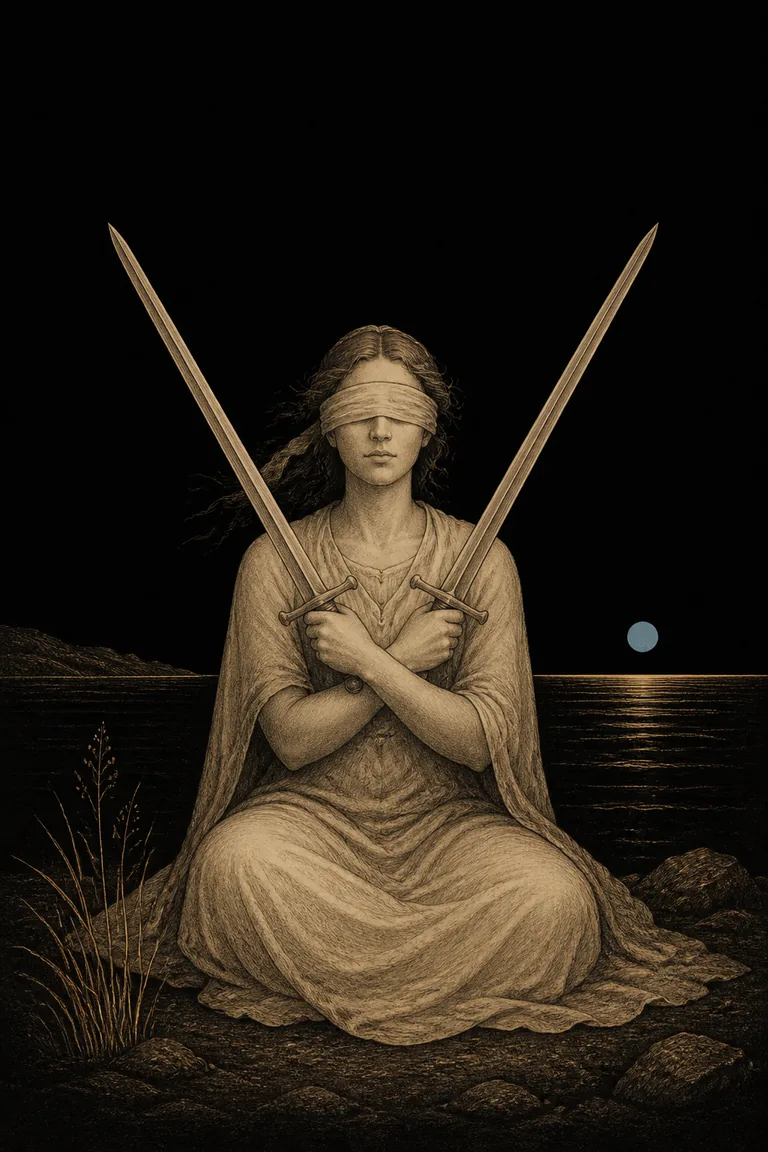
With the Ace of Swords, difficult clarity or a decisive conversation becomes central. With the Two of Swords, avoidance may delay a truth that still requires a choice. With the Three of Cups, the issue may involve friendship, community, support, or feeling excluded, but the pair still does not prove a romantic triangle. With Temperance, careful repair and pacing matter. With the Star, grief may be followed by credible hope and restoration. Read both cards as a sentence instead of letting the Three of Swords erase its partner.
How to read this card without catastrophizing
First identify the position in the spread. A card in the past, obstacle, advice, and possible outcome positions cannot mean the same thing. Then look for supporting cards that clarify whether the issue is news, conflict, loss, memory, or recovery. Keep the time frame and original question visible. If the reading produces panic but no testable information, stop drawing and return to what is known.
Common interpretation mistakes
The most common mistake is announcing cheating, divorce, or disaster from one card. Another is using the reversed card to promise instant healing. Avoid medical prediction, mind reading, and blaming a grieving person for not moving on quickly. The Three of Swords can validate a wound while still leaving cause, duration, responsibility, and outcome open to evidence.
Questions to ask when the Three of Swords appears
What fact hurts, and what interpretation have I added to it? Which loss needs acknowledgment? Is a direct conversation safe and useful? What boundary would prevent additional harm? Am I seeking repair, closure, distance, or simply permission to grieve? Which support belongs outside the reading? What would recovery look like in observable behavior rather than a forced positive feeling?