Tarot Journal
Five of Pentacles Tarot Meaning: Hardship, Support, Recovery
The Five of Pentacles names material strain, exclusion, and the difficult work of finding support without turning hardship into personal failure.

The Five of Pentacles is a Tarot card of hardship, insecurity, exclusion, and support that may be difficult to see or access. In the Rider-Waite-Smith image, two people move through snow beneath a window containing five pentacles. The scene makes deprivation visible, but it does not tell us that suffering is deserved or that help will arrive automatically.
In a reading, this card may describe limited money, unstable work, illness-related strain, social isolation, or the shame that makes asking for assistance harder. It is not a prediction of permanent poverty. Read it with the question, spread position, neighboring cards, and real conditions, especially when financial, housing, or health decisions are involved.
Take the next insight with you
Explore personalized Tarot guidance in Veritas, available for iOS and Android.
 Scan with your phone
Five of Pentacles meaning at a glance
Upright, the Five of Pentacles often points to material pressure, feeling shut out, loss of security, or carrying a burden with too little support. Reversed, it may show early recovery, accepting assistance, rebuilding stability, or a shortage that remains hidden. Both orientations ask what is actually missing and what barrier stands between the person and a workable resource.
Read hardship in its full context
Open a Tarot reading in Veritas and compare the Five of Pentacles with its position and neighboring cards before deciding what kind of support the situation needs.
Symbols in the Five of Pentacles
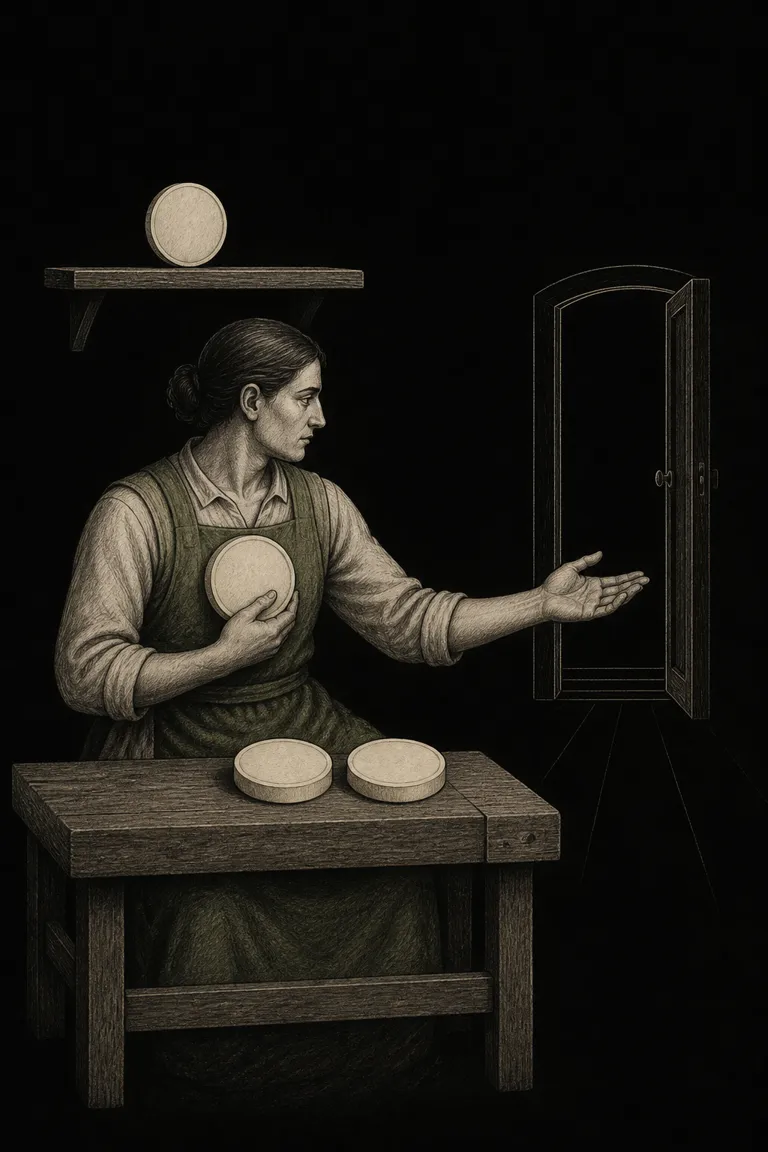
The familiar card shows snow, worn clothing, an injured figure using crutches, and a lit window holding five pentacles. Snow suggests exposure and difficult external conditions. The window can represent community, shelter, faith, or resources, but its presence does not prove that the door is open. The two travelers may also show mutual endurance. Notice whether your deck emphasizes abandonment, companionship, access, or the distance between need and help.
Upright Five of Pentacles
Upright, the card can mark a genuine shortfall rather than a failure of attitude. A person may be underpaid, priced out, recovering from a loss, excluded from a group, or spending more energy than current resources allow. Begin with facts: What bill, need, deadline, or barrier is creating pressure? Practical accuracy is kinder than insisting that optimism alone will change structural conditions.
Reversed Five of Pentacles
Reversed, the Five of Pentacles can indicate that recovery has started through new income, reduced expenses, treatment, community support, or a willingness to be seen. It can also show concealed hardship or help that comes with unsafe terms. Improvement should be measured through concrete changes, not only relief or reassurance. Check whether the resource is dependable, accessible, and respectful of consent.
Five of Pentacles in love and relationships
In love, this card may describe loneliness inside a relationship, financial stress affecting intimacy, unequal access to shared resources, or fear of being abandoned during difficulty. It does not prove rejection. Ask whether needs have been communicated and whether both people can participate in decisions. Financial control, threats, or withholding essentials require practical support and safety planning, not a more favorable card.
Five of Pentacles as feelings
As feelings, the card may suggest vulnerability, embarrassment, grief, exclusion, or worry about becoming a burden. Tarot cannot reveal another person's private state as fact. If you are reading for yourself, distinguish the wish for comfort from the need for money, information, rest, medical care, or belonging. A precise need is easier to communicate than a general sense of being unwanted.
Five of Pentacles for career and money
At work, the Five of Pentacles can point to insecure employment, inadequate tools, exclusion from opportunity, burnout, or a transition with little financial cushion. For money, it favors a clear inventory of cash flow, obligations, deadlines, and legitimate assistance. Tarot cannot replace financial, legal, benefits, or debt advice. Verify terms and use qualified help before making a consequential decision.
Five of Pentacles as advice
Name the immediate need without making it your identity. Ask one specific person or institution what support is available, and check eligibility rather than assuming rejection. If you are supporting someone else, offer a concrete option without taking control. Recovery often begins with a modest stabilizing action: extending a deadline, sharing a meal, arranging transport, documenting a claim, or reducing one recurring demand.
Find the next reachable resource
Use Veritas to separate the emotional weight of scarcity from one practical request you can make, verify, or offer today.
Five of Pentacles in a yes or no reading
The Five of Pentacles usually leans no when the plan requires resources, access, or support that are not currently secured. It can be a conditional yes for applying, asking, renegotiating, or accepting appropriate help. A better follow-up question is: Which missing resource must be confirmed before this becomes sustainable?
Useful card combinations
With the Four of Pentacles, fear of loss may be narrowing choices or protecting a necessary reserve. With the Five of Cups, material strain and grief can reinforce each other. With the Five of Swords, competition or humiliation may be worsening exclusion. With the Star, recovery needs realistic hope and care. With the Six of Pentacles, examine who controls access, what is exchanged, and whether support preserves dignity.
A practical Five of Pentacles resource check
- Name the shortage
Identify the exact amount, service, information, time, access, or companionship that is missing.
- List reachable doors
Write down people, benefits, institutions, professional services, and community resources that can be checked.
- Test the terms
Confirm eligibility, cost, privacy, consent, deadlines, and any obligation attached to the help.
- Choose one stabilizer
Take the smallest action that reduces immediate risk while preserving future options.
Common Five of Pentacles mistakes
Do not treat poverty, disability, unemployment, or isolation as evidence of weak faith or a bad mindset. Do not promise that unseen help is always nearby, and do not use the reversed card to guarantee recovery. The card is most useful when it restores specificity: real hardship deserves accurate information, dignified support, and choices proportionate to the situation.