Tarot Journal
How to Draw Tarot Cards: Four Clear Methods
Drawing Tarot cards is the moment you select hidden cards for named spread positions. A clear method protects the order, limits redraws, and keeps interpretation separate from selection.
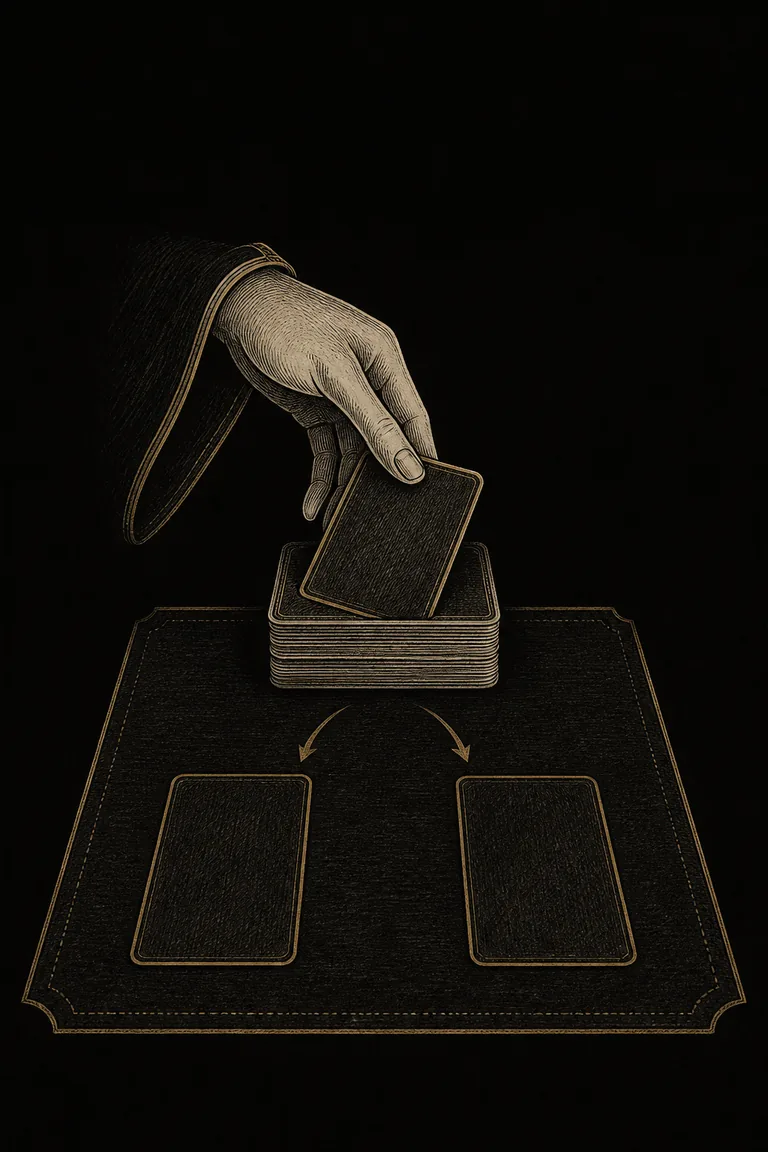
To draw Tarot cards, finish shuffling and cutting, keep the deck face down, then use one method chosen before any faces are visible. You can take cards from the top, select from a face-down fan, choose piles, or let a querent point to hidden cards. Place each selected card into the next named spread position and stop when every position is filled.
No draw method is inherently more intuitive or accurate. The useful method is comfortable, repeatable, and hard to change after an inconvenient card appears. Decide the spread, draw order, reversal rule, jumper rule, and redraw limit first so the cards answer the question you actually asked.
Take the next insight with you
Explore personalized Tarot guidance in Veritas, available for iOS and Android.
 Scan with your phone
What does it mean to draw a Tarot card?
Drawing is the selection step between mixing the deck and interpreting the spread. Shuffling changes card order, cutting changes where that order begins, and drawing commits particular hidden cards to particular positions. Keeping these stages separate makes a reading easier to review. It also prevents a vague feeling during selection from quietly becoming evidence after the card is known.
Prepare the question and spread first
Write one workable question and name every position before touching the first card. A three-card spread might use situation, obstacle, and next useful action. Those positions are not interchangeable with past, present, and future. If the role of a card changes after it is revealed, the reader can fit almost any result to a preferred story. Clear positions give each card a limited job.
Set the draw rule before the first card
Open Veritas, choose the question and spread, then record whether you will draw from the top, a fan, hidden piles, or a querent selection.
Method 1: draw from the top
Square the shuffled and cut deck face down. Lift the top card without looking at the next one and place it into position one. Continue from the top until the spread is complete. This is the simplest method because the order is visible and reproducible. It works especially well for daily cards, larger spreads, group practice, and readers who want fewer opportunities to steer the choice.
Method 2: choose from a face-down fan
Spread the deck in a shallow arc with every back visible and every face hidden. Select one card by touching its back, remove it without exposing nearby faces, close the gap, and assign it to the next position. Decide whether previously selected spaces stay closed or the fan is remixed. A fan offers tactile choice, but hovering until one card feels perfect can turn into repeated reassurance seeking. Use a short, comfortable selection rule.
Method 3: draw from hidden piles
Divide the deck into a fixed number of face-down piles, choose the pile order while all cards remain hidden, and draw from the top of those piles according to the rule. For example, use the left pile for position one, the middle for position two, and the right for position three. Do not inspect each pile and then decide which topic it should represent. That reverses the procedure.
Method 4: let another person choose
For an in-person reading, the querent can point to a hidden card in a fan, name a pile, or say when to stop while the reader moves through the deck. Explain the method before beginning and do not require anyone to touch the cards. The reader remains responsible for the question, position order, consent, and interpretation. A querent choice adds participation, not proof that the selected card was destined.
Top card versus intuitive selection
Top-card drawing minimizes choice after the shuffle. Fan selection includes a bodily choice among hidden backs. Both can support meaningful reflection because meaning comes from the relationship among the question, position, image, established card foundations, and real context. Calling one method intuitive does not exempt it from a stopping rule, and calling another random does not make it spiritually empty. Choose the method that helps you interpret honestly.
How to place cards in spread order
Number the positions mentally or on a spread guide. Place the first selected card in position one, the second in position two, and continue without sorting by suit, visual appeal, or perceived importance. For a complex spread such as the Celtic Cross, review the layout before drawing. If space is tight, build the spread in its numbered order rather than creating a visually neat arrangement that loses the sequence.
When should you turn the cards over?
You may reveal each card as it is placed or lay the complete spread face down and reveal in position order. Revealing one at a time supports a careful observation process. Revealing after the full draw reduces the chance that an early card influences later selection. Either approach is valid if it is decided first. Turn cards side to side rather than top to bottom if you want to preserve their orientation.
Drawing upright and reversed cards
A card is reversed only if your shuffle introduced orientation changes and your reading method uses them. Keep the deck direction stable while drawing, then reveal every card with the same physical motion. Do not rotate a card because its image seems difficult, and do not invent reversals by turning random selections in the fan. If you read upright only, square all cards in one direction before the session and state that rule.
What about jumper cards?
A card that falls while shuffling is not the same as a deliberately drawn card. Before the session, decide whether jumpers are returned to the deck, set aside as one secondary note, or used as the next position. If several cards fall, treat that as a handling event rather than an instruction to expand the spread. A declared jumper rule keeps an accident from changing the reading after its face becomes known.
Damaged, stuck, or exposed cards
A bent corner, distinctive scratch, or card that consistently sticks can make a supposedly hidden choice identifiable. Repair or replace the deck, use sleeves, or draw from the top after a thorough mix. If a face is accidentally exposed before selection, return it and reshuffle under the same rule unless the session protocol says otherwise. Do not promote an identifiable or exposed card to special status merely because it caught your attention.
Drawing one card for the day
For a daily one-card practice, define a modest prompt such as what quality deserves attention today. Shuffle, cut if desired, draw one card, and record the first observation before consulting a guidebook. Do not keep drawing until the card feels encouraging. If the card is broad, translate it into one observable question or action and review it later against what actually happened.
Worked example: a three-card spread
Suppose the positions are current situation, information missing, and next action. The reader shuffles, makes one cut, and draws the top three cards. A court card in position two describes information to examine, not automatically a secret person. A challenging card in position three describes the quality or constraint of the next action, not permission to redraw. Position meaning remains in charge of the interpretation.
Accessibility and limited-space adaptations
Use a nonslip mat, slide the top card sideways, or ask another person to move cards under verbal direction. A small fan of several packets can replace a full-table fan. Oversized cards can be dealt onto a tray or stand. If fine motor movement is painful, use a digital deck with one visible draw command. Accessibility changes the mechanics, not the validity of the reflective practice.
How digital Tarot draws work
A digital deck selects from a programmed card set and may also assign reversed orientation. The exact randomization method belongs to the software, but the reader can still control the question, spread, and stopping rule. Tap once for each declared position and preserve the first result. Reopening the app or refreshing the screen until a preferred card appears is the digital version of replacing a physical draw.
When is a redraw justified?
Redraw when the selection procedure genuinely failed: the app crashed before saving, cards were known to be missing, a face was exposed in violation of the agreed rule, or a physical interruption destroyed the order. Discomfort, ambiguity, or a card that appears unrelated is not a failure. First check the exact position, describe the image, compare established meanings, and gather real-world information. Use one predeclared clarifier only for a named ambiguity.
A repeatable Tarot drawing workflow
- Name the question
Write one question that leaves room for evidence, choice, and uncertainty.
- Define the positions
Choose the spread and give every card one job before drawing.
- Choose the method
Declare top, fan, piles, querent choice, or a digital draw.
- Set handling rules
Decide reversals, jumpers, reveal direction, and legitimate failure conditions.
- Draw in order
Assign each hidden selection to the next position without replacing it.
- Interpret after commitment
Record observations, meanings, context, and one useful action only after the draw is fixed.
Preserve the first valid draw
Use Veritas to save the method, card order, positions, first interpretation, later evidence, and review date without replacing an inconvenient result.
Common Tarot drawing mistakes
Avoid changing methods midway, selecting with visible faces, assigning positions after seeing the cards, turning difficult cards upright, adding undeclared jumpers, or drawing extra cards until the answer feels safe. Do not confuse a chosen card with a command or use Tarot to replace medical, legal, financial, or safety advice. A disciplined draw creates a stable object for reflection while leaving real decisions with the people affected.