Tarot Journal
How to Shuffle Tarot Cards: Six Practical Methods
Shuffling Tarot cards is a practical way to mix the deck and mark the beginning of a reading. The best method is one you can perform comfortably, consistently, and without damaging the cards.

To shuffle Tarot cards, choose a method that changes both the order of the cards and which cards sit beside one another. An overhand shuffle is easy for many beginners, a table wash suits large or stiff decks, and a gentle riffle can mix a flexible deck quickly. No method makes a reading more spiritual or more accurate by itself.
Decide before you begin whether you use reversed cards, how you handle cards that fall out, and how the final card will be selected. Then shuffle until the deck feels physically mixed or until a simple stopping rule is complete. A repeatable process protects the reading from anxious reshuffling and lets the question, spread position, and interpretation do the real work.
Take the next insight with you
Explore personalized Tarot guidance in Veritas, available for iOS and Android.
 Scan with your phone
What does shuffling Tarot cards actually do?
Shuffling has two useful functions. Mechanically, it changes the sequence of a seventy-eight-card deck so the next draw is not simply the previous order. Psychologically, it creates a boundary between forming the question and seeing the cards. A ritual can support attention, but the physical mix and the interpretive process remain separate. You do not need to prove that every possible order is equally likely before a personal reading can be useful.
Is there a right way to shuffle Tarot cards?
There is no single correct shuffle for every deck or reader. Card size, finish, flexibility, hand strength, pain, tremor, vision, and available table space all affect the choice. A method is suitable when it mixes the deck, preserves the cards, feels controllable, and can be repeated without turning the shuffle into a test of worthiness. Tradition may shape your ritual, but comfort and informed consent matter more than performance.
Inspect the deck before you mix it
Confirm that all cards are present and facing the intended direction. Look for bent corners, residue, moisture, or one unusually worn card that can be recognized from the back. Clean, dry hands and a clear surface reduce damage. If the deck is new and the cards cling, separate them gently in small packets before attempting a full shuffle. Never force a stiff deck into a sharp bend.
Overhand shuffle: the easiest place to start
Hold the deck loosely in one hand. With the other hand, lift small packets from the top and let them fall into the receiving palm. Vary the packet sizes rather than transferring the same block repeatedly. Several passes change order well enough for ordinary practice, especially when followed by a cut. Keep the grip relaxed so the edges slide instead of scraping. For an oversized deck, divide it into two manageable stacks and overhand-shuffle each before combining them.
Riffle shuffle without damaging the cards
Split the deck into two roughly equal halves and release small groups from each half so they interleave. A table riffle can use very little bend: rest the inner corners on the surface and let the cards mesh gradually. The dramatic bridge used with playing cards is optional and can warp Tarot stock. Avoid riffling gilded, laminated, brittle, or collectible decks when the edges show stress. One or two careful interleaves can be followed by an overhand shuffle rather than repeated flexing.
Packet or Hindu-style shuffle
Hold the deck by its long edges and draw small packets into the opposite hand. This method resembles an overhand shuffle with a different grip and can work well for narrower decks. Keep fingers away from the card faces if the coating marks easily. As with any packet method, change the packet size and occasionally cut the deck so intact groups do not travel together through every pass.
Table wash for large, stiff, or awkward decks
Spread the cards face down across a clean table and move them in broad overlapping circles with both hands. Continue until cards from different parts of the original deck have crossed repeatedly, then gather them without looking at the faces. A wash needs more space but asks for less grip strength and naturally changes orientation if reversals are allowed. Use a smooth cloth when the table is rough, and keep drinks, candles, and oils away from the mixing area.
Pile mixing is organization, not enough by itself
Dealing cards into several face-down piles changes their order, but a perfectly repeated pile pattern is predictable. Use pile mixing to count the deck, separate a known sequence, or make a large deck manageable. Then add an overhand shuffle, table wash, or irregular cut. Do not let the number of piles become an omen unless that choice is explicitly part of your practice and does not replace actual mixing.
How to cut a Tarot deck
A cut moves one or more blocks without mixing cards inside those blocks. After shuffling, lift a portion and place it beneath the remaining stack, or divide the deck into two or three piles and recombine them in a predeclared order. Cutting can mark the end of the shuffle and give the querent a simple way to participate. It is not a substitute for mixing a deck that remains in a known sequence.
Carry the shuffled deck into a focused reading
Open Veritas with one clear question, choose the spread before drawing, and record the first complete layout instead of reshuffling for a different answer.
How to shuffle for reversed Tarot cards
If you read reversals, create them deliberately rather than letting damaged handling decide. During a table wash, rotate some cards naturally as they move. With packet methods, turn one small section half a turn before returning it to the deck. Set an approximate policy, such as allowing mixed orientations without trying to engineer a fixed percentage. If you do not use reversals, align every card before shuffling and turn accidental reversals upright without treating them as secret exceptions.
What to do when a card jumps out
A fallen card can result from speed, loose grip, static, or an uneven packet. Decide beforehand whether you return all jumpers, keep only one cleanly separated card, or restart after a spill. A card is not automatically more important because it fell. If half the deck drops, gather it, check the order is no longer exposed, slow down, and continue. Consistency prevents every handling error from becoming an extra message.
Shuffling a new Tarot deck
New decks often arrive in a printed sequence, so separate and mix them before the first reading. Look through the artwork first if you want to verify print quality and card count. Then turn every card face down, divide the deck into manageable groups, mix each group, combine them, and cut. Cleansing is a personal ritual rather than a mechanical requirement. Airing the deck or placing it in its box can be meaningful, but smoke, salt, water, and oil may damage the stock.
Accessible shuffling methods
Small packets, a card mat, a shallow tray, or a table wash can reduce grip and reach demands. A reader with one-handed access can slide portions across a non-slip surface and recombine them. Another person may shuffle with the reader directing the stopping rule, provided the arrangement is consensual. Digital draws are also valid tools when physical handling is painful or impractical. Accessibility changes the method, not the seriousness of the reading.
When reading for someone else
Explain whether the other person may touch, cut, or shuffle the deck instead of imposing a rule after they reach for it. Some readers protect delicate decks and do all handling themselves; others invite participation. Either approach works when it is stated clearly. Keep the question private when requested, avoid claiming that touch transfers dangerous energy, and use a clean replacement deck if hygiene or card condition is a concern.
A simple repeatable shuffle routine
- Name the question
Write one open, bounded question and select the spread before touching the deck.
- Choose the handling rules
Decide how reversals, jumpers, the cut, and card selection will work for this reading.
- Mix in two ways
Use several comfortable packet passes or a table wash, then add an irregular cut.
- Stop once
Use a fixed number of passes, a timer, or one complete physical mix, then draw without reopening the decision.
- Record the layout
Photograph or note the first spread before moving cards, adding clarifiers, or checking a guidebook.
How long should you shuffle Tarot cards?
There is no universal number of seconds or passes. For a deck already in ordinary use, several varied overhand passes plus a cut may be enough. A deck restored to sequence needs more thorough mixing. Choose a visible stopping rule before you begin, especially when anxious. Continuing until a pleasant card feels likely does not improve randomness or insight. If concentration breaks, pause the reading instead of shuffling indefinitely.
Turn one draw into a useful record
In Veritas, save the question, shuffle rule, card positions, first interpretation, and what happened next so practice can improve without repeated redraws.
Common shuffling mistakes
Avoid using only neat piles, bending a stiff deck until it cracks, peeking while gathering a table wash, changing the reversal rule after seeing a difficult card, or treating every dropped card as mandatory. Do not restart because the first draw is uncomfortable. If the process reveals a marked card or incomplete deck, fix the physical problem and begin a new documented reading. If it reveals only disappointment, keep the original layout and interpret it in context.
Card care and when to retire a deck
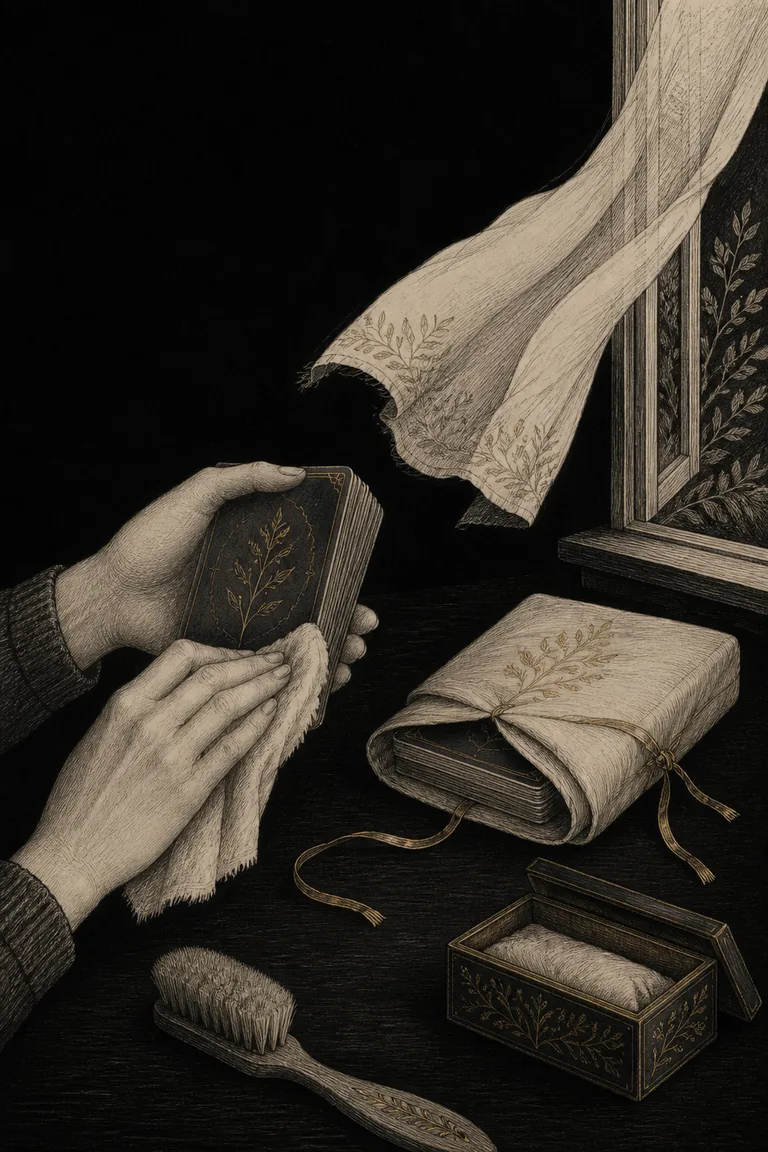
Store cards dry, flat, and away from direct heat or sunlight. Wipe the table rather than applying cleaners to the cards, and follow the publisher's care guidance for unusual finishes. Sleeves can protect a heavily used deck but make it thicker. Retire a deck from unbiased draws when several cards are identifiable from the back, pieces are missing, or the coating no longer allows safe mixing. It can still serve for study, journaling, or display.