Tarot Journal
Knight of Swords Tarot Meaning: Conviction and Consequence
The Knight of Swords brings speed, conviction, and direct speech into motion. The card asks whether a forceful conclusion has enough evidence, listening, and responsibility behind it.
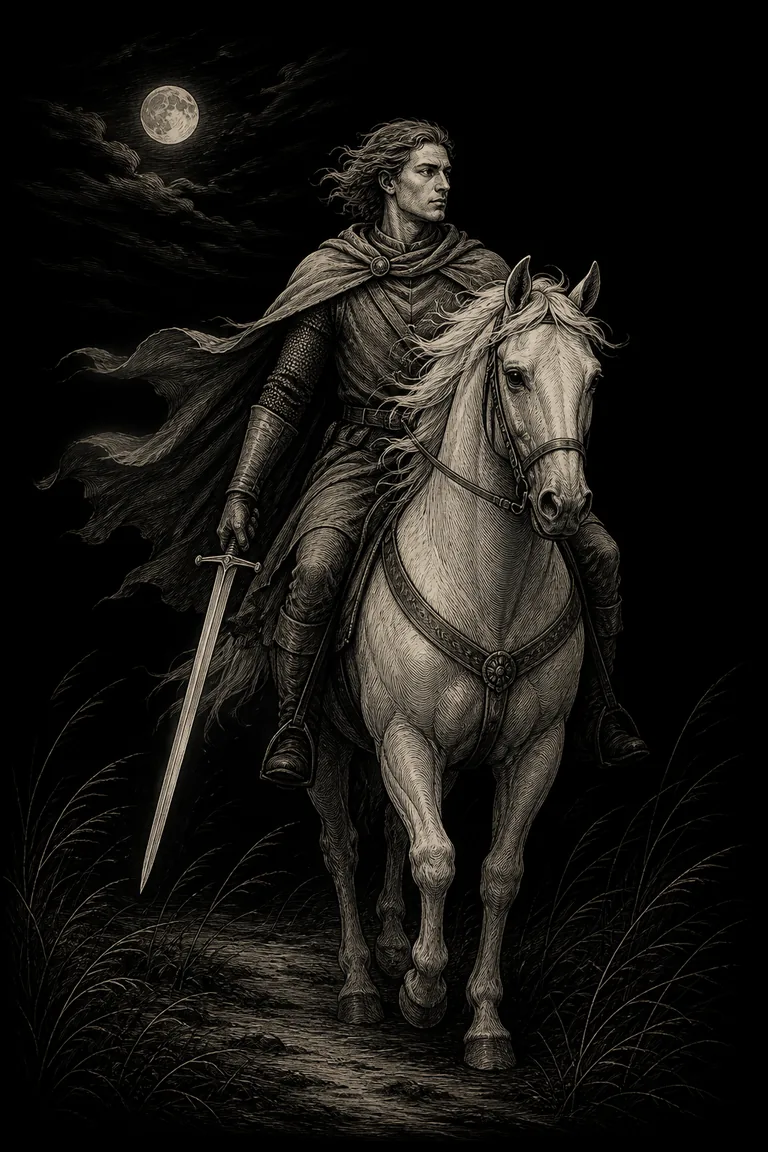
The Knight of Swords Tarot meaning centers on decisive action, intellectual confidence, urgency, argument, and the drive to pursue a conclusion. Upright, the card can show focused momentum, candid communication, rapid problem-solving, or courage in a difficult conversation. Reversed, it can point to haste, tunnel vision, reckless speech, scattered effort, or certainty that has outrun the facts.
A Knight may represent a person, role, message, or way of participating. It cannot reliably identify age, gender, zodiac sign, an enemy, or another person's hidden plan. Swords concern thought, language, conflict, truth, and decisions. Read this Knight through the question, spread position, surrounding cards, and the evidence that would support or revise the current conclusion.
Take the next insight with you
Explore personalized Tarot guidance in Veritas, available for iOS and Android.
 Scan with your phone
Knight of Swords meaning at a glance
This Knight moves quickly because an idea feels urgent and actionable. Its constructive expression is alert, brave, articulate, and willing to confront what others avoid. Its shadow confuses speed with accuracy or force with proof. The useful question is not simply whether to charge ahead, but which fact, listener, boundary, or contingency must travel with the decision.
Test the conclusion before the charge
Use Veritas to compare the Knight with the spread position, nearby cards, known facts, and the response your decision may require.
Upright Knight of Swords Tarot meaning
Upright, the Knight supports prompt action when the problem is clear and delay carries a real cost. It can describe defending an idea, delivering difficult news, asking a direct question, meeting a deadline, or cutting through confusion. Precision improves the card: state the claim, cite what supports it, define the next action, and identify what would make you change course.
Reversed Knight of Swords Tarot meaning
Reversed, the Knight can show impulsive speech, hostile debate, incomplete research, competing priorities, or action taken mainly to escape uncertainty. It can also indicate a necessary message being delayed because conflict feels intimidating. Reversal is not proof of aggression or deceit. Slow the sequence enough to separate observation, assumption, emotion, and decision.
Knight of Swords in love and relationships
In love, this Knight can bring a candid conversation, fast-moving connection, firm boundary, or effort to resolve a disagreement. Directness helps when it makes needs understandable and leaves room for an answer. It harms when one person treats debate as conquest. The card does not guarantee pursuit, commitment, separation, or reconciliation. Ask what must be discussed and what pace both people can freely support.
Knight of Swords as feelings
As feelings, the Knight may suggest mental preoccupation, urgency, frustration, admiration for someone's mind, or a strong wish to speak. A person can feel compelled to act while remaining uncertain about relationship capacity. Reversed may reflect agitation, defensiveness, conflicting thoughts, or fear of saying the wrong thing. Tarot cannot reveal a private mind, so use the card to prepare an honest question.
Knight of Swords in career and study
At work or in study, the Knight favors research under a deadline, debate, advocacy, troubleshooting, decisive editing, and projects that need intellectual stamina. Its risk is solving the wrong problem very efficiently. Confirm the brief, decision owner, sources, deadline, and definition of done. Reversed, too many urgent tasks may fragment attention, or criticism may arrive before the work has been understood.
Knight of Swords for money
Financially, this card can reflect a rapid purchase, negotiation, claim, contract decision, or attempt to correct a costly mistake. Urgency can be legitimate, but it can also be manufactured. Tarot is not financial or legal advice. Read the terms, verify fees and cancellation rights, compare alternatives, and consult a qualified professional when the consequence is material.
Knight of Swords as advice
As advice, be direct and prepared. Reduce the issue to one accurate sentence, gather the strongest relevant evidence, and decide what response you are actually requesting. Courage may mean speaking now, but it may also mean listening long enough to revise an attractive argument. If reversed, remove insults, exaggeration, and unnecessary urgency before sending the message.
Knight of Swords yes or no
For a low-stakes yes or no question, the upright Knight leans yes when the facts are sufficiently clear and prompt action serves the stated goal. It leans not yet when the decision rests on rumor, anger, or a false deadline. Reversed, pause to verify the premise. Health, legal, employment, and financial choices require evidence and appropriate professional guidance.
Knight of Swords timing
The Knight often suggests rapid movement after a decision, message, or challenge appears, but it does not provide a dependable date. Use observable markers instead: the research is complete, the meeting is scheduled, the question is answered, or the decision maker is available. Speed belongs to the process only when prerequisites are satisfied.
Knight of Swords symbols
In familiar imagery, a charging horse, raised sword, bent trees, and fast clouds create a sense of force meeting resistance. The sword makes thought and language visible as instruments with consequences. Decks vary, so begin with posture, direction, weather, the condition of the path, and whether the figure appears to observe the world being entered.
Knight of Swords card combinations
With the Ace of Swords, the Knight can act on a new conclusion. The Two of Swords asks what remains undecided, while the Eight of Wands increases speed and message traffic. Justice demands evidence and proportion; Temperance slows the method without abandoning the goal; and the Tower can show disruption that makes reckless action more costly. Beside the Knight of Cups, compare argument-led movement with feeling-led approach.
Page, Knight, Queen, and King of Swords
The Page investigates and asks. The Knight advances a conclusion into action. The Queen distinguishes what is relevant and communicates a boundary clearly. The King builds a durable framework for judgment, policy, and consequence. These ranks describe roles, not fixed ages, genders, intelligence scores, or levels of human worth.
Make directness accurate
Use Veritas to record the claim, strongest evidence, missing perspective, intended action, and one condition that would justify revising your course.
A practical Knight of Swords exercise
- State the claim
Write the conclusion in one sentence without insults, mind reading, or exaggeration.
- Sort the support
Separate verified facts from interpretations, predictions, and emotional reactions.
- Hear the response
Identify who is affected and what information or consent must be received before action.
- Set a revision point
Name the evidence or result that would make you slow down, stop, or choose another approach.
Common Knight of Swords mistakes
Do not reduce this Knight to an aggressive man, air sign, sudden arrival, argument, or guaranteed message. Do not treat reversed as proof of violence, lying, or a secret attack. Confidence is not evidence, and urgency is not consent. A responsible reading asks what is known, which consequence matters, and how decisive action can remain accurate and proportionate.