Tarot Journal
Nine of Wands Tarot Meaning: Resilience and Boundaries
The Nine of Wands brings endurance and vigilance into view, then asks whether the boundary still protects a real priority or only an old fear.

The Nine of Wands is a Tarot card of persistence, guardedness, and strength that has already been tested. In the Rider-Waite-Smith image, a bandaged figure holds one staff while eight others stand behind him like a fence. He has survived earlier difficulty, but his posture shows that experience can create both useful readiness and exhausting suspicion.
In a reading, the card may describe a final demanding stage, a boundary earned through experience, or the fatigue of expecting another problem. It does not promise victory simply because you keep going. Read the present evidence, the cost of continued defense, the help available, and the spread position before deciding whether to hold, recover, revise, or leave.
Take the next insight with you
Explore personalized Tarot guidance in Veritas, available for iOS and Android.
 Scan with your phone
Nine of Wands meaning at a glance
Upright, the Nine of Wands can show resilience, preparedness, cautious persistence, and a boundary maintained near the end of a difficult process. Reversed, it may describe depletion, rigid defensiveness, repeated setbacks, poor recovery, or a guard lowered without a safer plan. Both positions ask the same practical question: what deserves protection now, and what evidence supports the effort?
Read the boundary in context
Open a Tarot reading in Veritas and compare the Nine of Wands with its spread position and neighboring cards before deciding whether to persist or recover.
Symbols in the Nine of Wands
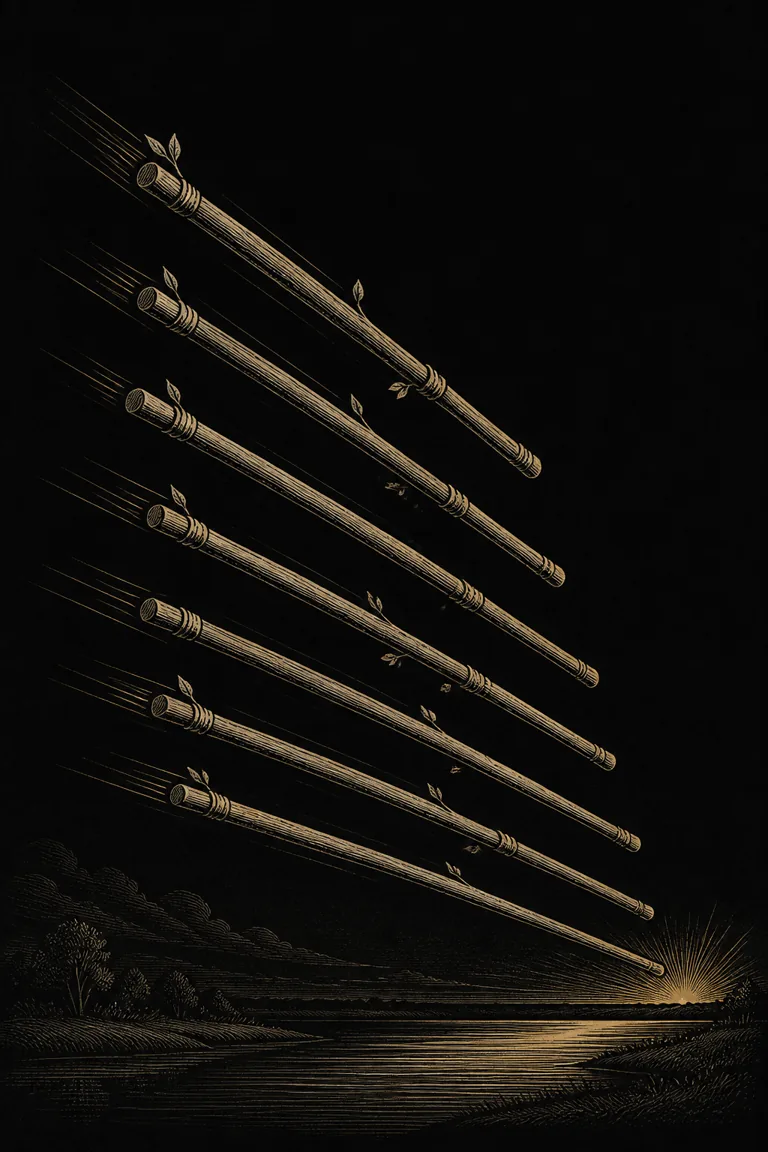
The familiar image shows a wounded but standing figure, one wand in hand and eight behind him. The bandage records a real past cost. The upright staffs can be read as a defended position, accumulated experience, or work already completed. His sideways glance matters: vigilance may be informed, but it can also keep attention fixed on an attack that has not happened. In another deck, notice whether the boundary looks protective, isolating, temporary, or ready to become a gate.
Upright Nine of Wands
Upright, the card often appears when progress is real but stamina is limited. You may need to document an agreement, protect uninterrupted time, repeat a tested procedure, or complete one defined stage before resting. Persistence is most useful when the finish condition is visible. If the task has no owner, limit, or measurable end, endurance can quietly become exposure to the same preventable harm.
Reversed Nine of Wands
Reversed, the Nine of Wands can show that constant alertness has reduced judgment, recovery, or trust. It may also expose a brittle stance that rejects every adjustment as surrender. Sometimes the wiser move is reinforcement; sometimes it is rest, delegation, a redesigned boundary, or withdrawal from a condition that keeps causing damage. Reversal is not a diagnosis of illness or proof that failure is inevitable.
Nine of Wands in love and relationships
In relationships, the card may describe cautious trust after disappointment, a couple protecting time for repair, or a person who needs slower evidence before opening further. A boundary should name behavior and consequence, not demand access to another person's thoughts. Reversed, old injuries may be applied to a new partner, or conflict may continue because neither person can safely soften. Tarot cannot replace consent, direct conversation, or support for abuse and coercion.
Nine of Wands as feelings
As feelings, the Nine of Wands can suggest caution, weariness, determination, or interest held behind a protective limit. It does not confirm that someone is secretly committed or planning to return. Observe behavior: do they communicate a need, keep a promise, respect a no, and participate in repair? The card can help you frame a question, but another person must disclose their own feelings.
Nine of Wands for career and money
At work, this card can mark a final review, an overloaded team, a hard-won control, or the need to protect scope before launch. Preserve the lesson in a checklist or handover instead of relying on permanent vigilance. For money, it can encourage a reserve, fraud protection, or careful terms, but fear should not replace verified information. Check obligations, fees, insurance, access, and downside before committing or refusing funds.
Nine of Wands as advice
Hold the line only after naming what the line protects. Reduce the boundary to one observable rule, secure the support needed to enforce it, and schedule recovery. If the same problem keeps returning, change the system rather than asking willpower to absorb it again. The card supports informed resilience, not proving strength through endless exposure.
Turn vigilance into a workable plan
Use Veritas to identify the present risk, one proportionate boundary, the evidence that will change your decision, and the recovery required afterward.
Nine of Wands timing
The Nine of Wands often describes a late stage, one more review, or a delay caused by caution, but it cannot give a reliable date by itself. Define the event and look at the real schedule. With the Eight of Wands, rapid movement may need a final safeguard. With the Four of Swords, recovery may be the condition for useful completion rather than an interruption of it.
Nine of Wands in a yes or no reading
The card gives a conditional yes when the goal remains worthwhile, the boundary is specific, and the remaining effort has a clear end. It leans no or not yet when the plan depends on ignoring repeated harm, depleted capacity, or missing support. Ask: what would make one more attempt safer, measurable, and different from the previous attempts?
Useful card combinations
With the Seven of Wands, defend a position without treating every disagreement as attack. With the Eight of Wands, confirm the safeguard before events accelerate. With Strength, calm regulation matters more than force. With the Four of Swords, recovery becomes part of the strategy. With the Tower, a guarded structure may no longer be safe enough to preserve, so practical protection takes priority over symbolic perseverance.
A practical boundary audit
- Name the priority
State the person, resource, value, deadline, or condition the boundary is meant to protect.
- Check the present evidence
Separate a current risk from a memory, forecast, or generalized expectation of harm.
- Choose the smallest effective boundary
Define one rule, owner, consequence, or access limit that can actually be maintained.
- Plan recovery and review
Set a pause, handover, support point, or date for deciding whether the boundary still fits.
Common Nine of Wands mistakes
Do not call every guarded person paranoid, treat exhaustion as noble, or promise success because a goal seems close. A past injury can justify caution without controlling every future decision. Reversed does not mean weakness, and upright does not require staying in an unsafe situation. The clearest reading distinguishes protection from isolation, persistence from repetition, and courage from unmeasured cost.