Tarot Journal
Seven of Wands Tarot Meaning: Boundaries Under Pressure
The Seven of Wands asks what deserves protection, what evidence supports your position, and when defense has become more costly than the value it preserves.
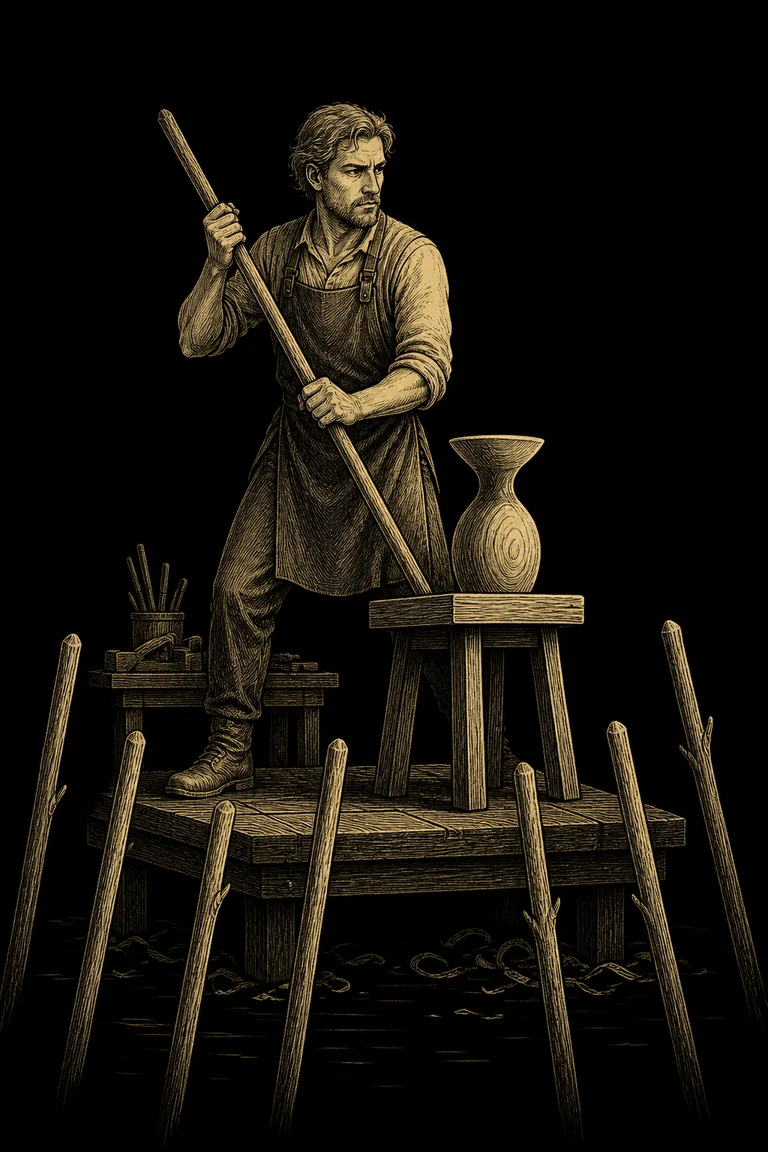
The Seven of Wands is a Tarot card of holding a position under pressure. In the Rider-Waite-Smith image, one person stands above six raised staffs and responds with a seventh. The higher ground can suggest an advantage, a standard already earned, or the visibility that follows success. It can also make every challenge feel urgent when some are only questions, feedback, or noise.
In a reading, the card often points to boundaries, competition, scrutiny, or the effort required to protect a priority. It does not automatically mean enemies are attacking or that persistence is always wise. Read the card with the question, spread position, neighboring cards, and real evidence about what is at stake.
Take the next insight with you
Explore personalized Tarot guidance in Veritas, available for iOS and Android.
 Scan with your phone
Seven of Wands meaning at a glance
Upright, the Seven of Wands can show justified resistance, visible standards, healthy boundaries, or the need to defend focused work from competing demands. Reversed, it may describe fatigue, weak preparation, avoidance, overreaction, or the relief of leaving a position that no longer deserves the cost. Both positions ask whether the response is proportionate.
Read the pressure in context
Open a Tarot reading in Veritas and compare the Seven of Wands with its spread position and neighboring cards before deciding what must be defended.
Symbols in the Seven of Wands
The familiar image places one figure on uneven high ground with six staffs rising from below. Height can mean leverage, exposure, or responsibility. The unmatched shoes sometimes suggest a rushed response or an improvised stance. Count all seven wands, then notice whether your deck emphasizes courage, isolation, advantage, disorder, or a boundary between the figure and the group.
Upright Seven of Wands
Upright, this card supports a clear defense of work, values, time, safety, or scope when the reason can be named. It may appear after recognition, when visibility attracts requests and evaluation. The useful response is not constant combat. It is a stable criterion: what you will protect, what you can negotiate, and which challenge deserves no further attention.
Reversed Seven of Wands
Reversed, the card can show depletion, poor positioning, fear of disagreement, or defending too many fronts at once. It may also mark the decision to stop proving yourself in a contest that has no meaningful prize. Check whether support, preparation, rest, or a narrower boundary would help. Withdrawal can be strategic, but avoidance should not be renamed wisdom without examining the consequences.
Seven of Wands in love and relationships
In relationships, the Seven of Wands may point to protecting privacy, maintaining an individual need, or resisting outside pressure on a shared agreement. It can also reveal a habit of treating a partner's question as opposition. A healthy boundary states the need and allows the other person to respond. It does not punish, control, test loyalty, or replace a conversation about compatibility.
Seven of Wands as feelings
As feelings, this card may suggest guarded interest, determination, defensiveness, or the sense that connection requires effort. Tarot cannot confirm another person's private state. Distinguish someone protecting a reasonable limit from someone who is unavailable or unwilling. Direct questions and consistent behavior provide more useful evidence than a story about hidden resistance.
Seven of Wands for career and money
At work, the card may appear during review, negotiation, scope pressure, competition, or the defense of a professional standard. Bring documentation, define ownership, and choose the point you can explain calmly. For money, protect essential resources and verify terms, but avoid turning caution into permanent scarcity thinking. A costly dispute needs a realistic estimate of time, risk, and recoverable value.
Seven of Wands as advice
Choose the hill before you defend it. State one boundary in observable language, explain the reason briefly, and avoid arguing with every reaction. Prepare evidence and support. If new facts show that the position is harmful or obsolete, changing it is not defeat. The card favors principled stamina, not identity built around opposition.
Define one proportionate boundary
Use Veritas to name what you are protecting, the evidence behind it, the response you will make, and the point when you will review the decision.
Seven of Wands in a yes or no reading
The Seven of Wands leans yes when the question is whether to maintain a well-supported standard or protect necessary capacity. It becomes conditional when success requires endless conflict, isolation, or a claim you cannot substantiate. Ask a better follow-up: What is the smallest boundary that protects the real priority without creating a larger fight?
Useful card combinations
With the Five of Wands, disagreement may be competitive but still productive. With the Six of Wands, recognition creates new scrutiny or responsibility. With the Two of Wands, strategy should precede defense. With Strength, calm regulation matters more than force. With the Ten of Wands, the position may be carrying too many obligations to remain sustainable.
A practical position audit
- Name the stake
Describe the value, resource, agreement, or standard that would be affected.
- Check the challenge
Separate a real threat from feedback, uncertainty, inconvenience, or ordinary disagreement.
- Set the response
Choose the smallest clear action that protects the stake without escalating by default.
- Create a review point
Decide what new evidence, cost, or change would make you adjust the position.
Common Seven of Wands mistakes
Do not use the card to label critics as enemies, excuse aggression, or insist that suffering proves a cause is correct. Reversal does not always mean surrender, and upright does not demand isolation. The Seven of Wands is most useful when it turns diffuse pressure into a specific decision about value, evidence, boundaries, and sustainable effort.