
Tarot Journal
Six of Swords Tarot Meaning: Transition and Distance
The Six of Swords describes a managed passage from strain toward greater stability. Progress is real, but the card asks what must travel with you and what kind of support makes the crossing sustainable.
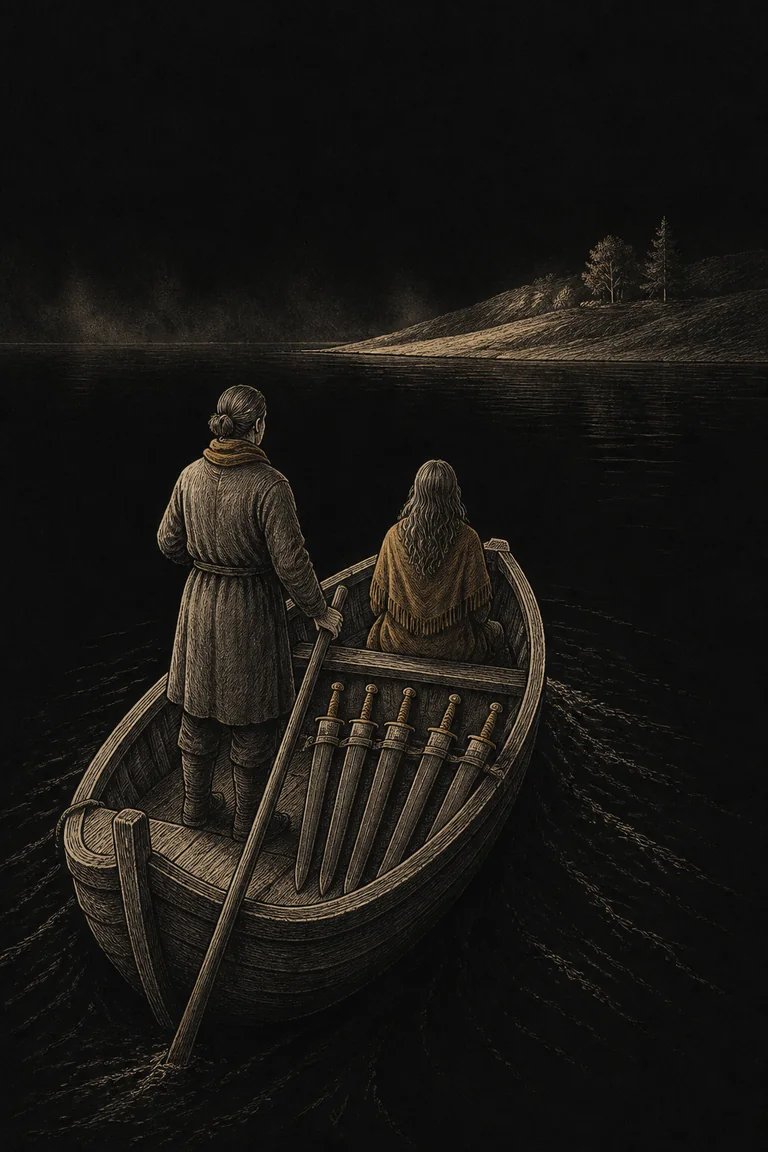
The Six of Swords Tarot meaning centers on transition, necessary distance, and practical support. In many Rider-Waite-Smith decks, a boat carries two passengers while another person steers across water. Six swords stand in the vessel. The scene does not promise that every problem is over. It shows movement under imperfect conditions, with attention to weight, direction, and safe passage.
Upright, the card often favors a considered move away from conflict, overload, or an environment that no longer supports clear thought. Reversed, it can show a delayed departure, unfinished logistics, repeated return, or an attempt to relocate without addressing what is being carried. Neither orientation proves travel, separation, or reconciliation. The question and spread position decide the scale.
Take the next insight with you
Explore personalized Tarot guidance in Veritas, available for iOS and Android.
 Scan with your phone
Six of Swords meaning at a glance
Symbols in the Six of Swords
The boat creates a temporary container between shores. It is neither the old place nor the destination, so the card often describes an in-between stage. The ferryman or guide suggests skill, help, or a method that keeps movement possible. The passengers may imply vulnerability, responsibility, or protected recovery. Swords belong to thought, language, conflict, and judgment. Carried upright in the boat, they can represent knowledge and history that remain present even while circumstances change. Water conditions, posture, weather, and direction vary by deck, so begin with what the image actually shows.
Upright Six of Swords
Upright, the Six of Swords can mark a move from acute difficulty into a more workable phase. The movement may be physical, such as relocation or travel, but it can also be procedural: changing teams, ending an argument, reducing contact, entering treatment, transferring a responsibility, or adopting a calmer way to frame a problem. Relief may be gradual rather than dramatic. The card values a route that reduces harm and restores the ability to reason.
Reversed Six of Swords
Reversed, the crossing may be blocked, premature, or repeatedly undone. A visa, budget, agreement, deadline, care plan, or conversation may be incomplete. Sometimes the person has changed location but preserved the same conflict pattern. In other readings, returning is appropriate because new evidence changes the route. Reversal is not a command to stay or leave. Identify the exact friction, then decide whether to repair the vessel, choose another destination, seek qualified help, or stop a passage that is unsafe.
Six of Swords in love and relationships
In relationships, the card can describe cooling conflict, taking space, moving together, recovering after a hard period, or leaving a dynamic that cannot become safe. It does not decide whether a couple separates or reconciles. Look for visible participation: Are both people willing to change conditions, or is one person carrying the entire passage? Reversed, the same issue may follow every attempted reset. Consent, direct communication, safety planning, and actual behavior matter more than a symbolic promise.
Six of Swords as feelings
As feelings, the Six of Swords may reflect emotional fatigue, caution, relief, guarded hope, or a wish for less turbulence. A person may care while still needing distance. The card cannot reveal private thoughts or guarantee contact. If the position describes your own feelings, ask whether you want a thoughtful transition or simply want discomfort to stop immediately. If it describes another person, use their stated boundaries and observable choices as evidence.
Career and money
At work, the card can point to a transfer, handoff, exit plan, new method, calmer team, or period of recovery after sustained pressure. Document responsibilities and define what success looks like after the move. With money, it may support simplification, debt planning, moving costs, or leaving an unstable arrangement, but it does not promise that a new job or investment will solve the problem. Calculate fees, notice periods, emergency reserves, and obligations before committing.
Advice, yes or no, and timing
As advice, create useful distance without abandoning necessary responsibility. For a bounded yes-or-no question, the card can lean yes when the proposal is a planned transition with adequate support, and not yet when essential logistics are missing. Timing is usually process-based rather than a guaranteed date: departure, crossing, and arrival each have conditions. Use real schedules, contracts, transport, and professional guidance instead of assigning six days or weeks automatically.
Six of Swords combinations
With the Five of Swords, the passage may follow conflict and require a clear rule against reopening the same fight. The Seven of Swords asks whether the plan is discreet or evasive. The Eight of Cups emphasizes an emotional decision to leave what no longer nourishes, while the Chariot adds direction and active control. A supportive Pentacles card can identify the budget, housing, routine, or practical help that makes movement durable. Read the pair through the spread positions rather than adding fixed keywords.
How it differs from nearby Swords cards
The Five of Swords examines conflict, cost, and the conditions of disengagement. The Six organizes passage after or around strain. The Seven focuses on strategy, selective disclosure, and accountability. The Eight examines restriction and the beliefs or structures that maintain it. The Six is therefore not generic escape. Its distinctive work is transporting people, knowledge, and responsibility toward conditions where better choices become possible.
Plan the crossing, not only the exit
Use Veritas to record the shore you are leaving, the destination, what travels with you, who provides support, the limits you will respect, and what evidence will show that conditions improved.
A practical Six of Swords passage plan
- Name the strain
Describe the condition you need to change without turning it into a total judgment of yourself or another person.
- Choose the destination
Define the more workable condition in observable terms rather than saying only that you want peace.
- List what travels
Record obligations, skills, grief, documents, costs, and relationships that remain relevant after the move.
- Secure support
Identify the person, professional, process, transport, or routine that helps the crossing stay safe.
- Review after arrival
Set a date to evaluate whether the new conditions reduced harm and improved clarity.
Common mistakes
Do not treat the Six of Swords as guaranteed travel, permanent breakup, reconciliation, or proof that someone is secretly moving on. Do not romanticize leaving when dependents, safety, housing, money, medical care, or legal obligations require a plan. Reversed does not mean you are trapped forever. The card is most useful when it turns vague escape into a supported transition whose costs and outcomes can be reviewed.