Tarot Journal
Six of Wands Tarot Meaning: Recognition and Responsibility
The Six of Wands brings recognition into view and asks how visible success can become responsible momentum rather than a fragile verdict.
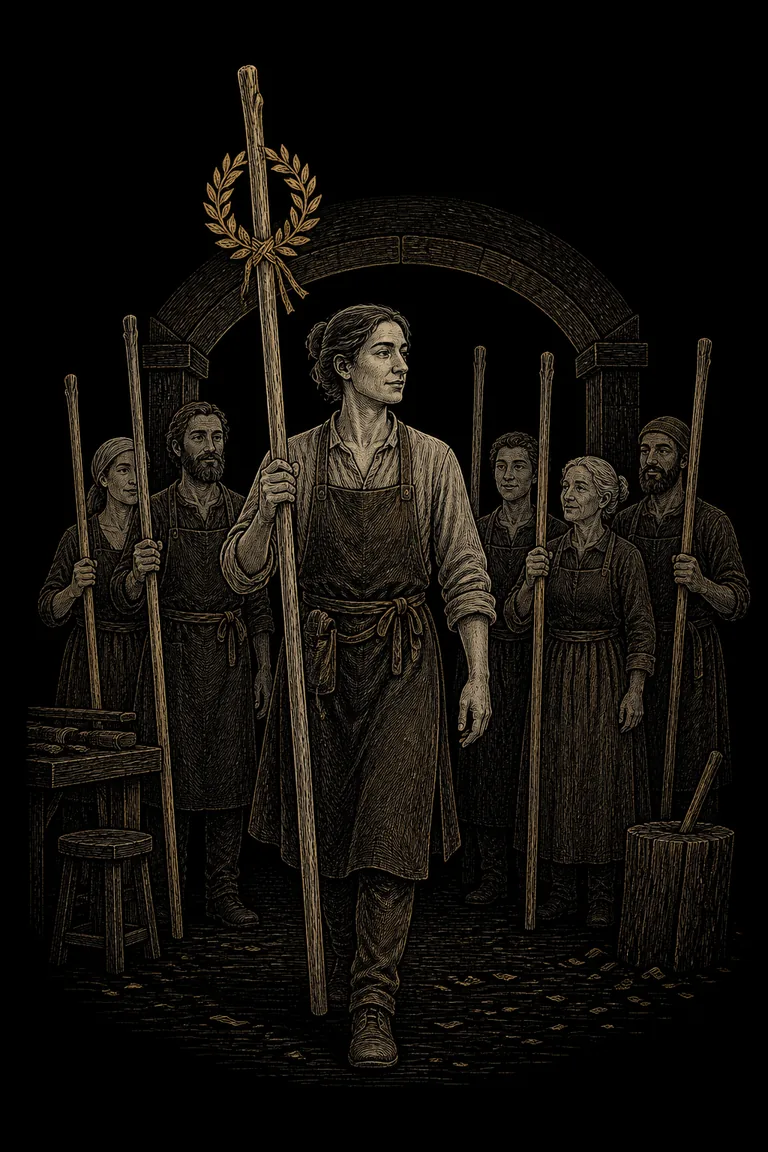
The Six of Wands is a Tarot card of recognition, visible progress, confidence, and support from a group. In the Rider-Waite-Smith image, a rider carries a wand crowned with laurel while other people raise five more wands nearby. The scene suggests acknowledgment after effort, but it does not guarantee permanent victory, popularity, or status.
In a reading, the card can show a result being noticed, a milestone worth naming, or the courage to let completed work be seen. It can also ask who contributed, what the recognition is actually based on, and what responsibility follows. Read it with the question, spread position, neighboring cards, and evidence outside the cards.
Take the next insight with you
Explore personalized Tarot guidance in Veritas, available for iOS and Android.
 Scan with your phone
Six of Wands meaning at a glance
Upright, the Six of Wands often points to earned recognition, a public milestone, restored confidence, or a group responding positively to visible effort. Reversed, it may describe delayed credit, dependence on approval, private progress, inflated claims, or a result that needs stronger evidence. Both positions ask whether success is real, shared fairly, and sturdy enough to guide the next decision.
Read recognition in context
Open a Tarot reading in Veritas and compare the Six of Wands with its spread position and neighboring cards before treating attention as a final verdict.
Symbols in the Six of Wands
The familiar image includes six staffs, a laurel wreath, a mounted figure, and a crowd. Laurel traditionally signals achievement, while the raised position makes the result visible. The group can represent support, witnesses, colleagues, or an audience, but it may also raise questions about hierarchy and attribution. Notice whether your deck emphasizes celebration, leadership, performance, community, or the distance between the recognized person and everyone who helped.
Upright Six of Wands
Upright, this card can mark a concrete success: a project accepted, a skill demonstrated, a difficult stage completed, or trust regained through action. Confidence is useful here because it allows a person to receive accurate praise without shrinking or pretending the result happened alone. The card becomes more reliable when the achievement can be named specifically and its effects can be checked.
Reversed Six of Wands
Reversed, the Six of Wands may show good work that remains unseen, praise that feels hollow, fear of public evaluation, or a claim that has moved ahead of the evidence. It can also describe a private win that does not need an audience. Ask whether the problem is visibility, quality, attribution, timing, or an unrealistic expectation that one success should settle every doubt.
Six of Wands in love and relationships
In love, the card may reflect mutual pride, a relationship milestone, public acknowledgment, or confidence restored after consistent effort. It does not prove commitment or make a public gesture more important than private behavior. Reversed, it can point to comparison, image management, unequal credit, or needing outside approval. Look for reciprocal care, honest agreements, and behavior that continues when nobody is watching.
Six of Wands as feelings
As feelings, the Six of Wands may suggest admiration, pride, encouragement, or a wish to be recognized by the other person. Tarot cannot reveal another person's private mind as fact. A useful interpretation separates affection from the desire to win attention. If clarity matters, ask directly what the person appreciates, wants to build, and is prepared to do.
Six of Wands for career and money
At work, this card can show a successful presentation, promotion conversation, positive review, launch, award, or growing authority. Document the result and the contributions that produced it. For money, recognition may improve opportunity, but attention is not income until terms are agreed and payment arrives. Verify compensation, ownership, workload, and future expectations before treating praise as security.
Six of Wands as advice
Allow good work to be visible. State what was achieved in concrete language, acknowledge the people and conditions that helped, and accept proportionate credit. Then ask what the result now makes possible. The advice is not to perform confidence at all costs. It is to use credible recognition as information while keeping standards, consent, and capacity intact.
Turn applause into a next step
Use Veritas to name the evidence behind one success, the people who share the credit, and the responsibility you want to accept next.
Six of Wands in a yes or no reading
The Six of Wands generally leans yes when the question concerns presenting completed work, accepting fair recognition, or moving forward with demonstrated support. It is conditional when the plan depends only on popularity, reputation, or an unverified promise. A better follow-up is: What evidence would show that this positive response can last beyond the first reaction?
Useful card combinations
With the Five of Wands, competition may have sharpened the work or left unresolved resentment. With the Three of Wands, recognition can open a wider field that still needs planning. With the Five of Pentacles, public praise may contrast with weak material support. With Justice, credit and consequences should be distributed fairly. With the Hermit, private standards may matter more than public approval.
A practical recognition audit
- Name the result
Describe what changed, finished, improved, or became visible without relying on general praise.
- Check the evidence
Identify the observation, feedback, metric, or completed commitment that supports the claim.
- Share the credit
Acknowledge collaborators, resources, timing, and prior work that made the result possible.
- Choose the responsibility
Decide which next action, boundary, or standard should follow from greater visibility.
Common Six of Wands mistakes
Do not turn the card into a guarantee of fame, victory, promotion, or romantic pursuit. Do not assume that criticism is jealousy or that applause proves every method was fair. Reversal does not automatically mean humiliation. The Six of Wands is strongest when it helps a reader receive real acknowledgment without confusing attention with worth, certainty, or permanent success.