Tarot Journal
Tarot Clarifier Cards: When and How to Draw One
A Tarot clarifier card answers one specific ambiguity in an existing spread. Used with a clear question and stopping rule, it can add precision without burying the original reading.
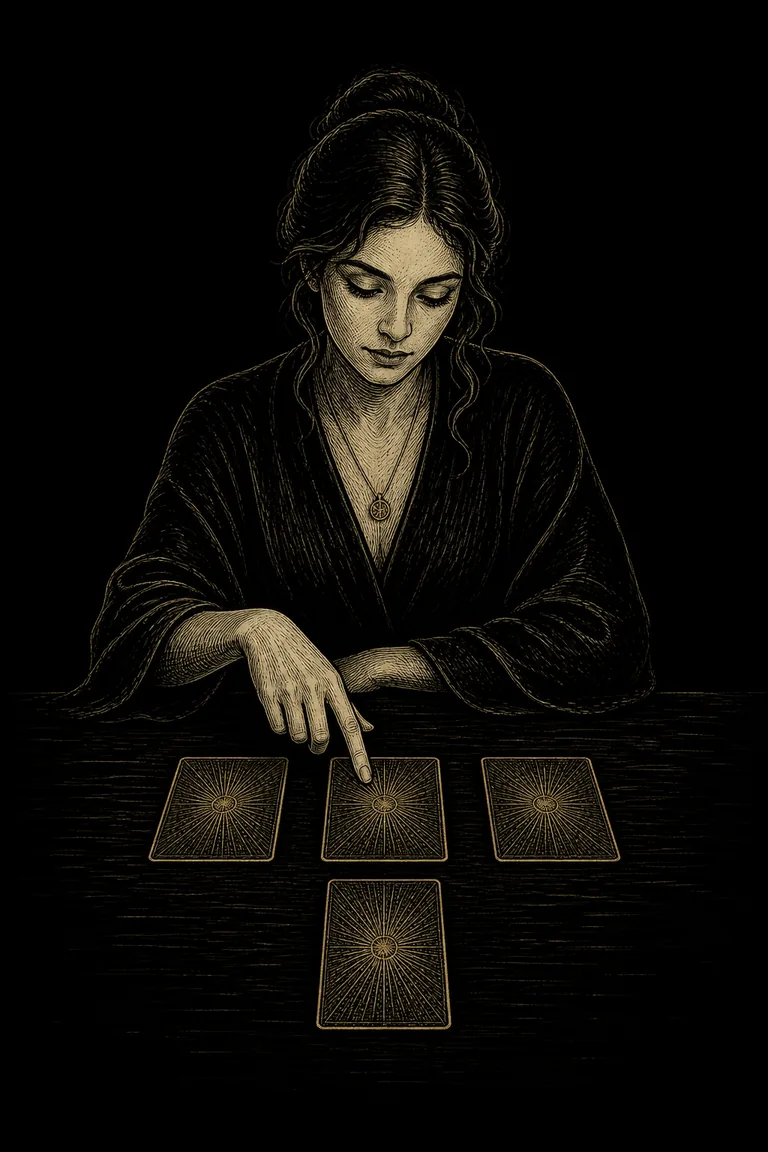
Tarot clarifier cards are extra cards drawn after a spread when one position, image, or relationship remains genuinely unclear. A clarifier should have a defined job, such as showing what makes an obstacle difficult, what action an advice card recommends, or which part of a broad theme deserves attention first. It belongs to the original position rather than starting a second reading.
The useful discipline is one ambiguity, one follow-up question, and usually one additional card. Drawing until a reassuring answer appears weakens the reading because every new image creates more possible stories. Read the original spread first, state what you understand, name the precise gap, then decide whether another card will produce information you can actually use.
Take the next insight with you
Explore personalized Tarot guidance in Veritas, available for iOS and Android.
 Scan with your phone
What is a clarifier card in Tarot?
A clarifier is a supporting card attached to one card or position already on the table. It can narrow a vague word, distinguish two plausible interpretations, or translate a theme into an action. It does not cancel the first card. If the original position is the obstacle and shows The Moon, a clarifier might identify whether the useful focus is incomplete information, anxiety, or unclear communication. Both cards still answer the obstacle position together.
Give every extra card one clear job
Open a Veritas reading, interpret the spread as a whole, then add a clarifier only after writing the exact ambiguity it needs to resolve.
When a clarifier card is useful
A clarifier helps when a position is broad, two cards seem to conflict, a court card could describe several roles, or an advice card names a quality without showing its practical expression. It can also help distinguish what is known from what needs observation. Before drawing, try the position, question, imagery, suit, number, and neighboring cards. Often the context already supplies the missing precision.
When not to draw a clarifier
Do not clarify merely because the answer is uncomfortable, ordinary, or different from what you hoped to see. Avoid extra cards when you have not attempted the original interpretation, when the question is actually too vague, or when anxiety is pushing you to repeat the same inquiry. For medical, legal, financial, safety, or another person's private intentions, more cards cannot replace evidence, consent, or qualified advice.
How to phrase a clarifying question
Name the card, position, and missing information. Useful prompts include: What part of this obstacle can I influence? What behavior would express this advice? What assumption makes these two cards appear contradictory? What should I observe before deciding? Avoid asking what does this mean, because that simply repeats the original task. Avoid yes-or-no wording unless the spread was deliberately designed for a bounded decision.
Where to place a Tarot clarifier
Place the clarifier beside or directly below the card it supports, leaving the original layout visible. This simple spatial rule preserves hierarchy: the spread position comes first, the original card answers it, and the clarifier modifies that answer. Do not mix extra cards into the main line as though they had independent positions. In a journal, draw a small connector or record the position name so the relationship remains clear later.
How to interpret the original card and clarifier
Read in sequence. First restate the position. Second summarize the original card in one sentence. Third give the clarifier its exact assigned job. Finally combine them with a linking phrase such as through, because, by avoiding, or by practicing. If the advice card is Strength and the clarifier is the Two of Pentacles, the combined message may be to practice steady self-command through realistic pacing and workload adjustment.
Clarifiers and reversed cards
A reversed original card does not automatically require clarification. Apply your normal reversal method first: blocked, internal, delayed, excessive, or redirected expression. If two of those lenses remain equally credible, ask what form the reversal takes here and draw once. A reversed clarifier still serves its assigned role. It does not mean the deck refuses to answer or that another card must repair it.
Worked example: clarifying an advice position
Imagine a three-card reading about a stalled project: current condition, obstacle, and next action. The next-action position shows the Hermit. You understand the need for independent review but cannot tell what to review. The question becomes: What deserves focused examination before I proceed? The Eight of Pentacles clarifies the Hermit through craft, process, and repeatable quality. The action is a quiet technical audit, not general withdrawal.
Worked example: cards that seem contradictory
Suppose a relationship spread shows the Four of Pentacles for what protects the bond and the Eight of Cups for what helps it grow. These are not necessarily opposites: one can preserve a boundary while the other leaves an exhausted pattern. If the distinction is still unclear, ask what must be protected while change occurs. A clarifier then answers that narrow bridge rather than choosing which original card is correct.
How many clarifier cards should you draw?
One is usually enough. If it creates a new question, pause and ask whether the uncertainty comes from the reading or from a real-world fact you need to learn. A second clarifier is reasonable only when it has a different, written job. Set the limit before drawing. If the spread remains incoherent after that limit, photograph or record it, step away, and return after gathering context rather than expanding the layout.
Clarifier cards when reading for yourself
Self-readings make answer shopping especially easy because preference and interpretation occur in the same mind. Write your first interpretation before touching the deck. State what evidence would support or challenge it, then phrase the clarifying question. If you notice urgency, repeated shuffling, or a wish to erase a difficult card, stop. A short break or a practical conversation may clarify more than another draw.
Ethical limits for clarifying another person
A clarifier cannot verify secret feelings, infidelity, pregnancy, diagnosis, guilt, or future behavior. Reframe private-state questions toward the querent's observations and choices: What behavior deserves attention? What boundary can I communicate? What information should I verify directly? The goal is greater agency and specificity, not greater confidence in an unsupported claim.
Turn one ambiguity into one usable next step
Use Veritas to record the original position, your first interpretation, one clarifying question, one supporting card, and the action you will review.
A four-step clarifier method
- Read before drawing
Summarize the position, original card, and surrounding spread in plain language.
- Name the gap
Write the one distinction or practical detail the spread does not yet answer.
- Assign one job
Phrase a narrow question and place one card beside the position it supports.
- Stop and test
Combine both cards, choose an observable action, and set a point to review what happened.
Common clarifier card mistakes
The most common mistakes are drawing before interpreting, asking the same question again, treating the extra card as stronger than the original, losing track of which position it supports, and continuing until the message feels pleasant. A clarifier is successful when it reduces ambiguity. If it only increases the number of possible stories, the better move is to stop, preserve the original spread, and seek real context.