Tarot Journal
Tarot Meditation: A Ten-Minute Card Practice
Tarot meditation is a short, structured way to study one card through observation, imagination, and written reflection without treating the image as a prediction or command.
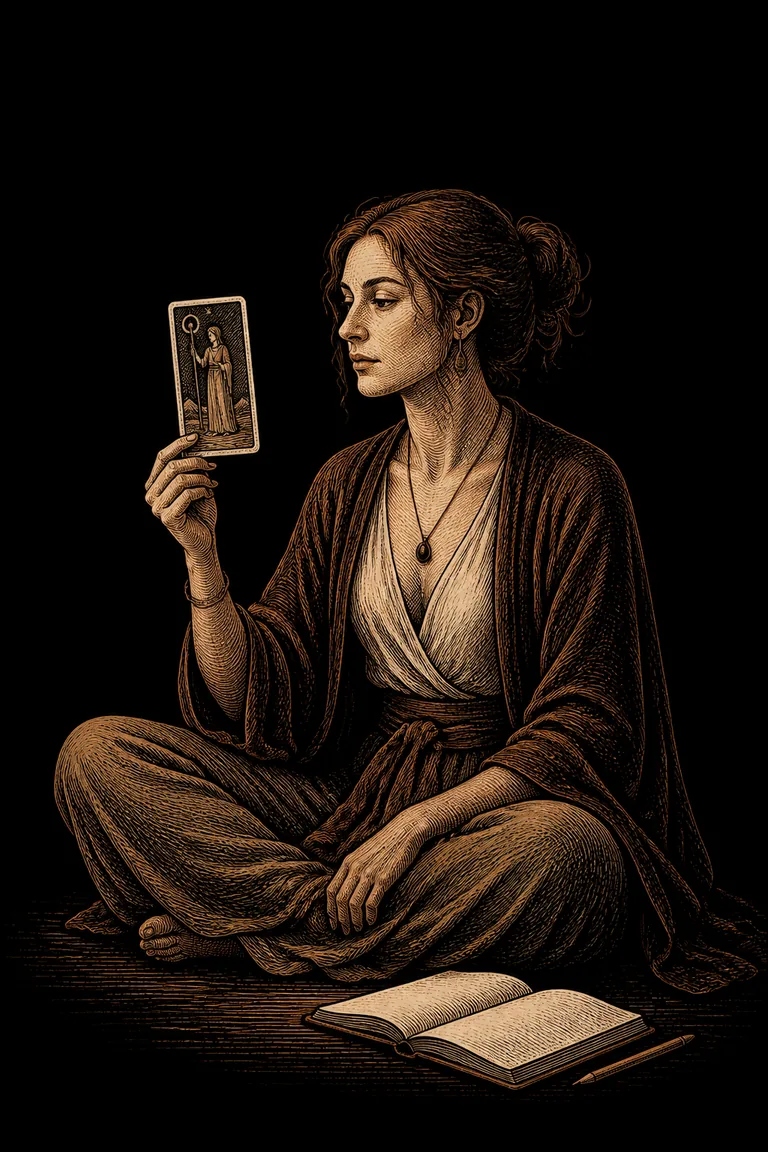
Tarot meditation slows a reading down. Instead of pulling several cards and searching for an answer, you stay with one image long enough to notice composition, posture, color, distance, tension, and your own first associations. The practice can strengthen visual literacy and reveal where a familiar keyword has replaced actual attention.
Use a fixed ten-minute method: look at the card with open eyes, close your eyes for a brief visualization, return to the physical card, then write what was visible and what you supplied. Keep the exercise low stakes. Stop if it becomes distressing, disorienting, or compulsive, and never use an imagined scene as evidence about another person or the future.
Take the next insight with you
Explore personalized Tarot guidance in Veritas, available for iOS and Android.
 Scan with your phone
Tarot meditation at a glance
A ten-minute Tarot meditation method
- Set the frame
Choose one low-stakes card, set a ten-minute timer, and write the date and deck.
- Look for three minutes
Describe visible facts such as posture, direction, foreground, background, color, and repeated shapes.
- Imagine for two minutes
Close your eyes and picture entering the scene while keeping the exercise optional and easy to leave.
- Return for three minutes
Open your eyes, compare the imagined scene with the actual card, and mark details you added or missed.
- Write for two minutes
Record one interpretation, one alternative, one question, and one ordinary action that does not depend on prediction.
How to choose a card
For study, choose deliberately from a card you want to understand. For reflective practice, shuffle and draw once, then keep the card even if it feels plain. Beginners may prefer a card with a clear scene rather than dense esoteric correspondences. A difficult card is not more profound than a gentle one, and repeatedly redrawing until the mood feels right defeats the attention exercise.
Begin with what is actually visible
Use concrete language before symbolic language. A figure looks left; two objects are separated by water; the horizon is high; one hand is open. These statements can be checked against the card. Only then add associations such as hesitation, distance, invitation, or control. This order helps distinguish observation from interpretation and makes it easier to notice when a guidebook keyword is doing all the work.
A brief visualization without forcing a message
If closing your eyes feels comfortable, imagine the card as a still room rather than a portal that must answer. Notice where you would stand, what seems near or far, and which direction you could leave. You may ask the pictured figure a neutral question such as what detail deserves another look. Any response is your own imaginative material. It is not a voice with independent authority and does not need to be obeyed.
Return to the card and verify
The return is the most important step. Compare your imagined version with the printed image. Perhaps you remembered a closed door that is actually open, made a neutral face angry, or added an object that is not present. Those differences are useful because they show how expectation shapes a reading. Do not erase them. Label them as additions and consider at least one alternative interpretation.
Journal the meditation clearly
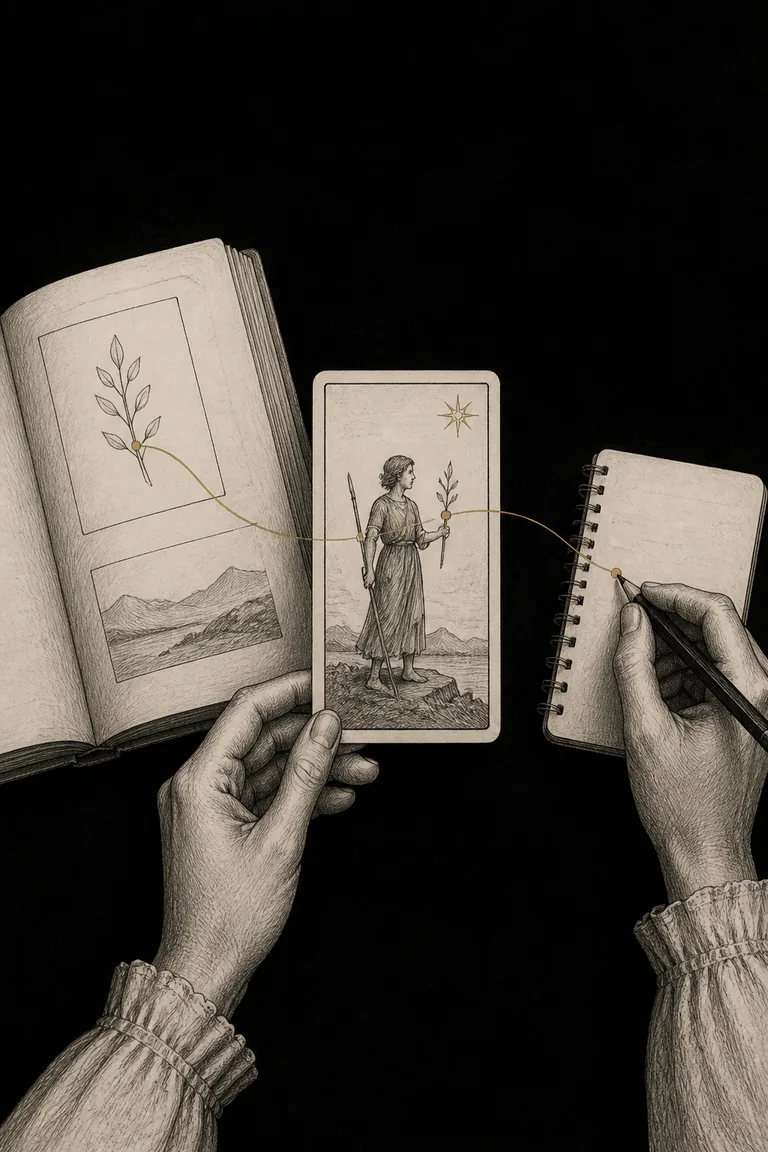
Use separate headings for visible detail, personal association, imagined addition, conventional meaning, and possible alternative. Finish with a modest question or action, such as checking an assumption in a conversation or giving a task an uninterrupted twenty minutes. Avoid writing that a card ordered a breakup, purchase, diagnosis, confession, or risky decision.
Keep observation separate from interpretation
Use Veritas to save the card, visible evidence, personal associations, imagined additions, body response, alternative reading, grounded action, and review date.
Meditating with reversed cards
If your practice includes reversals, keep the card physically reversed and observe the changed composition before choosing a meaning. A reversal may suggest blocked, excessive, internal, delayed, or reconsidered expression, but none is automatic. You can also rotate the card upright after the first observation and compare what changes. Record which orientation produced each association.
What to do with a difficult card
The Tower, Devil, Death, Three of Swords, and Ten of Swords can evoke strong reactions. You do not need to visualize entering a distressing scene. Keep your eyes open, shorten the timer, describe only formal details, choose another study card, or stop. If an image connects with trauma, panic, paranoia, or intrusive thoughts, use appropriate mental health support rather than escalating the exercise.
Tarot meditation versus a one-card reading
A one-card reading applies a card to a declared question or time window. Tarot meditation studies the image and the reader's response, whether or not there is a question. The practices can support each other, but keep their records distinct. An association produced during meditation should not quietly become a forecast for the day.
Tarot meditation versus pathworking
Pathworking often uses a longer guided journey through a card or symbolic landscape. The method here is shorter and deliberately returns to visible evidence. Readers who use ceremonial, Kabbalistic, or deck-specific correspondences should name that framework rather than presenting it as the only meaning. A deck creator's system may differ from Rider-Waite-Smith conventions.
How often to practice
One or two sessions a week gives enough space to revisit notes. More is not automatically better. If meditation becomes a requirement before ordinary decisions, produces repeated redraws, or keeps you awake searching for signs, pause the practice. Review after a month by comparing interpretations, alternatives, and details you consistently overlook.
Limits and responsible use
Tarot meditation cannot reveal hidden facts, diagnose physical or mental health, prove spiritual contact, recover reliable memories, read another person's mind, or guarantee an event. Imagination can feel vivid without being externally true. Use direct communication, verified information, medical and mental health care, legal advice, financial records, and safety planning for consequential choices. The practice is useful when it improves attention, language, and self-observation while leaving reality free to disagree.