Tarot Journal
The Chariot Tarot Meaning: Direction, Will, and Momentum
The Chariot represents directed momentum: the work of choosing a destination, coordinating competing drives, and keeping speed answerable to judgment.
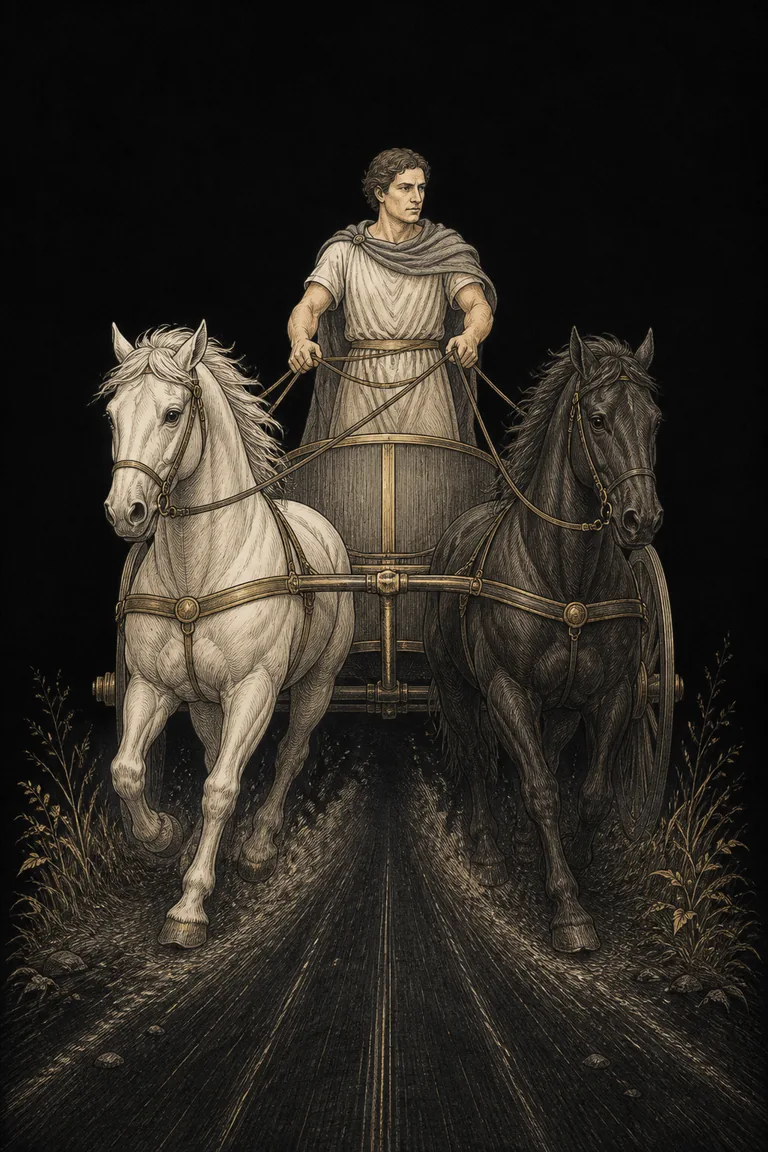
The Chariot is the seventh numbered card of the Major Arcana. A composed driver, a vehicle, protective structure, and paired creatures often suggest movement produced through coordination rather than force alone. The card can appear when ambition, discipline, travel, competition, or a demanding transition requires a clear line of effort.
A grounded reading does not treat willpower as limitless or speed as proof of success. The Chariot asks where you are going, which parts of you are pulling in different directions, what conditions affect the route, and how you will notice when control has become strain.
Take the next insight with you
Explore personalized Tarot guidance in Veritas, available for iOS and Android.
 Scan with your phone
The Chariot Tarot meaning at a glance
The Chariot commonly points to direction, determination, disciplined movement, travel, competition, self-command, and the ability to organize conflicting pressures around one decision. In a difficult expression, it can show haste, tunnel vision, domination, brittle control, or motion used to avoid uncertainty.
Find the direction inside your reading
Open a Tarot reading in Veritas and explore which goal, competing impulse, or practical condition needs clearer coordination now.
What the imagery suggests
The vehicle gives movement a container, while the driver provides attention and choice. Paired animals or guardians can represent impulses that are both necessary but not automatically aligned, such as caution and desire, duty and independence, or urgency and care. The image asks for skill at the reins, not the elimination of one side.
The Chariot upright
Upright, The Chariot can favor committing to a defined course, practicing a demanding skill, organizing resources, or moving through a transition with deliberate effort. Progress becomes more likely when the destination is specific enough to guide choices and flexible enough to respond to conditions. Resolve is useful here, but so are feedback, timing, and rest.
The Chariot reversed
Reversed, the card may describe scattered effort, competing priorities, stalled travel, poor pacing, or an attempt to control people and circumstances that are not yours to command. It can also show motion without orientation: many tasks completed, but no clear relationship between them and the goal. Pause long enough to identify the actual conflict before adding more force.
Love and relationships
In relationship readings, The Chariot can highlight a shared move, a fast-developing connection, independence within partnership, or the need to agree on direction. It does not prove that persistence can overcome another person's refusal. Consent, pace, and compatible goals matter more than winning. If two people want different futures, stronger pressure will not create genuine alignment.
Career, study, and competition
At work or in study, the card may support focused preparation, leadership under pressure, a demanding deadline, travel, or entry into a competitive field. Translate ambition into a route: define the outcome, the evidence of progress, the resources available, and the limits that protect quality. Competition can sharpen effort, but it should not erase ethics, cooperation, or recovery.
Money and practical decisions
For financial questions, The Chariot can reflect a purchase connected with transport, a concentrated savings goal, or the need to bring several obligations under one plan. It cannot guarantee profit or justify a rushed commitment. Compare total cost, downside, timing, and exit conditions before treating momentum as evidence.
Direction is different from control
Direction concerns your choices, priorities, effort, and response. Control tries to remove uncertainty by commanding outcomes, other people, or every variable. The Chariot is strongest when the driver accepts the road as real. Weather changes, bodies tire, new information arrives, and a responsible course may require slowing, rerouting, or stopping.
Choosing a sustainable pace
The right pace is not always the fastest one. A short sprint may fit an emergency or deadline, while a long project requires repeatable effort and recovery. Ask what pace preserves judgment, what warning signs indicate overload, and which checkpoint would justify changing the plan. Sustainable momentum makes correction possible.
The Chariot as advice or obstacle
As advice, choose one destination for the current phase and align your calendar, resources, and communication around it. As an obstacle, the card may reveal pride in self-sufficiency, impatience with feedback, or a need to appear decisive before the situation is understood. The question is not whether you can push harder, but whether your effort is still steering.
Useful card combinations
With The Lovers, direction follows an explicit value choice. With The Emperor, movement needs sound structure and accountable authority. With The Hermit, a period of focused withdrawal may refine the route. With The Tower, speed meets information that demands immediate reassessment. With Temperance, opposing forces become workable through measured adjustment rather than conquest.
A practical Chariot reflection
- Name the destination
Write one concrete outcome for the next stage, not a vague wish to move forward.
- Map the opposing pulls
Identify two needs, duties, fears, or desires that currently compete for the reins.
- Choose the pace
Set a speed that fits the distance, available resources, safety, and quality required.
- Install a checkpoint
Choose a date or observable signal when you will review the route and adjust it if needed.
A question The Chariot asks
Ask: “What would coordinated progress look like if I did not confuse urgency with direction?” Name the destination, the forces involved, the pace, and the next checkpoint.
Tarot is a symbolic reflective practice, not a scientifically validated forecasting method. The Chariot cannot guarantee victory, safe travel, employment, financial return, athletic performance, relationship consent, or recovery, and it cannot replace medical, legal, financial, mental health, transportation, workplace, or safety guidance.