Tarot Journal
Major Arcana Meanings: All 22 Tarot Cards Explained
The Major Arcana describes the large turning points of a Tarot reading. Learn the core action of every card, then connect it to the question, position, and cards around it.
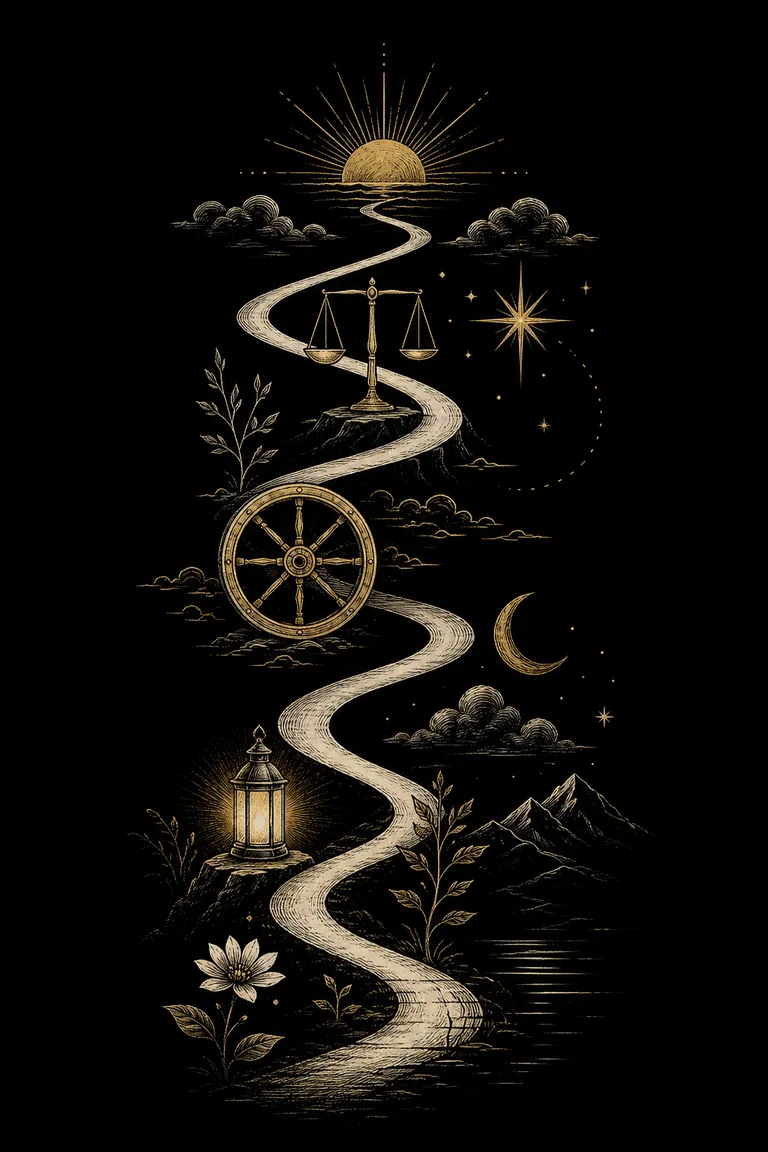
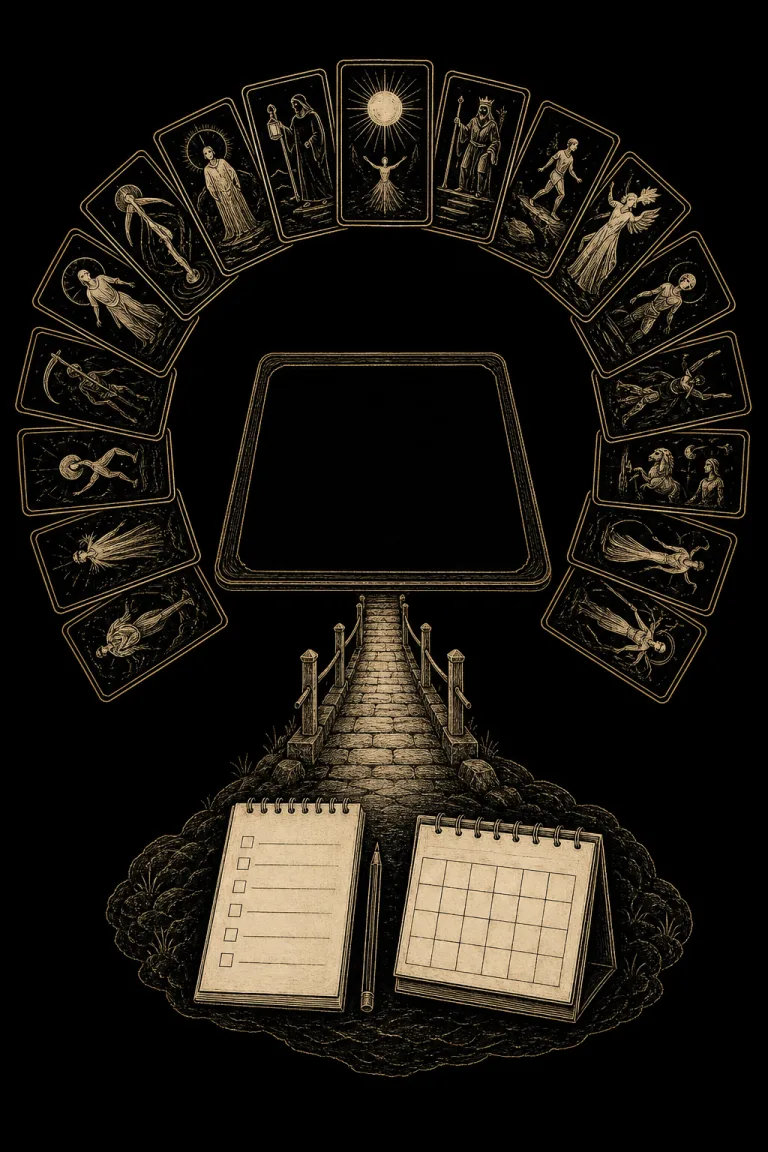
The 22 Major Arcana cards form the symbolic backbone of Tarot, beginning with The Fool and ending with The World. They speak to recognizable human experiences: choosing, building, waiting, losing certainty, changing direction, and integrating what has been learned.
A Major Arcana card does not automatically predict a dramatic event. It usually asks you to notice the deeper pattern beneath an everyday situation. This guide gives each card a practical center of gravity so you can interpret it without reducing the image to one memorized keyword.
Take the next insight with you
Explore personalized Tarot guidance in Veritas, available for iOS and Android.
 Scan with your phone
What are the Major Arcana?
A standard Tarot deck contains 78 cards: 22 Major Arcana and 56 Minor Arcana. The Minor Arcana tends to describe daily actions, emotions, conflicts, resources, and relationships. The Major Arcana points toward broader developmental themes and moments when a choice carries more psychological weight.
The cards are numbered from 0 to 21. Readers sometimes call the sequence the Fool’s Journey because The Fool moves through teachers, tests, reversals, and realizations before arriving at The World. You do not need to force every reading into that story, but the order helps show how one archetype develops into the next.
Major Arcana meanings from 0 to 21
The Fool: begin before certainty
Openness, movement, trust, and a step into unfamiliar ground. The Fool asks what becomes possible when curiosity is stronger than the need for guarantees. Its shadow is avoidable risk or refusing to learn from experience.
The Magician: use what is available
Skill, attention, communication, and directed will. The Magician turns potential into action by bringing tools together. Check whether ability is being used with integrity or whether confidence has become performance and manipulation.
The High Priestess: listen beneath the noise
Inner knowledge, privacy, patience, and information that has not fully surfaced. This card favors observation over immediate action. It can also warn against passivity, secrecy, or calling fear intuition.
The Empress: let life grow
Creation, embodiment, nurture, pleasure, and material abundance. The Empress asks what needs steady care to become fruitful. Her shadow appears when care becomes overprotection or comfort prevents necessary change.
The Emperor: create useful structure
Authority, boundaries, order, and responsibility. The Emperor builds a framework that can hold pressure. Read it alongside the question to distinguish trustworthy leadership from control that exists only to protect status.
The Hierophant: examine inherited wisdom
Teaching, tradition, belonging, and established systems of meaning. The card may support mentorship or a proven method. It may also ask whether a rule still serves its purpose or is being followed without thought.
The Lovers: choose in alignment
Relationship, attraction, values, and consequential choice. The Lovers is not limited to romance. It asks whether desire, action, and principle can meet honestly, especially when a decision reveals what matters most.
The Chariot: direct opposing forces
Momentum, discipline, ambition, and coordinated effort. Progress comes from holding competing impulses in one direction, not pretending they do not exist. Watch for speed that outruns judgment.
Strength: meet intensity without force
Courage, patience, self-command, and compassionate influence. Strength works with instinct instead of crushing it. The card often favors a calm response that can remain present with fear, anger, or desire.
The Hermit: seek an honest light
Solitude, discernment, study, and guidance earned through reflection. The Hermit steps away to see clearly, then carries useful insight back. Isolation becomes a problem when withdrawal replaces contact indefinitely.
Wheel of Fortune: recognize the turning point
Cycles, timing, change, and conditions beyond personal control. The Wheel asks what is shifting and how you can respond. Luck matters, but so does the way you meet a change you did not design.
Justice: face cause and consequence
Fairness, truth, accountability, and proportion. Justice asks for clear evidence and responsibility for choices. It may concern agreements or decisions, but it does not promise that every institution will behave fairly.
The Hanged Man: change the angle
Pause, surrender, suspension, and a perspective that appears only when effort stops. This is purposeful waiting, not helpless delay. Ask what must be released before the situation can be seen differently.
Death: let the ending be real
Closure, transition, shedding, and irreversible change. Death rarely means physical death in a reading. It names the point where an old form cannot continue and honest renewal requires space.
Temperance: combine without losing balance
Integration, moderation, adjustment, and patient healing. Temperance finds a workable proportion between extremes. Its lesson is active refinement, not bland compromise or avoiding a necessary decision.
The Devil: see what keeps the chain in place
Attachment, compulsion, shame, material desire, and power given away. The Devil makes a binding pattern visible. Recognition matters because some chains are maintained by habit, fear, or the belief that no choice exists.
The Tower: release a false structure
Disruption, exposure, shock, and truth that can no longer be contained. The Tower is difficult when stability depended on denial. It can also describe the relief of no longer maintaining what was unsound.
The Star: repair faith through honesty
Hope, openness, restoration, and a quieter relationship with the future. The Star follows upheaval and does not deny what happened. It restores direction through sincerity, patience, and small signs of life returning.
The Moon: move carefully through uncertainty
Dreams, instinct, projection, ambiguity, and incomplete information. The Moon asks you to respect what you feel without treating every fear as fact. Slow down until perception and evidence can be separated.
The Sun: let clarity become visible
Vitality, recognition, warmth, and uncomplicated truth. The Sun illuminates what can be shared freely. Its brightness does not erase difficulty, but it brings enough confidence and information to engage with life directly.
Judgement: answer the honest call
Review, awakening, reckoning, and a decision shaped by the whole story. Judgement asks what you know now that you can no longer ignore. It favors responsible renewal over endless self-punishment.
The World: complete and integrate
Fulfillment, belonging, mastery, and the closure of a meaningful cycle. The World recognizes completion without pretending growth is finished forever. A finished chapter becomes the ground for another beginning.
Read the Major Arcana inside a real spread
Open a Tarot reading in Veritas and explore how an archetype changes when it meets your question, its position, and the cards beside it.
How to interpret a Major Arcana card in context
Start with the question and the card’s position. The Emperor in an obstacle position may point to rigidity or an authority problem. In an advice position, the same card may recommend boundaries, planning, or taking responsibility. The image has a stable range of meaning, but the position decides which part of that range matters.
Next, name the card’s action in a plain sentence. Instead of writing “The Tower means disaster,” try “A structure built on an unstable assumption is being challenged.” This wording preserves the archetype while leaving room for the actual scale of the situation.
What multiple Major Arcana cards mean in one reading
Several Major Arcana cards can signal that the question touches a larger developmental pattern, but the number alone does not make the reading more fated. Look at the sequence. The Hermit followed by The Star may describe withdrawal that leads toward renewed trust. The Chariot followed by The Hanged Man may show momentum interrupted so a different perspective can emerge.
Notice whether the numbers rise, fall, or jump. A movement from an early card toward a later one can suggest development, while a return to an earlier number can show that a basic lesson needs attention. Treat this as a reading aid, not a rigid formula.
Major Arcana versus Minor Arcana
Major Arcana cards describe the deeper theme; Minor Arcana cards often show how that theme is lived. Justice beside the Two of Pentacles may connect accountability with money, time, or competing obligations. The Moon beside the Page of Cups may locate uncertainty in a tender message, intuition, or emotional inexperience.
Do not dismiss the Minor Arcana as less important. A daily decision can be the exact place where a large archetypal lesson becomes real. The most useful reading moves between both levels instead of treating the Major cards as destiny and the Minor cards as background.
Should Major Arcana reversals change the meaning?
If you read reversals, use them to modify expression rather than invert the card mechanically. A reversed Hermit may show isolation, avoiding reflection, or insight that is ready to return to community. Reversed Strength may point to suppressed intensity or a need to rebuild confidence. Decide your reversal method before drawing.
You can also read the full deck upright. Position, surrounding cards, visual direction, and the question already create shadow and tension. A thoughtful upright reading is more nuanced than a reversal system applied without consistency.
Learn the sequence without memorizing a script
Study the cards in small families: beginnings from The Fool through The Emperor, social teaching and choice from The Hierophant through The Chariot, inner tests from Strength through Temperance, and the large transformations from The Devil through The World. Then describe what changes from one image to the next.
Keep a record of readings and compare your first interpretation with later understanding. Tarot is a symbolic reflective practice, not a scientifically validated forecasting method. Use the Major Arcana to clarify patterns and choices, never as a substitute for medical, legal, financial, or mental health guidance.