Tarot Journal
The Hierophant Tarot Meaning: Tradition, Teaching, and Belief
The Hierophant represents inherited knowledge, teaching, shared practice, and the responsibility to examine which traditions still deserve our participation.
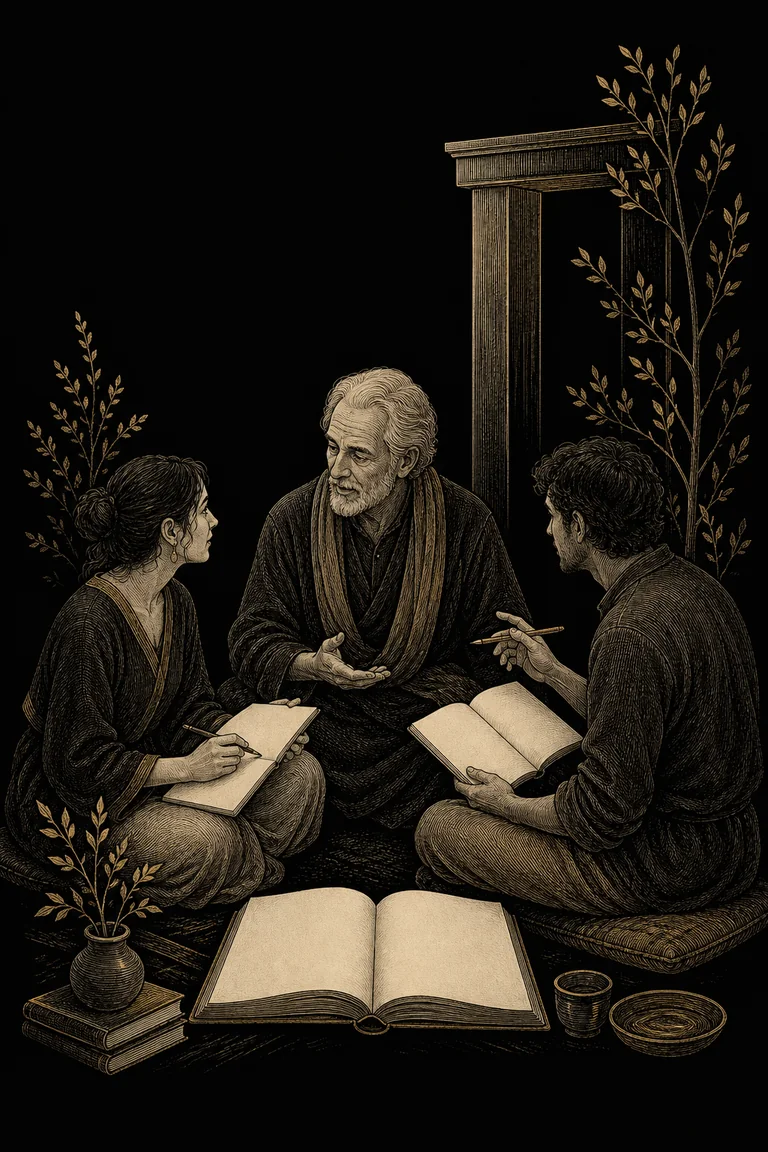
The Hierophant is the fifth numbered card of the Major Arcana. Its teacher, formal setting, keys, gestures, and gathered students often point to institutions, mentors, belief systems, education, ceremonies, or a method passed from one generation to another.
A grounded reading does not assume that tradition is wise merely because it is old, or that questioning authority is disloyal. The card asks what a practice preserves, who interprets its rules, how consent and dissent are handled, and whether guidance helps people develop judgment of their own.
Take the next insight with you
Explore personalized Tarot guidance in Veritas, available for iOS and Android.
 Scan with your phone
The Hierophant Tarot meaning at a glance
The Hierophant commonly points to teaching, tradition, mentorship, education, ceremony, community standards, and established methods. In a difficult expression, it can show dogma, conformity, gatekeeping, borrowed certainty, or an institution protecting its status instead of the people it serves.
Explore the teaching inside your cards
Open a Tarot reading in Veritas and consider which method, mentor, value, or inherited rule is shaping the question in front of you.
What the imagery suggests
A formal seat can symbolize recognized authority, while keys suggest access to knowledge or entry into a practice. Students show that learning happens in relationship. These images can describe a useful container for study, but they also raise questions about who is admitted, whose experience counts, and whether the gate can be challenged.
The Hierophant upright
Upright, the card may favor learning the foundations, consulting a qualified teacher, following a tested procedure, joining a community of practice, or making a commitment visible through ritual. The useful emphasis is not blind compliance. It is disciplined participation with clear expectations, context, and accountability.
The Hierophant reversed
Reversed, The Hierophant can describe rejecting an inherited rule, studying outside a formal institution, encountering hypocrisy, or realizing that a standard no longer fits. It can also warn against reflexive rebellion that discards useful knowledge without understanding it. Identify the exact rule and test its purpose, effects, and alternatives.
Love, commitment, and shared values
In relationship readings, the card may highlight formal commitment, family expectations, shared faith, counseling, or agreements about how a partnership is defined. It cannot guarantee marriage or prove that tradition should outweigh consent. Ask which values are genuinely shared and which expectations belong to relatives, institutions, or fear of judgment.
Career, education, and mentorship
At work or in study, The Hierophant can point to training, certification, supervision, professional ethics, or an established route into a field. A credential may provide useful standards without capturing every kind of competence. Evaluate the teacher's expertise, the method's evidence, the feedback process, and the learner's practical access.
Belief is different from borrowed certainty
A belief can be held with humility, examined through experience, and revised when evidence changes. Borrowed certainty repeats an authority without understanding its reasoning. When this card appears, distinguish what you know, what you trust, what you have been told, and what remains an open question.
Tradition as a living practice
Traditions survive by repetition, but healthy traditions also interpret, adapt, and repair. Ask what the practice protects, which historical conditions shaped it, who carries unpaid labor, and how new participants can influence it. Continuity and change are not opposites when the core purpose is understood.
The Hierophant as advice or obstacle
As advice, learn the grammar before improvising and seek guidance from someone answerable for what they teach. As an obstacle, the card may show approval seeking, fear of exclusion, or a rule treated as universal when it belongs to one culture or institution.
Useful card combinations
With The High Priestess, formal teaching meets private discernment. With The Emperor, institutional rules need accountable governance. With The Lovers, a commitment must express freely chosen values. With The Tower, evidence may expose a tradition that requires deep reform rather than cosmetic change.
A practical Hierophant reflection
- Name the teaching
Write the rule, method, or value you inherited and the source from which it came.
- Find its purpose
State what the teaching was designed to protect, transmit, or make possible.
- Test the effects
Compare the intended purpose with who benefits, who is burdened, and what evidence is available now.
- Choose your participation
Decide what to practice, revise, question, or leave, and name the support that choice requires.
A question The Hierophant asks
Ask: “Which teaching deserves my commitment, and what would make that commitment informed rather than automatic?” Identify the source, method, accountability, and freedom to question it.
Tarot is a symbolic reflective practice, not a scientifically validated forecasting method. The Hierophant cannot prove spiritual authority, guarantee commitment, validate coercion, determine moral worth, or replace educational, religious, legal, medical, mental health, relationship, workplace, or safety guidance.