Tarot Journal
The Emperor Tarot Meaning: Structure, Power, and Duty
The Emperor represents structure used responsibly: clear authority, workable boundaries, protection, planning, and accountability for the systems we build.
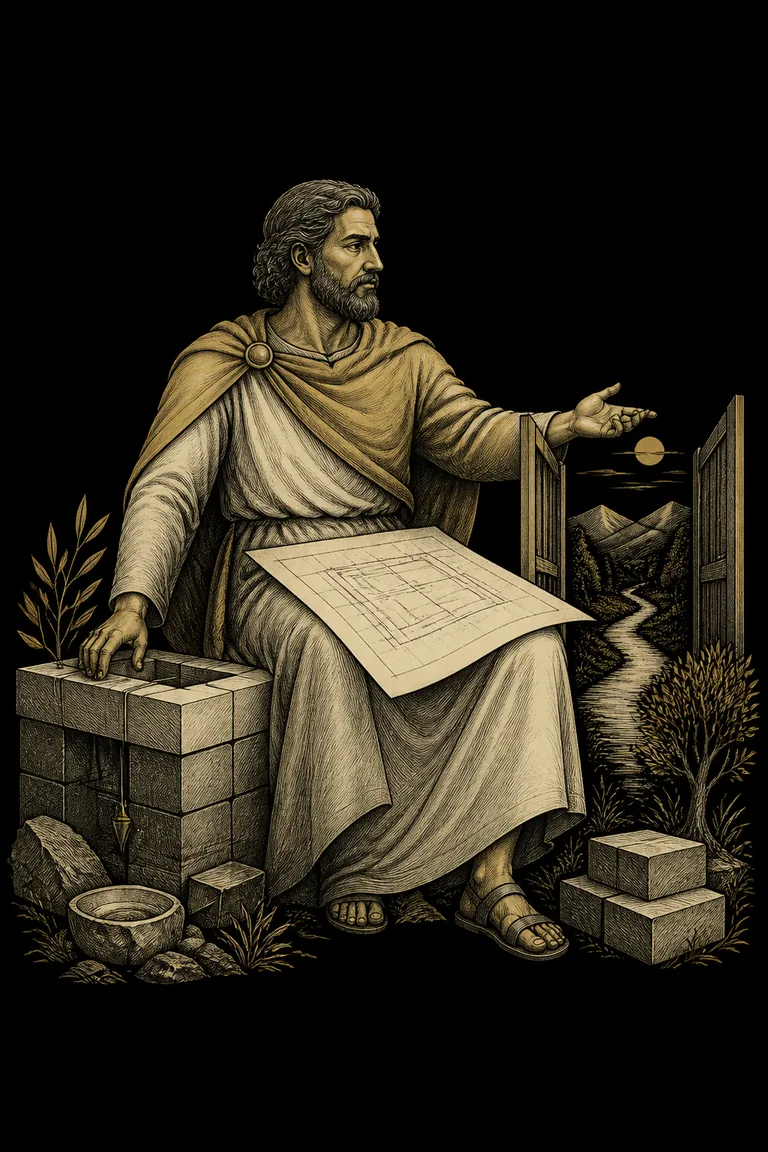
The Emperor is the fourth numbered card of the Major Arcana. Its walls, squared forms, formal seat, and steady posture suggest order that can hold pressure. In a reading, the card may concern leadership, rules, institutions, father figures, personal discipline, or the practical framework a goal needs.
A grounded interpretation does not treat control as strength or obedience as safety. The Emperor asks who has authority, what responsibility comes with it, which boundary serves a real purpose, and whether the structure protects people or merely protects power.
Take the next insight with you
Explore personalized Tarot guidance in Veritas, available for iOS and Android.
 Scan with your phone
The Emperor Tarot meaning at a glance
The Emperor commonly points to authority, stability, boundaries, planning, protection, standards, and long-term responsibility. In a difficult expression, structure can harden into rigidity, domination, defensiveness, micromanagement, or a refusal to revise an outdated rule.
Examine the structure around your question
Open a Tarot reading in Veritas and explore where The Emperor calls for a clearer boundary, decision, responsibility, or review.
What the imagery suggests
Stone, armor, mountains, and squared architecture often communicate durability and limits. These symbols can describe a container strong enough for other activity to happen. They can also warn that protection has become isolation. Ask what the structure makes possible and what it prevents.
The Emperor upright
Upright, The Emperor may favor defining roles, making a decision, setting a budget, documenting a process, or accepting responsibility for an outcome. The card supports consistency more than force. Authority becomes credible when expectations are stated, resources are adequate, and consequences apply fairly.
The Emperor reversed
Reversed, the card can describe chaotic leadership, unclear limits, excessive control, brittle pride, or dependence on rules that no longer fit. Sometimes the issue is too little structure rather than too much. Identify the missing decision, the unaccountable power, or the policy that needs revision.
Love and relationships
In love readings, The Emperor can highlight reliability, commitments, household agreements, and the boundaries that protect trust. It does not prove that a person will commit or that one partner should command the other. Healthy stability includes consent, shared influence, emotional responsiveness, and room to renegotiate.
Career and leadership
At work, the card may point to management, governance, operations, standards, or the need to turn an informal effort into a repeatable system. A useful Emperor does not simply issue orders. It clarifies ownership, supplies tools, hears evidence, and remains answerable for the effects of a decision.
Money and practical security
For money, The Emperor can encourage a budget, reserve, contract review, or a plan for recurring obligations. It is not a guarantee of wealth, property, or business success. High-stakes financial and legal choices require current facts and qualified advice, especially when another person controls access or terms.
Authority is not the same as domination
Authority can come from a role, expertise, consent, law, or responsibility. Domination concentrates control while limiting meaningful choice and accountability. When this card appears, ask whether affected people can understand the rule, challenge an error, refuse safely, and participate in decisions that concern them.
The Emperor as advice or obstacle
As advice, establish a clear container and take ownership of the part that is yours. As an obstacle, the card may show perfectionism about control, fear of uncertainty, or loyalty to hierarchy over evidence. The strongest structure includes a way to learn and change.
Useful card combinations
With The Empress, growth needs both nourishment and structure. With The Magician, skill benefits from a defined plan and ethical limits. With The Lovers, authority must respect shared values and consent. With The Tower, a rigid system may face evidence that demands reconstruction.
A practical Emperor reflection
- Name the responsibility
State the result you are accountable for and the people affected by it.
- Define the boundary
Write what is allowed, required, or unavailable and explain the purpose it serves.
- Match power with duty
Identify who decides, what evidence they must consider, and how mistakes will be repaired.
- Set a review point
Choose a date or condition for testing whether the structure still works.
A question The Emperor asks
Ask: “What structure would make this situation safer and more workable, and how will its authority remain accountable?” Name one boundary, its purpose, the person responsible, and the evidence that would justify changing it.
Tarot is a symbolic reflective practice, not a scientifically validated forecasting method. The Emperor cannot prove safety, predict another person's conduct, validate coercion, guarantee legal or financial outcomes, or replace medical, legal, financial, mental health, relationship, workplace, or safety guidance.