Astrology Journal
Accidental Dignity in Astrology: A Practical Guide
Accidental dignity describes the chart circumstances that help or hinder a planet's ability to act, including house position, motion, visibility, and relationships with other planets.
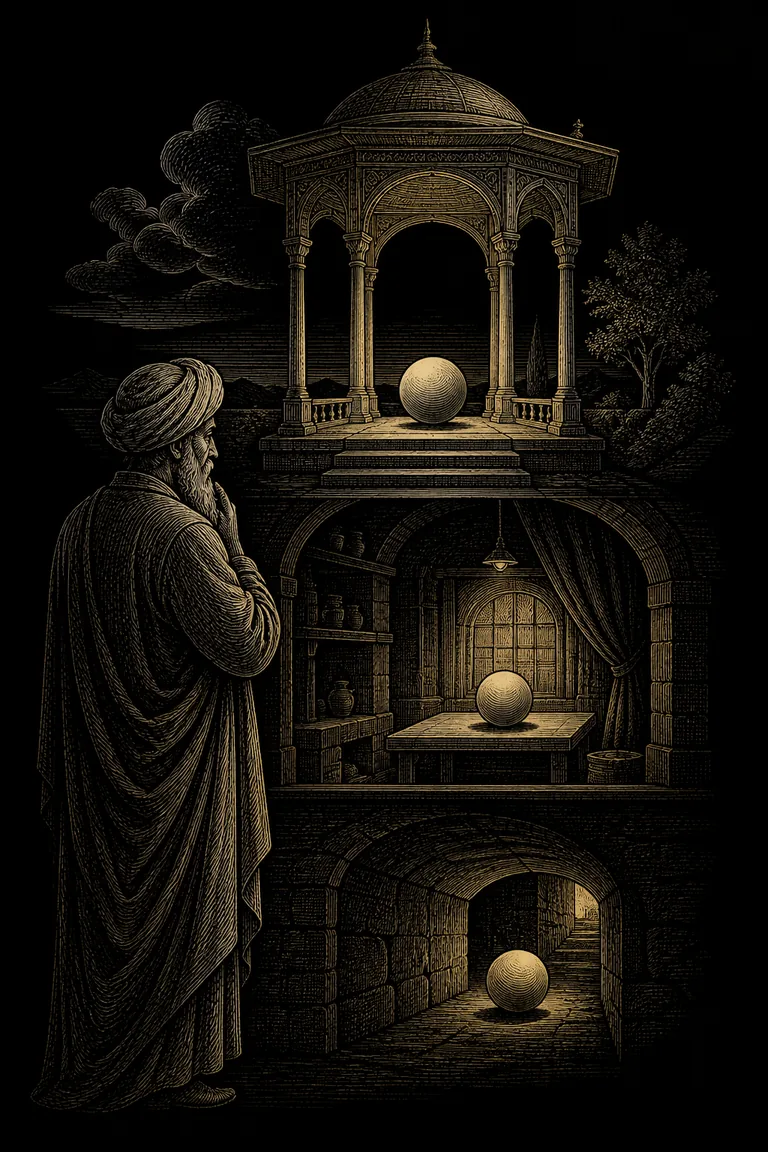
Accidental dignity in astrology evaluates a planet through circumstances beyond its zodiac sign. Traditional astrologers may consider angularity, house placement, direct or retrograde motion, speed, solar visibility, aspects, reception, sect, and relevance to the question. These conditions help describe whether a planet can act openly, promptly, consistently, or with support.
The technique complements essential dignity rather than replacing it. Essential dignity describes zodiacal resources available to a planet in a named system; accidental dignity describes the situation in which those resources must operate. A planet can have strong resources but little opportunity, or limited resources yet considerable visibility and agency. Interpret the testimonies, not just a total score.
Take the next insight with you
Explore personalized Astrology guidance in Veritas, available for iOS and Android.
 Scan with your phone
What is accidental dignity in astrology?
Accidental dignity is a traditional category for conditions that strengthen a planet for a particular chart or purpose without changing its essential sign-based status. The word accidental means circumstantial, not random or unimportant. A planet may become more prominent because it is angular, move more straightforwardly because it is direct, or receive assistance through an applying aspect. Exact lists and point values differ among authors, periods, and techniques.
Essential dignity versus accidental dignity
A planet's domicile, exaltation, triplicity, bound, and face are essential conditions tied to sign and degree. Its house, angularity, motion, speed, solar relationship, aspects, and other circumstances are commonly treated as accidental. The distinction prevents a simple good-or-bad judgment. Domicile can describe familiar tools, while an angular house can describe access to a stage on which those tools are used.
Angular, succedent, and cadent houses
Angular houses, especially the first, tenth, seventh, and fourth, are traditionally associated with greater capacity to act and become visible. Succedent houses can support continuity and consolidation. Cadent houses may describe distance, transition, learning, service, or reduced direct control, depending on the house and question. House strength is not a moral ranking. A cadent planet may still be highly relevant, skilled, or well supported.
Direct motion, retrograde motion, and stationing
Direct motion often supports forward execution in traditional scoring, while retrograde motion can describe return, revision, reversal, delay, or a less straightforward route. A station can intensify focus while reducing movement. Natal interpretation should not treat retrograde planets as broken. In event, electional, or horary work, motion may speak more literally to whether a matter advances, repeats, or changes direction.
Planetary speed and momentum
Some traditional tables compare a planet with its average daily motion. Faster motion can suggest readiness or prompt development; slower motion can suggest caution, delay, or concentration. Speed must be calculated for the date, not guessed from a static chart image. It also needs context. Fast movement is useful when timely action matters, but it can be less desirable when a process requires stability and review.
Solar visibility, combustion, and cazimi
A planet close to the Sun may be hidden by solar light. Traditional systems distinguish conditions such as under the beams, combustion, and cazimi, with exact degree boundaries varying by author and method. Combustion is often treated as a serious constraint, while cazimi is usually treated as a special strengthening condition. State the orb you use and avoid turning visibility symbolism into a claim about health or personal worth.
Compare resources with real circumstances
Use Veritas to view the planet's sign, house, motion, and aspects together, then note which accidental testimonies your chosen method recognizes.
Aspects, application, and support
An applying aspect can show two planetary functions moving toward contact, while a separating aspect describes contact already completed. Support from benefics, pressure from malefics, reception, prohibition, or interference may matter differently in different branches of traditional astrology. Do not reduce every trine to help or every square to harm. Identify the planets, their condition, the aspect's phase, and the concrete topic they govern.
Sect and other rejoicing conditions
Sect distinguishes day and night charts and can describe whether a planet operates in a more supported environment. Some authors also consider planetary joys, gendered sign conventions, hemispheric placement, or oriental and occidental relationships to the Sun. These factors are not interchangeable, and not every school calls each one an accidental dignity. Use a documented table rather than combining every favorable-sounding rule.
House rulership and relevance to the chart
A planet gains interpretive importance when it rules the Ascendant, Midheaven, a profected house, or the house central to a question. Importance is not the same as strength. A chart ruler can be deeply relevant while constrained, and an angular planet can be powerful without governing the topic you are studying. Ask two separate questions: how much can this planet act, and what responsibility does it carry here?
Why point totals are not the interpretation
Renaissance and later tables often assign points to selected testimonies, but the lists and weights vary. Totals can organize observations or help compare candidates in a specific technique. They cannot explain what a planet does, whether its action is constructive, or how conflicting testimonies combine. Preserve the underlying evidence. A score without the table, chart purpose, and planetary role is not reproducible.
Worked example: dignified but constrained
Consider Mars in Capricorn, where traditional astrology gives it exaltation, placed in a cadent house and moving slowly under the Sun's beams. Mars may have disciplined resources but limited visibility, indirect access, or delayed execution. The interpretation is not strong Mars plus weak Mars equals neutral. It is a capable strategy operating under circumstances that require timing, privacy, delegation, or patience.
Worked example: debilitated but able to act
Consider Venus in Scorpio, traditionally in detriment, placed close to an angle, direct, swift, and applying to a supportive ruler. Venus may need to negotiate intensity, privacy, or shared stakes, yet have strong opportunity to make relationship, value, or artistic matters visible. Accidental strength does not erase the essential challenge; it shows that the planet has channels through which to work on it.
Natal charts, transits, and event charts
In natal work, accidental conditions can describe recurring circumstances and modes of participation. In horary, electional, solar return, or transit analysis, motion and application may carry more immediate timing significance. Do not move a rule between techniques without checking its purpose. A retrograde transit can mark review without proving that an agreement will fail, and an angular return planet can be prominent without guaranteeing an event.
Document the testimony behind the judgment
Open Veritas and record the chart type, exact condition, table or tradition, and one concrete way the planet gains opportunity or meets constraint.
A practical accidental-dignity workflow
- Name the technique
State whether the chart is natal, horary, electional, predictive, or another specific use.
- Establish essential condition
Note sign-based resources separately so they are not confused with circumstances.
- Check the circumstances
Review house, angularity, motion, speed, visibility, aspects, reception, sect, and relevance using one documented system.
- Write a concrete synthesis
Describe what the planet can access, what slows or redirects it, and what other planet may provide support.
Common accidental-dignity mistakes
Avoid treating angular as good, cadent as useless, direct as healthy, or retrograde as doomed. Do not mix point tables without attribution, guess speed or solar distance, score modern planets with rules designed for the seven traditional planets, or ignore the chart's purpose. Accidental dignity is most useful when it turns vague strength language into a clear account of opportunity, visibility, timing, and support.