Astrology Journal
The 12 Astrology Houses: Meanings and Life Areas
The 12 astrology houses describe where a birth-chart pattern becomes lived experience, from identity and resources to partnership, vocation, community, and retreat.
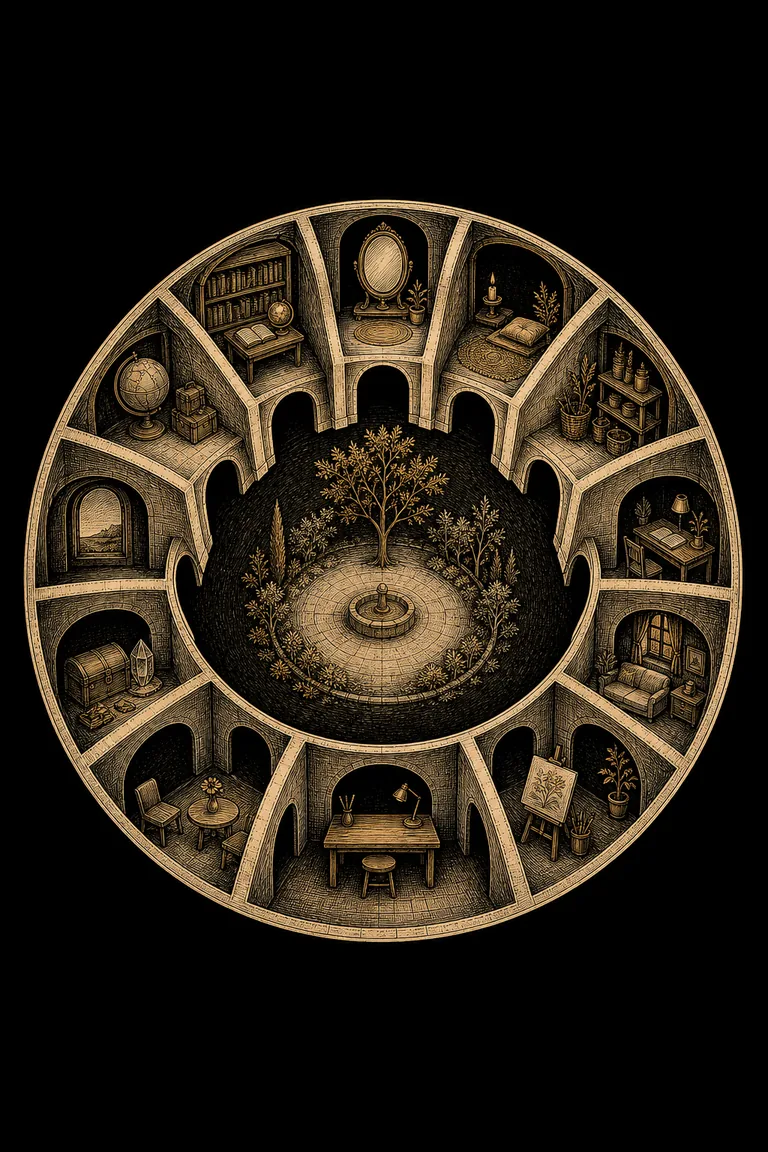
The 12 houses in astrology divide a birth chart into areas of life. Planets describe what is happening, signs describe how it happens, and houses describe where the pattern seeks expression: in identity, money, learning, home, creativity, work, relationship, shared resources, meaning, vocation, community, or private closure.
A house is not the same thing as a zodiac sign, and an empty house is not a missing part of life. To interpret a house, read the sign on its cusp, the planet that rules that sign, any planets inside the house, and the aspects connecting those planets to the rest of the chart.
Take the next insight with you
Explore personalized Astrology guidance in Veritas, available for iOS and Android.
 Scan with your phone
What are houses in a birth chart?
Houses are calculated from the local horizon and meridian at the time and place of birth. The Ascendant begins the First House, while the Midheaven commonly marks or influences the Tenth. Because the Earth rotates, house positions depend strongly on birth time.
Different house systems divide the sky in different ways. Placidus, Whole Sign, Equal House, and other systems can place a planet in a different house without changing its zodiac sign. Choose one system, understand its logic, and use it consistently before comparing alternatives.
The meanings of all 12 astrology houses
First House: self and approach
Identity in motion, body, presence, immediate response, and the way you enter new experience. The Ascendant and its ruler are central to how this house operates.
Second House: resources and value
Money, possessions, skills, self-support, priorities, and the material or inner resources you can call your own. It asks what creates sustainable value.
Third House: learning and exchange
Language, everyday study, siblings, neighbors, local movement, information, and the habits through which the mind connects one thing to another.
Fourth House: roots and private foundation
Home, family patterns, ancestry, privacy, belonging, and the inner base from which public life becomes possible. It also concerns endings and return.
Fifth House: creation and play
Creativity, pleasure, romance, performance, children, risk, and the wish to make something that carries your distinct participation.
Sixth House: work and maintenance
Daily labor, routines, health practices, service, craft, coworkers, and the adjustments required to keep a life functioning.
Seventh House: partnership and encounter
Committed relationship, contracts, collaboration, open conflict, and qualities recognized through meeting an equal other. The Descendant begins this house.
Eighth House: sharing and transformation
Shared money, debt, inheritance, intimacy, trust, loss, obligation, and the psychological changes that occur when control cannot remain entirely individual.
Ninth House: meaning and wider horizons
Higher learning, philosophy, religion, publishing, long-distance travel, law, and the frameworks used to interpret experience beyond the immediate environment.
Tenth House: vocation and public contribution
Career, reputation, authority, achievement, responsibility, and the work by which a person becomes visible to the larger world.
Eleventh House: community and future
Friendship, networks, groups, shared causes, audiences, collaboration, and hopes that require participation beyond one person.
Twelfth House: retreat and closure
Solitude, hidden patterns, surrender, institutions, rest, grief, spiritual practice, and what needs privacy or completion before a new cycle begins.
See which planets live in each part of your chart
Create your natal chart in Veritas and explore every house through its cusp, ruler, planetary occupants, and connections to the rest of the wheel.
Houses are not the same as zodiac signs
A popular teaching shortcut links Aries with the First House, Taurus with the Second, and so on. The analogy can help beginners remember a sequence, but it should not collapse houses and signs into the same thing. The Fifth House always concerns fifth-house topics; it does not automatically behave like Leo.
If Capricorn is on the Fifth House cusp, creative expression may be approached through structure, commitment, or long development. Read Saturn, the ruler of Capricorn, to learn where that approach is directed and what supports or complicates it.
How to interpret a house step by step
- Name the life area
Begin with the house’s concrete topics and the question you are trying to answer.
- Read the cusp sign
The sign shows the style and priorities through which the house is approached.
- Find the house ruler
Locate the planet that rules the cusp sign, then read its sign, house, and major aspects.
- Add planetary occupants
Planets inside the house show active needs and functions in that life area. Start with the most prominent.
- Compare the opposite house
Every house belongs to an axis, so development in one area affects its counterpart.
The six house axes
The First and Seventh balance self with partnership. The Second and Eighth compare personal resources with shared resources. The Third and Ninth connect immediate knowledge with larger meaning. The Fourth and Tenth join private foundation with public contribution. The Fifth and Eleventh connect personal creation with collective participation. The Sixth and Twelfth balance maintenance with retreat.
An axis prevents one house from being interpreted in isolation. Heavy Tenth House emphasis may increase public responsibility, while the Fourth House still asks what private base makes that role sustainable. Strong Seventh House activity may develop relationship skill, while the First House preserves agency.
What do empty houses mean?
Most charts contain empty houses because ten traditional planets cannot occupy twelve houses. An empty house does not mean nothing happens there. Read the sign on the cusp and follow its ruler. Transits and progressions can also activate that house over time.
A planet-filled house receives more visible natal emphasis, but emphasis is not the same as success or difficulty. Several planets in the Second House may make resource questions central without guaranteeing wealth. The signs and aspects decide how that concentration is experienced.
Angular, succedent, and cadent houses
The angular houses are First, Fourth, Seventh, and Tenth. They initiate the four main axes and often feel immediate. Succedent houses Second, Fifth, Eighth, and Eleventh stabilize and develop what the angular houses begin. Cadent houses Third, Sixth, Ninth, and Twelfth distribute, adapt, learn, and prepare transition.
These modes add rhythm without replacing meaning. A planet in an angular house may become more visible, while one in a cadent house may work through learning, service, interpretation, or withdrawal. Visibility does not measure importance.
Why accurate birth time matters
A wrong or estimated birth time can move house cusps and, near a boundary, place a planet in another house. If the time is unknown, do not present the Ascendant and houses as certain. You can still interpret planetary signs and many aspects that remain stable across the date.
Astrology is a symbolic interpretive tradition and is not scientifically validated as a diagnostic or predictive method. Use houses to organize reflection, not to prove fate, health outcomes, financial success, or another person’s intentions.