Astrology Journal
North Node Conjunct Quaoar Transit: Timing and Meaning
North Node conjunct Quaoar transit can frame a system-design review, but responsible use begins with object 50000, fixed settings, every pass, both nodes, evidence, participation, maintenance, revision, and exit.
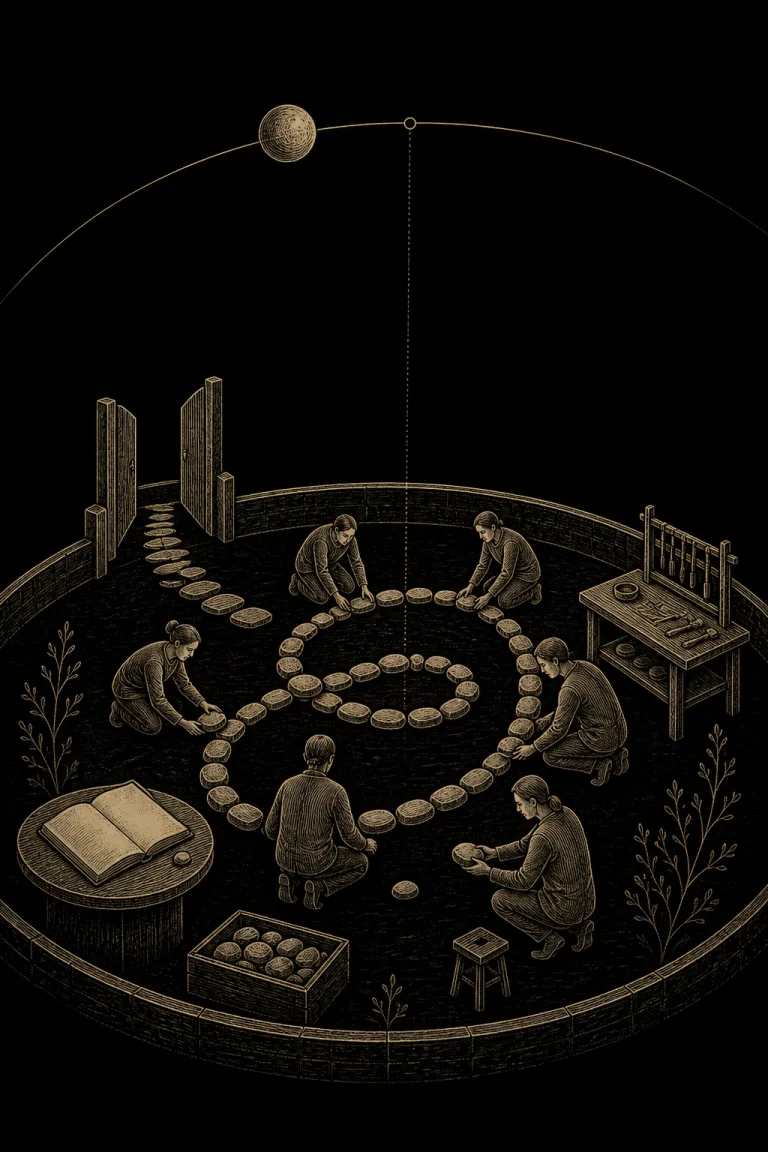
North Node conjunct Quaoar transit occurs when the transiting North Node reaches the zodiac longitude of natal trans-Neptunian object 50000 Quaoar. A careful symbolic reading can examine how people create repeatable order, establish a shared rhythm, assign authority, and revise a system when it stops serving its purpose. It cannot prove that a new order is destined, that one person has special authority, or that a rule is fair because it appears meaningful.
Calculate the contact with one saved node model, zodiac, ephemeris, object identifier, and orb. Record every exact pass and keep the simultaneous South Node opposition visible. Then map the real system outside astrology: purpose, participants, rules, ownership, resources, exceptions, maintenance, feedback, failure signals, revision, retirement, and exit. The transit can organize questions, while evidence and accountable governance determine what should continue.
Take the next insight with you
Explore personalized Astrology guidance in Veritas, available for iOS and Android.
 Scan with your phone
Quaoar transit at a glance
Verify object 50000 before interpretation
Use numbered object 50000 Quaoar and save its identifier with the chart. NASA JPL lists the provisional designation 2002 LM60 and classifies the orbit as trans-Neptunian. These facts establish a physical small body with a calculated orbit. They do not measure creativity, social order, personality, governance, or astrological effects. A mythic name, an unnumbered point, or a similarly named software entry is not a substitute for the verified object.
Freeze node, zodiac, ephemeris, and orb
Choose mean or true node, tropical or sidereal zodiac, ayanamsha when relevant, ephemeris, time zone, and orb before searching dates. Save the natal Quaoar longitude and calculation source. Changing settings after learning an event can manufacture a preferred match. The lunar nodes guide explains the axis, while the aspect guide keeps conjunction rules explicit.
Record every exact pass
The chosen nodal longitude may cross a natal target more than once around a contact window. Search the full interval and record every exact timestamp, residual, orb entry, and orb exit. Preserve quiet passes and contradictory dates. Do not move an event to the nearest hit or call an entire season exact. The transits guide provides a reproducible timing method that separates calculation from interpretation.
Keep the South Node opposition visible
When the North Node conjoins natal Quaoar, the South Node is simultaneously opposite it in the same zodiac and node model. Treat this as one axis. Symbolically, the conjunction may frame a developing rule, rhythm, or cooperative structure, while the opposition can review inherited procedures, automatic participation, obsolete customs, or older ways of withdrawing. This is an interpretive lens, not an astronomical force or proof that a collective mandate exists.
Birth time controls houses and angles
Quaoar moves slowly enough that a date-only chart may support an approximate natal longitude, but houses and angles require a reliable birth time. If the recorded time is rounded, unknown, or disputed, omit house claims and angle contacts. The birth chart without a birth time guide shows what remains usable. Precise transit timing cannot repair uncertain natal data or prove a life event.
Map the real system before the symbol
Name the system in plain language: a household routine, team workflow, community practice, creative method, technical protocol, learning program, or public procedure. Record its purpose, users, affected non-users, owner, inputs, outputs, resources, rules, exceptions, feedback, dependencies, maintenance, revision path, and retirement condition. If no actual system exists, do not invent one to fit the transit.
Creation does not grant permanent authority
The person who creates a useful process may understand its early logic, but authorship does not automatically confer permanent control. Ask who may set rules, spend resources, access data, approve exceptions, stop operations, and represent affected people. Authority should be explicit, limited, reviewable, and compatible with law and policy. A symbolic creation theme cannot justify ownership of another person's labor, culture, privacy, body, identity, or consent.
Rhythm should serve the purpose
A repeatable rhythm can reduce friction, improve learning, and make responsibility visible. It can also become ritual without evidence. Record cadence, required preparation, duration, handoffs, missed-cycle consequences, accessibility, and the signal that a different rhythm is needed. A daily meeting, monthly review, seasonal practice, or automated schedule is useful only if it supports the stated purpose without creating hidden burden or excluding necessary participants.
Participation needs a genuine choice
Shared order is not shared when some participants cannot decline, understand, question, or leave. Record who was consulted, what information they received, which alternatives exist, and whether disagreement carries retaliation. Children, employees, patients, tenants, dependent relatives, and marginalized community members may have limited bargaining power. The transit cannot convert pressure into consent or make silence evidence of agreement.
Rules need an exception path
A rule can create consistency while still failing unusual cases. Define the ordinary rule, its evidence, who may request an exception, who decides, what criteria apply, how reasons are documented, and how a decision can be appealed. Exceptions should not become secret privilege, and uniform treatment should not ignore disability, safety, culture, or unequal starting conditions. Fair process depends on transparent authority and review, not astrological symbolism.
Maintenance is part of design
Systems accumulate repair work, documentation, training, moderation, updates, cleanup, and emotional labor. Name who performs this work, how it is funded, what access they need, and who covers absences. A process that appears elegant to its designer may shift unpaid burden to others. The Quaoar lens is most useful when creation includes maintenance capacity from the start rather than celebrating novelty while treating upkeep as invisible.
Define failure before expansion
Choose measures that match the purpose and include harm, not only output. A workflow may increase speed while worsening errors, privacy, accessibility, workload, or trust. Define baseline, data source, review interval, minimum success, unacceptable harm, stop authority, rollback, and evidence that would disconfirm the preferred design. Expansion should follow demonstrated value and capacity, not the emotional importance of an exact transit.
Use a reproducible transit method
- Identify
Save 50000 Quaoar, natal longitude, birth-data quality, ephemeris, and calculation source.
- Freeze settings
Choose node model, zodiac, ayanamsha when relevant, orb, time zone, and search interval.
- Calculate
Record every exact pass, residual, orb entry, orb exit, and simultaneous South Node opposition.
- Map
Document purpose, participants, rules, authority, resources, exceptions, maintenance, feedback, and failure signals.
- Review
Choose a bounded revision, owner, evidence threshold, stop rule, rollback, retirement condition, and exit.
Worked relationship example
Two partners want a household routine that reduces repeated negotiation. They list essential tasks, capacity, preferences, privacy, and times when either person may opt out. They test a shared weekly plan, rotate ownership, and keep an exception for illness and peak work periods. After four weeks they review workload rather than treating participation as proof of love. The transit framed a design question; consent and observed burden determined the revision.
Worked work example
A team creates a release process after several avoidable errors. The lead documents the purpose, approval rights, evidence, emergency exception, accessibility needs, and rollback owner. A pilot shows fewer errors but excessive review time for low-risk changes. The team creates two risk levels and audits them after one month. The transit did not prove the original system was correct. It prompted a testable structure with a retirement path.
Compare Quaoar with Orcus, Saturn, and Uranus
North Node conjunct Orcus owns obligations, authority to promise, capacity, amendment, consequence, and release. Quaoar here owns the design and governance of a repeatable system. Saturn offers a broader lens on limits and responsibility, while Uranus concerns disruption and innovation. Keep these scopes distinct.
Keep natal Quaoar separate from this transit
The natal Quaoar guide owns natal sign, house, aspects, synastry, and chart context. This page owns a transiting nodal conjunction to the saved natal longitude. Do not copy a natal personality description into the transit or assume everyone born near the same Quaoar degree experiences the same event. Systems, laws, resources, histories, and choices remain specific.
Guard against hindsight and selective timing
A successful launch or failed institution can make one exact pass seem decisive after the fact. Build the pass table first, include the full interval, and log neutral events. Compare the transit with staffing, funding, policy, training, technology, conflict, and ordinary iteration. Do not widen the orb or change node models until a date fits. Reproducibility limits narrative overreach without claiming that astrology has been scientifically validated.
Save the system and its revision path
Use Veritas to record object 50000, fixed settings, every pass, both nodes, purpose, participants, rule authority, exceptions, maintenance burden, evidence, failure signals, revision, rollback, retirement, exit, and review.
Responsible limits
North Node conjunct Quaoar transit is a symbolic framework, not scientific evidence of destiny, collective permission, authority, fairness, compliance, safety, cultural ownership, or another person's thoughts. Visit the <a href="/astrology">Astrology journal hub</a>. Use consent, records, representative participation, qualified legal or technical guidance, and real governance procedures for consequential systems.