Astrology Journal
Decans in Astrology: The 36 Zodiac Divisions Explained
Decans divide each zodiac sign into three equal ten-degree sections. They can refine a placement by degree, but their planetary rulers depend on the tradition being used.
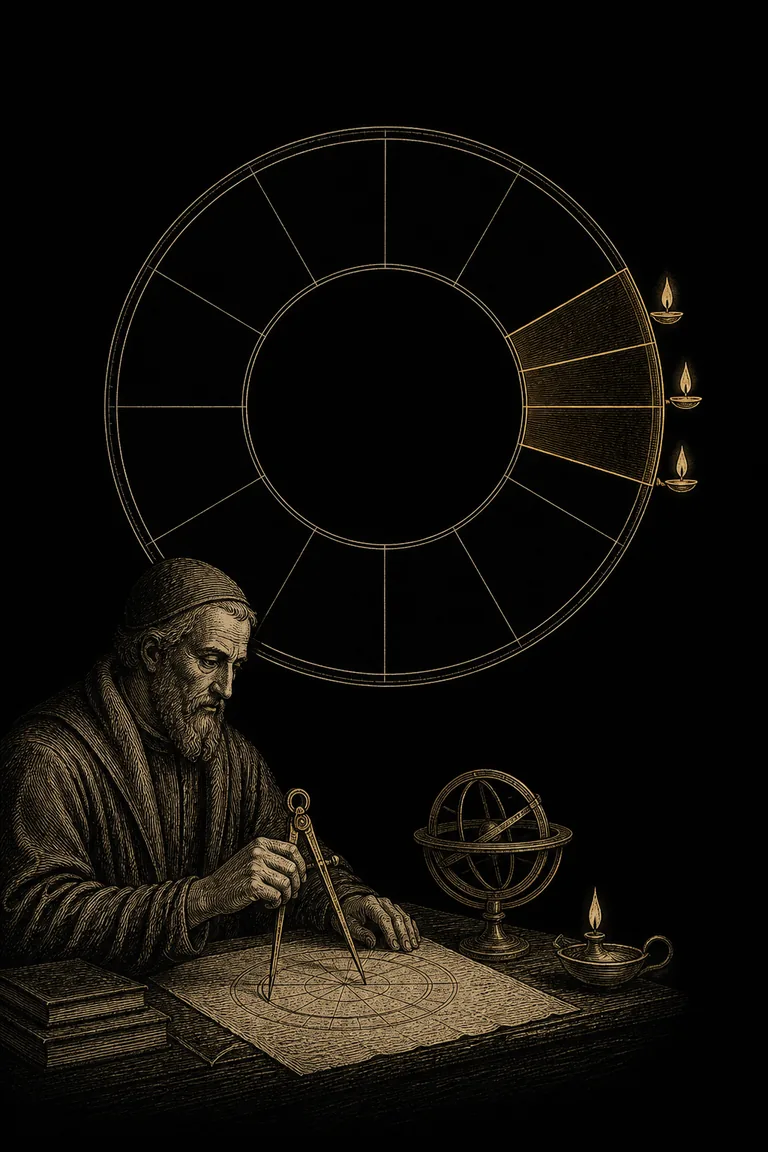
Decans in astrology are 36 consecutive divisions of the zodiac, each spanning ten degrees. Every 30-degree sign contains a first, second, and third decan. A planet at 4 degrees of a sign is in its first decan, one at 16 degrees is in its second, and one at 27 degrees is in its third. The geometry is simple; the interpretive ruler is where systems differ.
Use decans as a secondary layer after identifying the planet, sign, house, dignity, aspects, and chart context. They do not create a hidden thirteenth sign or change a planet's zodiac sign. A decan can add texture to how a sign operates, especially when the method is named and applied consistently, but it should not override stronger chart factors or observed character.
Take the next insight with you
Explore personalized Astrology guidance in Veritas, available for iOS and Android.
 Scan with your phone
What are the three decans of a zodiac sign?
The first decan covers 0 degrees 00 minutes through 9 degrees 59 minutes, the second covers 10 degrees 00 minutes through 19 degrees 59 minutes, and the third covers 20 degrees 00 minutes through 29 degrees 59 minutes. At 30 degrees the zodiac enters the next sign, which begins again at 0 degrees. Software may round the displayed degree, so inspect minutes before deciding a boundary placement.
Read the degree inside the whole chart
Use Veritas to compare a placement's exact degree, sign, house, ruler, dignity, and aspects before adding a decan interpretation.
How to find a placement's decan
Start with a calculated chart and the exact zodiacal longitude shown for the placement. Degrees 0 through 9 belong to decan one, 10 through 19 to decan two, and 20 through 29 to decan three. For 9 degrees 58 minutes, use the first decan. For 10 degrees 00 minutes, use the second. Do not infer a decan from a birth date alone when the planet could change sign or cross a boundary that day.
Why decan rulers differ
Ancient Egyptian decans began as star groups associated with timekeeping, while later Hellenistic astrology organized 36 ten-degree faces within the zodiac. Modern references may blend several historical and occult systems. Two common approaches are the Chaldean planetary order and elemental triplicity rulers. Because they assign different secondary rulers, a responsible interpretation states the chosen system rather than presenting one list as universal.
Chaldean faces and planetary order
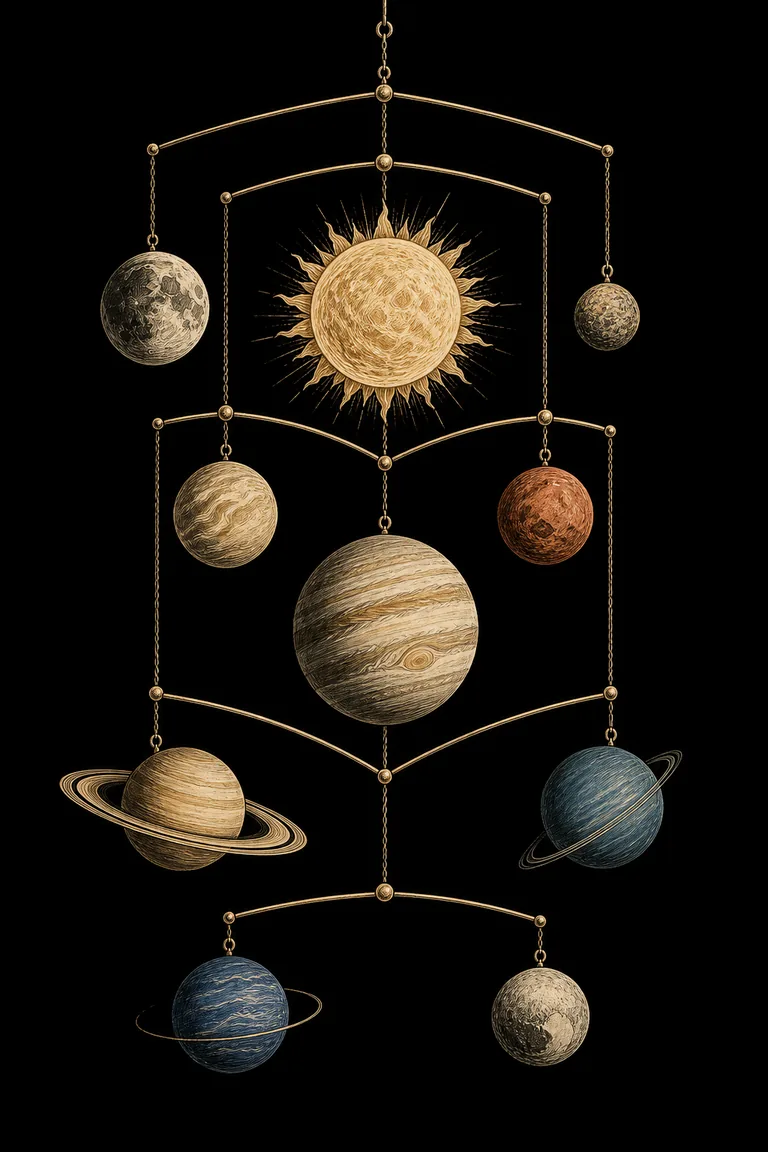
The traditional faces use the repeating Chaldean order Saturn, Jupiter, Mars, Sun, Venus, Mercury, Moon, arranged through the zodiac from the first face of Aries. The sequence does not restart at every sign. This produces a specific ruler for each of the 36 faces and is often used in traditional astrology, planetary magic, and Tarot correspondences. Consult one reliable table and keep the same zodiac and boundary convention throughout the reading.
Triplicity decans in modern astrology
A popular modern method associates the three decans of a sign with the three signs of the same element in zodiac order. Aries decans, for example, may be described through Aries, Leo, and Sagittarius rulers; Taurus through Taurus, Virgo, and Capricorn rulers. This creates an intuitive elemental progression, but it is not identical to the traditional face rulers. It should be labeled as a triplicity method.
Decans through the four elements
Fire decans refine styles of initiative and expression; earth decans, material process and maintenance; air decans, ideas and exchange; water decans, feeling and attachment. The first decan often expresses the sign more directly in triplicity-based readings, while later decans introduce another sign-ruler emphasis from the same element. This is a comparative technique, not evidence that part of the placement belongs to another sign.
Decans for the Sun, Moon, and Ascendant
The Sun's decan can refine conscious style and purpose, the Moon's decan emotional habits, and the Ascendant's decan the manner of meeting circumstances. These are still Sun, Moon, and rising placements in their actual signs. The Moon moves quickly, so the correct date, time, and location matter near boundaries. The Ascendant is highly time-sensitive and should not receive a confident decan without a reliable birth time.
Decans for planets in a birth chart
A Mercury decan may refine how thought and speech operate within Mercury's sign. Venus may show a more specific style of value and relating; Mars, action and assertion; Jupiter, expansion and judgment; and Saturn, structure and consequence. Outer-planet decans are shared by many people and usually add little unless the placement is prominent through houses, angles, rulership, or exact aspects.
Decans, dignity, houses, and aspects
Traditional face rulership is itself a minor dignity, but it is weaker than domicile or exaltation in common scoring systems. Do not let a face ruler erase a planet's condition, house responsibility, or exact aspects. A second-decan Mars closely conjunct Saturn in the tenth house is defined more strongly by Mars, Saturn, conjunction, and house than by the decan alone. Use the smaller factor to sharpen, not reverse, the larger testimony.
Are zodiac cusps the same as decan boundaries?
No. A decan boundary occurs inside a sign at 10 or 20 degrees. A sign cusp is the exact transition from 29 degrees 59 minutes of one sign to 0 degrees of the next. Astrology does not require a placement to be half of two signs. If uncertainty comes from rounded data or an unknown birth time, calculate a time range and state what can change instead of inventing a blended sign.
Decans without an exact birth time
A date-only chart may be enough for a slow planet well inside a decan, but not for the Ascendant, houses, angles, or a fast-moving Moon near a boundary. Calculate the earliest and latest plausible times for the birthplace. If a placement crosses 10, 20, or a sign boundary during that range, report both possibilities. Precision in interpretation cannot exceed precision in the input data.
A practical decan reading workflow
Interpret the placement normally first. Then note the exact degree and decan number. Choose either traditional faces or triplicity rulers and write down that convention. Describe one way the secondary ruler could modify expression, then compare it with the natal condition of that ruler and the lived evidence. Keep the decan only if it adds a precise, testable distinction rather than a second generic personality description.
Add detail without losing the hierarchy
Open Veritas, record the exact degree and ruler system, then test one decan nuance against the sign, house, aspects, and real experience.
A four-part decan worksheet
- Verify the degree
Use reliable chart data and inspect degrees and minutes near every boundary.
- Assign the division
Mark 0 to 9 as first, 10 to 19 as second, or 20 to 29 as third decan.
- Name the system
Choose traditional faces or triplicity decans and record the secondary ruler.
- Restore context
Compare the nuance with the planet, sign, house, dignity, aspects, ruler, and lived evidence.
Common decan interpretation mistakes
Do not call a decan a second Sun sign, mix ruler tables without explanation, round a boundary degree carelessly, or build a personality verdict from one ten-degree division. Avoid treating decans as scientifically established causes. They are a symbolic subdivision used in several astrological traditions. The clearest reading preserves method, degree accuracy, chart hierarchy, and uncertainty where the birth data cannot support precision.