Astrology Journal
Heliacal Rising in Astrology: Meaning and Visibility
A heliacal rising is the first visible appearance of a planet or star in the morning sky after a period hidden in the Sun's light. Its date depends on the body, location, horizon, season, and observing conditions.
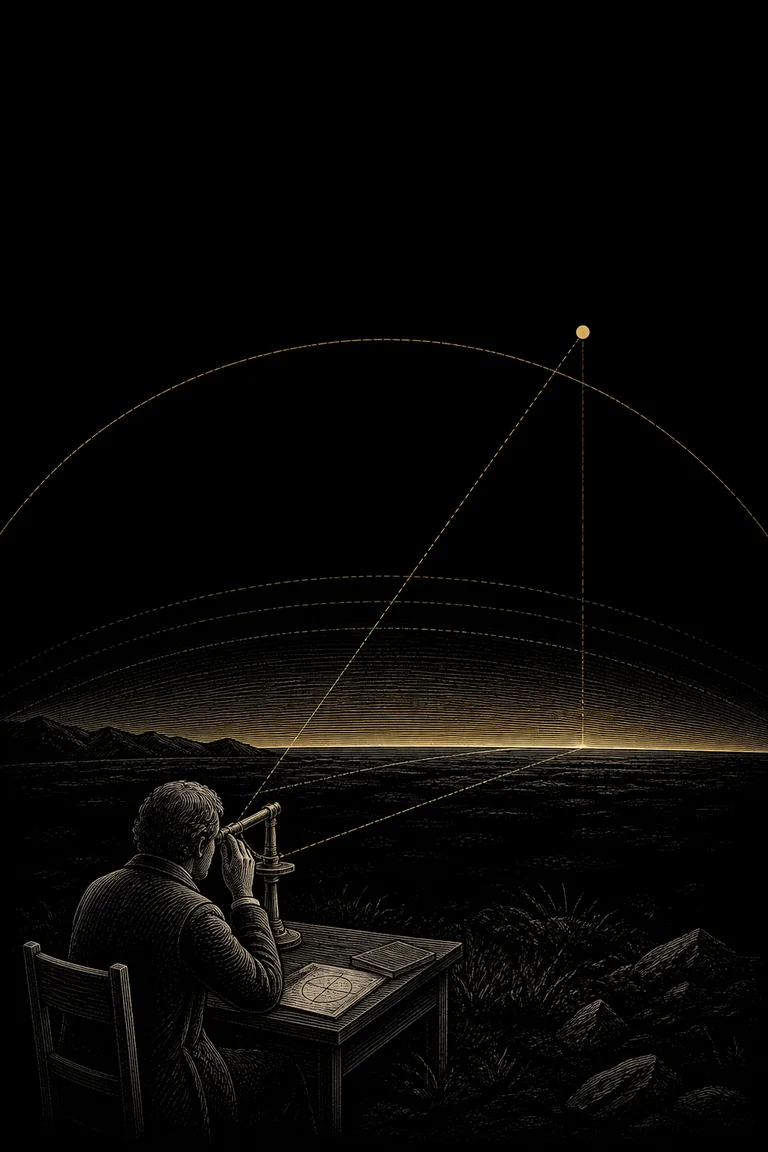
In astrology, heliacal rising describes a planet or star returning to visibility shortly before sunrise after solar conjunction. The astronomical event is observational, not a single universal degree distance. Mercury may become visible under different conditions from Saturn, and the same body can appear on different dates from different latitudes.
Traditional astrologers often treat first visibility as an emergence into public expression or renewed agency, but it remains one phase testimony. Interpret the planet's condition, motion, dignity, house, rulerships, and chart context as well. Software can estimate the event, while a claimed visual observation needs a location, horizon, weather, and method.
Take the next insight with you
Explore personalized Astrology guidance in Veritas, available for iOS and Android.
 Scan with your phone
What does heliacal rising mean?
The word heliacal refers to the Sun. A heliacal rising occurs when a celestial body becomes visible in the eastern sky before sunrise after being lost in solar glare. The body rises before the Sun and has enough separation and brightness to be seen against twilight. The exact first day is not a permanent property of one degree value. Atmospheric transparency, altitude, horizon obstruction, latitude, season, and the body's brightness all matter.
Document the phase you actually used
In Veritas, save the planet, location, date, observation or calculation method, solar separation, motion, and the chart topics you are testing.
Heliacal rising versus heliacal setting
Heliacal rising is a first morning appearance after invisibility. Heliacal setting is the last evening appearance before a body disappears into solar light. Sources sometimes use broader phase labels or different terminology, so check whether a date refers to first morning visibility, last evening visibility, or another acronychal event. Record the definition rather than relying on the word alone. The two phases describe different points in an observable synodic cycle.
Why there is no universal heliacal rising orb
Angular distance from the Sun is important, but visibility is not controlled by elongation alone. A bright Venus can be seen in twilight under conditions that would hide a dimmer body. A planet well above a clear sea horizon may be visible when the same geometry is blocked by mountains or haze elsewhere. The angle of the ecliptic to the horizon changes with latitude and season. Fixed degree rules can be useful estimates, but they should not be presented as observed fact.
How to calculate or verify a heliacal rising
- Choose the body and event
Specify first morning visibility rather than a generic solar phase.
- Set the location
Use latitude, longitude, elevation, time zone, and a realistic eastern horizon.
- Find conjunction and emergence
Track the body's motion relative to the Sun across candidate mornings.
- Model twilight and altitude
Check solar depression, body altitude, brightness, extinction, and atmospheric assumptions.
- Classify the result
Label it observed, software-calculated, or an approximate degree-based date.
- Preserve uncertainty
Record a date window when weather or local horizon makes the exact first sighting uncertain.
Heliacal rising and under the beams
Under the beams is usually a geometric astrological condition defined by a declared distance from the Sun, often 15 or 17 degrees. Heliacal rising is an appearance event. A planet may cross a chosen under-the-beams boundary before or after its modeled first visibility, depending on the method and circumstances. Do not silently replace one test with the other. The geometric rule is reproducible from longitudes; the visibility claim requires more environmental information.
Heliacal rising, combustion, and cazimi
Cazimi names a very close solar conjunction under a narrow traditional orb. Combustion names a wider close condition, while under the beams extends farther. Heliacal rising generally occurs later in the cycle as the body separates enough to reappear. These categories are related through solar proximity but are not interchangeable. A phase sequence can move through conjunction, hidden separation, and first visibility while dignity, reception, speed, house placement, and rulership remain separate testimonies.
Morning star and evening star phases
After heliacal rising, a planet is visible before sunrise and is often called a morning star, even when it is not literally a star. Other parts of the synodic cycle place it in the evening sky after sunset. Mercury and Venus alternate morning and evening appearances because their orbits stay near the Sun from Earth's viewpoint. Superior planets also pass through solar invisibility, then return to the morning sky on their longer cycles.
Traditional astrological interpretation
Many traditional approaches associate first visibility with emergence, announcement, renewed capacity, or a planet becoming available to act in a more observable way. This is symbolic language, not a guaranteed event. Ask what the planet rules in the specific chart and whether its other conditions support expression. A heliacally rising ruler of work may focus attention on a work topic, but it cannot promise employment, fame, health, or victory without real-world evidence.
Heliacal rising in a natal chart
A natal analysis first needs an accurate birth date, place, and preferably time. Determine whether the planet was near an actual or modeled first visibility for that location. Then assess its sign, house, motion, dignity, aspects, sect, and houses ruled. If birth time is unknown, horizon-dependent houses and an exact local appearance claim may be unreliable. Do not infer exceptional talent, destiny, status, or a public role from the phase alone.
Heliacal rising in transits and mundane work
A current heliacal rising can mark a useful observation point in a planetary cycle. Define the location and topic before looking for events, because broad retrospective matching encourages confirmation bias. For public charts, avoid claiming that the phase causes markets, elections, conflict, weather, or disasters. Compare the symbolism with independent timelines and contrary examples. For personal planning, keep practical deadlines, expertise, safety, and consent primary.
Example: Mercury returns before sunrise
Suppose software estimates Mercury's first morning visibility across a three-day window for a chosen city. The eastern horizon is clear, but haze prevents observation on day one. A report should distinguish the modeled date from the first confirmed sighting. Astrologically, you might review Mercury-ruled communication or scheduling after its emergence, while also checking motion, sign, house, aspects, and what actually changed. The phase does not certify that misunderstandings end.
Example: a bright Venus and a dimmer planet
Venus can remain visible against brighter twilight than a dim outer planet under otherwise similar geometry. Applying one fixed elongation to both may produce a neat table but not the same visual threshold. This is why serious calculations use magnitude, extinction, altitude, and local conditions. An astrological article should say whether it uses a simplified rule or an astronomical visibility model, especially when comparing dates from different software packages.
Avoiding false precision
Do not publish an exact minute of heliacal rising when the method only estimates a day of likely visibility. Weather can hide the first observable appearance, and historical charts may lack precise atmospheric or horizon data. Use a date window when appropriate and preserve the software settings. If two sources disagree, compare location, refraction, twilight threshold, extinction model, magnitude data, and the event definition before assigning astrological meaning to the discrepancy.
Connect the sky event to chart context
Use Veritas to compare the visibility window with planetary condition, concrete events, counterexamples, and the limits of your chosen method.
A responsible interpretation checklist
- Define first visibility
State morning appearance, body, and event terminology.
- Name the location
Include the horizon and environmental assumptions.
- Disclose the method
Separate observation, visibility modeling, and fixed-degree approximation.
- Read the whole planet
Add sign, house, dignity, motion, aspects, sect, and rulerships.
- Choose one topic
Test a bounded chart question rather than a global life claim.
- Keep contrary evidence
Record misses, ordinary outcomes, and alternative explanations.
Common heliacal rising mistakes
Avoid calling every planet east of the Sun heliacally risen, using one universal orb as an observed threshold, ignoring latitude, and confusing morning appearance with evening setting. Do not treat software output as eyewitness evidence or the phase as a promise of visibility, success, health, or public recognition. A useful reading names the astronomy, uncertainty, astrological method, chart context, and limits.