Astrology Journal
Heliacal Setting in Astrology: Meaning and Visibility
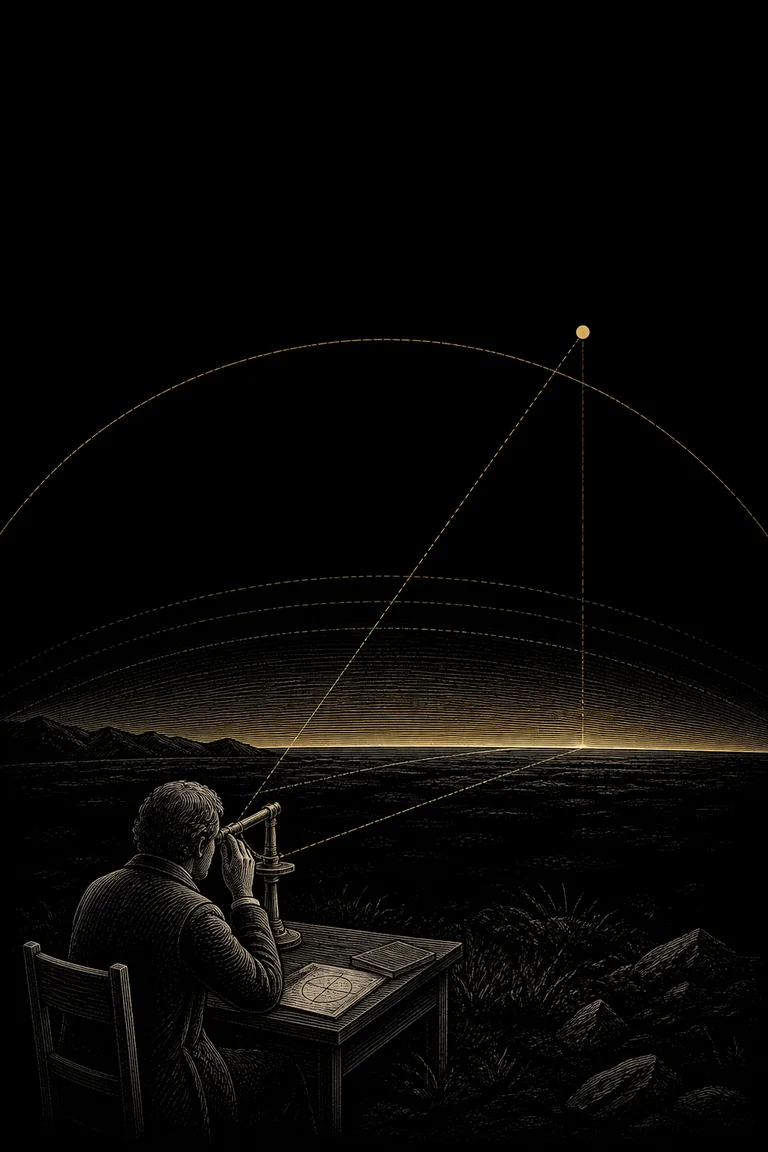
A heliacal setting is the last visible evening appearance of a planet or star before it disappears into the Sun's light. The date depends on the body, observer, horizon, season, and atmosphere.
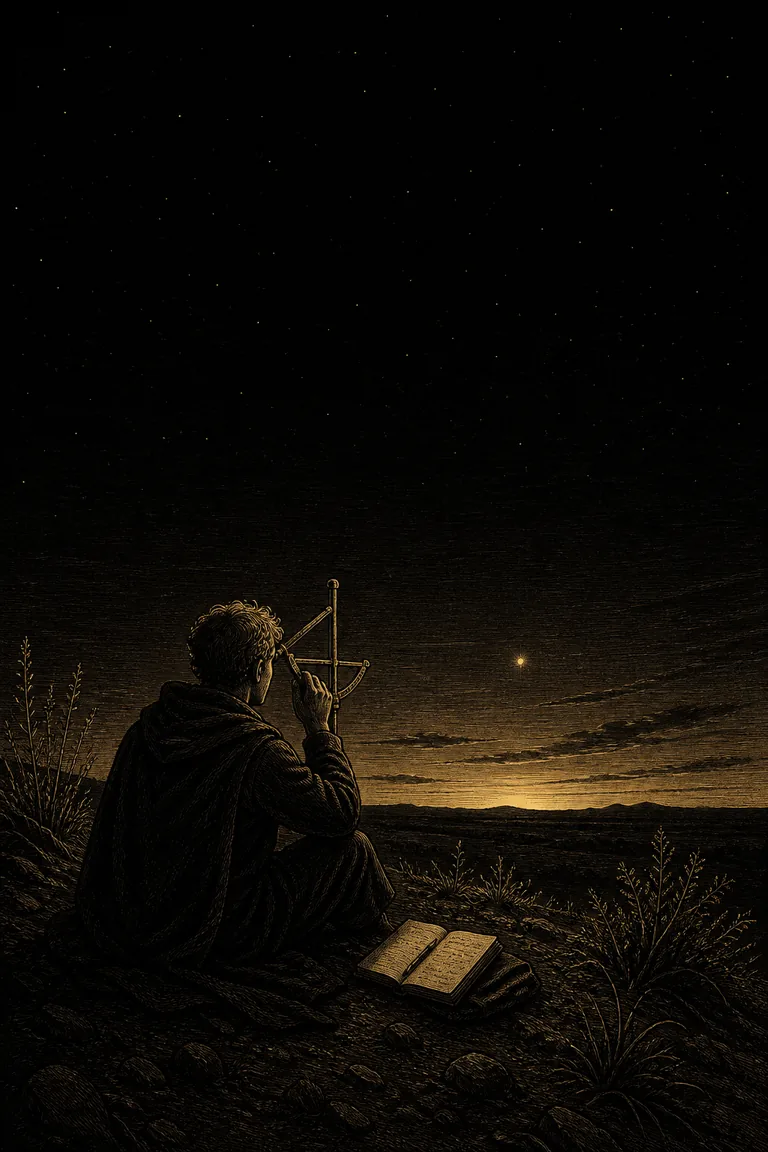
In astrology, heliacal setting marks a celestial body's withdrawal from evening visibility as it approaches solar conjunction. The event is observational. It is not one universal degree distance from the Sun, and a calculated date should not be presented as a confirmed sighting without location and visibility conditions.
Traditional interpretation often treats the phase as a transition from public display toward concealment, completion, or internal preparation. That symbolism is only one testimony. The planet's motion, dignity, aspects, house, rulerships, sect, and the actual chart question still matter.
Take the next insight with you
Explore personalized Astrology guidance in Veritas, available for iOS and Android.
 Scan with your phone
What does heliacal setting mean?
A body at heliacal setting is seen low in the western sky after sunset for the last time before solar glare hides it. On following evenings, decreasing separation, lower altitude, brighter twilight, or poor atmospheric conditions make it unavailable to the observer. The event belongs to the body's apparent cycle relative to the Sun as viewed from Earth.
Record the visibility claim precisely
In Veritas, save the body, location, western horizon, date window, observation or software method, solar separation, and the chart context you are testing.
Heliacal setting versus heliacal rising
Heliacal setting is the last evening visibility before concealment. Heliacal rising is the first morning visibility after concealment. They sit on opposite sides of the hidden solar phase and should not be collapsed into a generic “near the Sun” label. Some sources use phase terminology differently, so verify whether “setting” means last evening appearance rather than an ordinary daily descent below the horizon.
Why there is no single heliacal-setting orb
Elongation matters, but visibility also depends on apparent magnitude, atmospheric extinction, twilight brightness, altitude, latitude, season, elevation, and obstructions on the western horizon. Bright Venus can remain visible under conditions that hide a dimmer body. A fixed degree boundary may be a reproducible approximation, but it is not the same as an observed last appearance.
How to calculate or verify the phase
- Name the event
Specify last evening visibility and the celestial body rather than asking for a generic solar phase.
- Set the observing place
Use latitude, longitude, elevation, time zone, and a realistic western horizon.
- Track candidate evenings
Follow the body's altitude and separation from the Sun as conjunction approaches.
- Model visibility
Include twilight, magnitude, extinction, refraction, and the chosen visibility criterion.
- Classify the result
Label the date observed, modeled, historical, or based on a simplified degree rule.
- Keep uncertainty visible
Use a window when clouds, haze, terrain, or incomplete records prevent an exact last sighting.
Relationship to under the beams and combustion
Under the beams and combustion are usually geometric astrological conditions based on declared longitude distances from the Sun. Heliacal setting is an appearance threshold. A body can cross a chosen beams boundary on a different date from its modeled last visibility. Cazimi names the much closer solar conjunction. State which test you used instead of silently translating visibility into an orb.
Evening star terminology can be confusing
Before setting, the body belongs to an evening appearance and is seen after sunset. Mercury and Venus alternate evening and morning appearances because they remain near the Sun in our sky. Superior planets also enter solar concealment, but their geometry and visibility intervals differ. “Evening star” describes appearance, not a separate kind of celestial object.
Traditional astrological interpretation
Astrologers may associate last visibility with withdrawal, completion, handing something inward, or a period when the planet's topics become less publicly available. This language is symbolic, not a guarantee of disappearance, secrecy, defeat, illness, or loss. Ask what the planet signifies in the chart and whether other conditions support closure, protection, revision, or simple reduced visibility.
Heliacal setting in a natal chart
Use accurate birth location and date, and preferably time, to compare the natal planet with the local phase window. Then read sign, house, rulerships, dignity, motion, aspects, and sect. Do not label a person hidden, weak, secretive, or destined to lose recognition from this phase alone. When birth time is uncertain, preserve uncertainty around houses and horizon-sensitive claims.
Heliacal setting in transits
A current setting can provide a checkpoint in a planetary cycle. Define the topic and location before looking for matches. A Mercury setting might prompt review of unfinished communication, but it cannot prove that messages will fail. For markets, elections, health, weather, or conflict, do not substitute phase symbolism for domain evidence, expertise, or causal analysis.
Example: Venus disappears from evening view
Suppose software gives a three-evening last-visibility window for Venus in one city. Buildings block the western horizon on the first two evenings, while a rural observer sees Venus later. These reports can both be honest because local horizons differ. Astrologically, record the method before considering themes of values, relating, or evaluation. The phase does not predict a breakup, reunion, purchase, or financial result.
Example: a modeled historical setting
For an ancient date, software can reconstruct geometry but usually cannot recover exact haze, cloud, eyesight, or horizon obstruction. Report a likely visibility window and the model assumptions. An exact minute suggests precision the evidence cannot support. Compare alternative settings when two programs disagree before building an interpretation around one date.
Separate observation from interpretation
Use Veritas to keep the calculated phase, local conditions, chart testimony, expected theme, and later evidence in separate fields.
A responsible interpretation checklist
Confirm the event definition, body, place, horizon, date, and calculation method. Note whether visibility was observed or modeled. Then assess the planet's motion, sign, dignity, house, aspects, rulerships, and sect. Write one modest hypothesis and a contrary possibility. Review what actually happened without turning every quiet period into proof of concealment.
Limits of the technique
Heliacal setting cannot by itself establish personality, status, medical condition, relationship fate, financial outcome, or public events. Astrology is a symbolic interpretive practice rather than a scientifically validated prediction system. Use astronomical terms accurately and keep practical evidence, consent, safety, and professional advice primary.