Astrology Journal
North Node Conjunct Apollo Transit: Timing and Meaning
North Node conjunct Apollo is a settings-dependent transit to natal asteroid 1862, useful for reviewing trained clarity and visibility without promising talent or recognition.
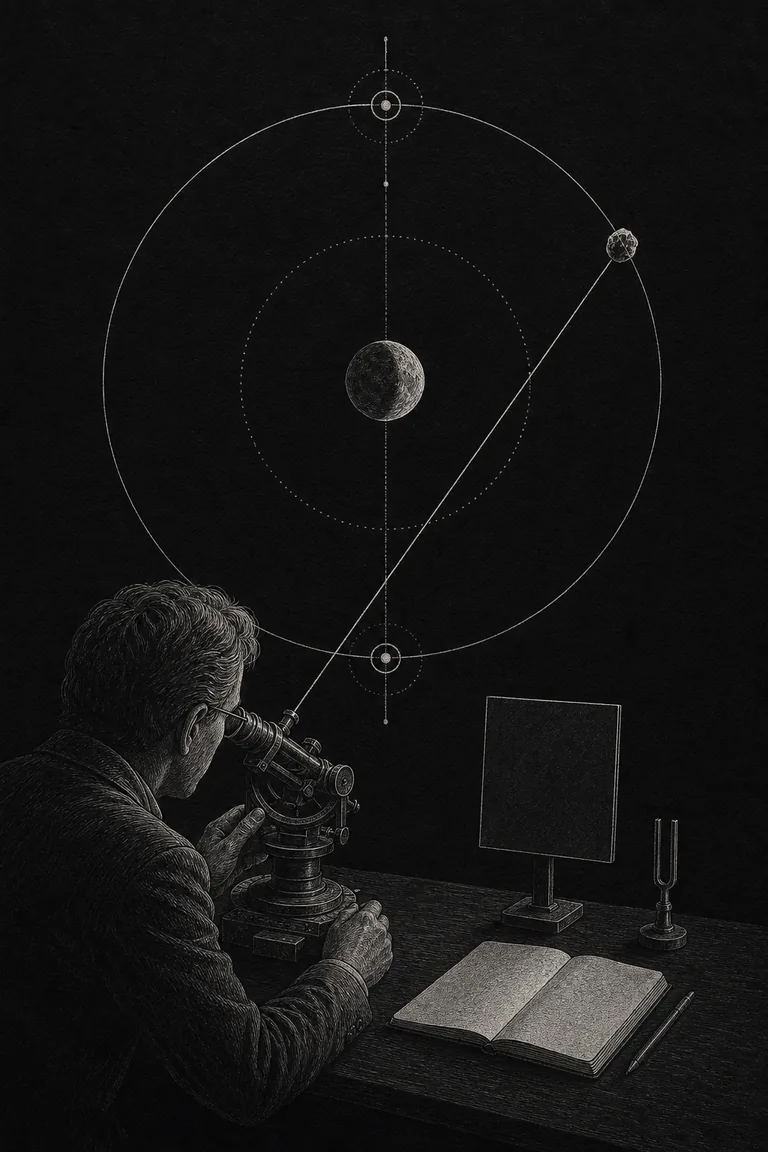
North Node conjunct Apollo transit occurs when the zodiac longitude of the moving North Node matches the natal longitude of physical asteroid 1862 Apollo within a declared orb. Astrologers may use the contact to review skilled aim, practice, teaching, performance, publication, or the responsibility attached to visible work. It does not prove genius, fame, prophecy, healing ability, professional authority, or a destined vocation.
A reproducible reading starts with the correct object, one mean or true node model, one zodiac, a narrow orb, and every exact pass. The transiting South Node is simultaneously opposite natal Apollo because the lunar nodes form an axis. Interpret that full geometry, then test any visibility or craft hypothesis against practice records, feedback, qualification, consent, credit, scope, consequences, and the needs of affected people.
Take the next insight with you
Explore personalized Astrology guidance in Veritas, available for iOS and Android.
 Scan with your phone
North Node conjunct Apollo at a glance
Confirm asteroid 1862 before calculating
Use physical asteroid 1862 Apollo and confirm its number and name in the ephemeris. NASA JPL identifies 1862 Apollo as a near-Earth asteroid and the namesake of the Apollo orbit class. Do not substitute Apollon, a separate hypothetical factor used in Uranian astrology, or a solar point. The natal Apollo guide owns signs, houses, aspects, and synastry; this article owns the moving-node contact.
Choose mean or true node once
Software may offer a mean node, which smooths lunar-node motion, or a true node, which retains short-term oscillation. Either can belong to a declared method, but exact dates and pass counts may differ. Label the choice and keep it fixed from search through interpretation. The lunar nodes guide explains the axis.
Keep zodiac and coordinates consistent
Record tropical or sidereal zodiac and name the ayanamsha if sidereal. Compare geocentric ecliptic longitudes calculated under the same conventions. Mixing a tropical natal asteroid with a sidereal node can create or remove a conjunction. Save the software, version, ephemeris, timezone, coordinate system, and settings so another reader can reproduce the result.
Use longitude and a declared orb
A conjunction is an angular relationship, not two marks that look close on a chart wheel. Calculate the shortest separation between the transiting North Node and natal Apollo. For an optional asteroid contact, a narrow working orb keeps the window useful. State the orb before searching and preserve applying, exact, and separating phases instead of widening it after a presentation or compliment seems meaningful.
Record every exact pass
True-node oscillation can produce more than one exact contact near the same degree, and software can report different results if settings change. Search a complete interval, save every exact timestamp, and record the separation at relevant observations. Do not select only the pass nearest an audition, publication, lesson, diagnosis, award, or public response. Multiple passes are one transit sequence, not several confirmations.
Preserve the South Node opposition
When the North Node conjoins natal Apollo, the South Node is opposite it by definition. The axis can frame an approach and its counterweight: developing clearer form while releasing borrowed prestige, or presenting work while reviewing an old performance habit. This is one geometry. Do not count the opposition as independent evidence or use it to claim a destined audience.
Birth-time uncertainty changes houses and angles
Apollo's natal longitude may remain usable across a limited birth-time range, but verify the actual motion for that date. Houses, angles, and Moon contacts can change substantially. If birth time is unreliable, omit house and angle claims or compare a documented range. The guide to a birth chart without birth time explains the boundary.
Apollo can symbolize trained clarity
Modern asteroid astrology often associates Apollo with focused aim, music, poetry, teaching, visible craft, disciplined form, and the consequences of recognition. Under a nodal contact, these themes can become a review prompt. Name the actual skill, audience, standard, practice, and result instead of announcing brilliance. Myth supplies symbolic questions, not a credential or prediction.
Visibility is not proof of value
A larger audience, title, applause, ranking, invitation, or polished image does not establish accuracy, ethics, competence, or benefit. Ask what work was completed, which standard applies, who reviewed it, what was omitted, who bears consequences, and whether people can decline participation. Recognition may require more accountability, not broader authority.
A clear target needs ethical scope
Apollo imagery can encourage a story about hitting the mark. Define the target in observable terms and ask whether it is legitimate. A teacher can clarify a lesson without controlling a student's identity. A practitioner can describe a method without claiming medical or legal authority. A creator can seek reach without using private material, unpaid labor, or uncredited work.
Practice evidence comes before a talent claim
Track rehearsal, study, drafts, error rates, feedback, supervision, revision, and finished work. A symbolic contact cannot establish innate talent, readiness, licensure, or mastery. If the task carries health, safety, financial, legal, or professional consequences, use the applicable qualification, evidence, and oversight. The transit may prompt the review but cannot pass it.
Feedback must be specific and safe
Praise and criticism can both be vague. Request feedback against a declared goal from people qualified or affected enough to comment. Protect confidentiality, accessibility, credit, and the right to refuse unpaid review. Separate preference from error and harm. One response does not represent an audience, and silence does not prove approval or rejection.
A six-step transit method
- Verify Apollo
Confirm physical asteroid 1862 and exclude hypothetical Apollon or a solar point.
- Freeze settings
Record mean or true node, zodiac, ayanamsha if used, coordinates, ephemeris, orb, and birth-time source.
- Find every pass
Save applying, exact, and separating phases across the full interval without selecting one convenient date.
- Preserve the axis
Read the North Node conjunction and simultaneous South Node opposition as one geometry.
- Name one craft question
Define the skill, target, practice, audience, standard, scope, credit, and possible consequence.
- Review evidence
Compare records, feedback, qualifications, consent, outcomes, alternatives, and one dated review.
Worked example: presenting a creative project
A person notices the first exact pass before sharing a music project. Instead of predicting acclaim, they record the node model, all passes, rehearsal history, rights to the material, accessibility, feedback criteria, distribution scope, and a review date. The South Node opposition prompts a check on an old need for approval. Audience response remains uncertain and measurable.
Worked example: teaching a method
Another person sees the transit while preparing a workshop. A grounded interpretation asks whether the learning objective is clear, sources are credited, examples are safe, limitations are explicit, and participants can opt out. It does not prove teaching ability, authority, demand, or positive outcomes. Pilot feedback and observed learning matter more than the transit.
Use the wider chart without stacking confirmation
Compare major transits, natal placements, progressions, and current circumstances only when each method is calculated independently and documented. A Sun, Mercury, Venus, or Midheaven contact may supply broader context, but several symbolic indicators do not become scientific proof. The transits guide keeps moving and natal factors distinct.
Avoid retrospective date fitting
After praise, rejection, publication, a health event, or a public mistake, it is easy to widen the orb, switch node models, or select the nearest pass. Preserve settings and the complete search interval before reviewing events. Track comparable dates when nothing notable happened. This reduces confirmation bias and protects the distinction between correlation, narrative, and causation.
Apollo is not the Sun or Apollon
The Sun is a core chart factor associated with identity, vitality, and organizing purpose. Asteroid 1862 Apollo is an optional named object with narrower symbolic use. Apollon is a hypothetical factor in a separate Uranian tradition. Do not mix their ephemerides or meanings. State the object number and method whenever a chart, software list, or source uses only a name.
Save the complete Apollo transit record
Use Veritas to log asteroid 1862, node model, zodiac, orb, every pass, South Node opposition, craft question, practice evidence, qualification, consent, credit, scope, counterevidence, and review date.
A practical journal prompt
Complete: "The skill or message I want to make clearer is __. The practice record is __. The relevant standard is __. The audience can verify or refuse __. My authority ends at __." Add every exact pass, one alternative explanation, one source of qualified feedback, one risk of visibility, and the old prestige habit worth reviewing.
Responsible limits
North Node conjunct Apollo transit is a symbolic timing framework, not scientific evidence of fate, talent, fame, prophecy, healing, diagnosis, vocation, authority, promotion, publication, demand, or success. It cannot determine another person's opinion or consent. Visit the <a href="/astrology">Astrology journal hub</a>, preserve calculation settings and every pass, and use practice records, direct communication, qualified guidance, and ordinary safety checks.