Astrology Journal
Quaoar in Astrology: Signs, Houses, Aspects, and Meaning
Quaoar is an optional modern chart factor used to explore creative ordering, rhythm, rules, and the structures that let complex activity become workable.
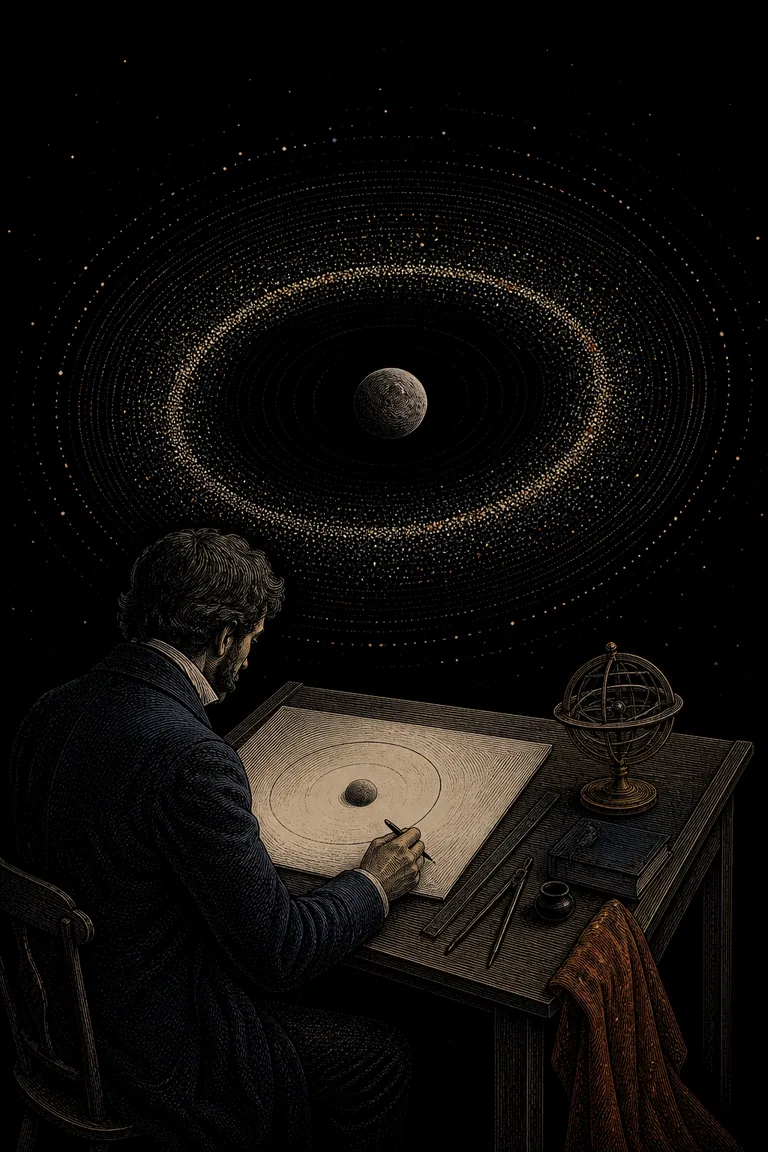
Quaoar in astrology refers to the trans-Neptunian object numbered 50000, discovered in 2002 and named with permission for a creation figure in Tongva tradition. Astronomically, it is a distant minor planet with a moon and a surprisingly remote ring system. Modern astrologers sometimes use Quaoar as an optional symbol for bringing order from complexity through rhythm, pattern, shared rules, and creative coordination.
This astrological use is recent, interpretive, and not scientifically validated. Quaoar does not measure creativity, prove a spiritual calling, or grant authority to speak for Tongva culture. Its slow movement makes the sign largely generational. Personal emphasis needs a close aspect, a house or angle based on reliable birth time, repeated chart themes, and lived evidence. Start with the established planets before assigning weight to a distant object.
Take the next insight with you
Explore personalized Astrology guidance in Veritas, available for iOS and Android.
 Scan with your phone
What Quaoar means in astrology
Astrologically, Quaoar can be used as a lens on the act of making an order that supports creation. The emphasis is less on a single flash of inspiration and more on cadence, sequencing, convention, and participation. It may help a reader examine how a team coordinates, how a practice becomes repeatable, or how rules can hold complexity without becoming rigid. Treat these as hypotheses to test against the chart and life, not fixed traits.
Place Quaoar in the whole chart
Use Veritas to compare Quaoar with planets, angles, houses, and close aspects before giving one distant object personal authority.
Quaoar astronomy and interpretive limits
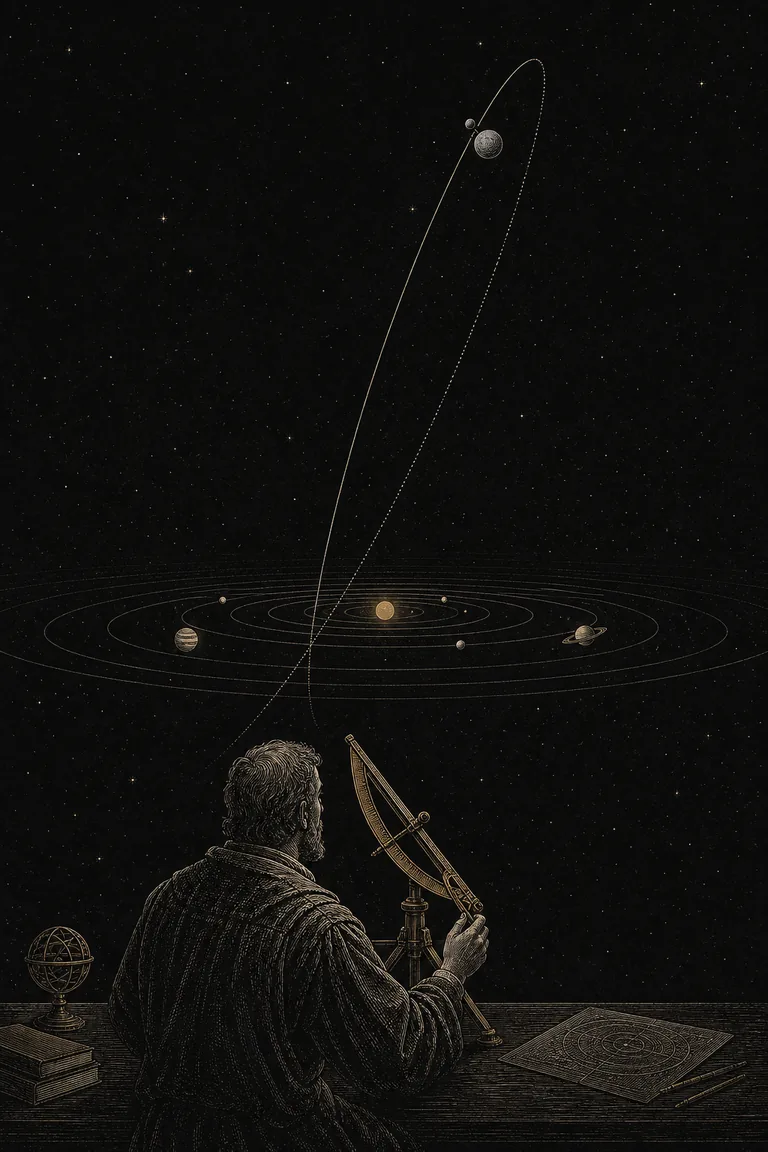
Quaoar travels beyond Neptune and takes roughly three centuries to orbit the Sun. Its sign therefore describes a broad cohort rather than a unique personality. The object is also notable because astronomers have detected rings farther from it than standard ring models once expected, a useful reminder that observation can revise an elegant rule. Astrology and astronomy are different practices, however. Physical facts can anchor the object's identity but do not validate astrological meaning.
Quaoar sign meaning
Quaoar by sign can suggest the style through which a generation experiments with order, creation, and shared rhythm. Because many peers share the sign, avoid presenting it as an individual gift. For personal reading, ask whether a close contact from the Sun, Moon, Mercury, Venus, Mars, or an angle gives that generational theme a more visible channel. Confirm the exact position with an ephemeris that includes minor planet 50000.
Quaoar house meaning
The house can describe the life area where questions of pattern and coordination become concrete. This requires an accurate birth time because house cusps can shift quickly. Without one, omit the house and use sign and close planetary aspects only. The house does not promise success in that area. It points to a field where the person may notice which routines, agreements, and boundaries allow creative work to continue.
Quaoar through the twelve houses
In the first house, Quaoar may emphasize a deliberately constructed way of entering situations. In the second, it can focus on systems for skills and resources; in the third, language, learning, and local coordination; in the fourth, household patterns and inherited rules. The fifth can bring structure to play and making, the sixth to craft and maintenance, the seventh to negotiated partnership, and the eighth to shared obligations. The ninth may concern frameworks of study and belief, the tenth public systems and contribution, the eleventh group protocols and collective projects, and the twelfth private rhythms, retreat, or institutions.
Quaoar aspects and orbs
Use a narrow orb, usually about one degree and no more than two for a conjunction or opposition to a major planet or angle. Exact contacts deserve more attention than a long list of loose ones. A conjunction concentrates the theme, an opposition may externalize it through negotiation, a square can expose friction in the system, and a trine or sextile may show coordination that feels available but still needs use. Check the same theme elsewhere before interpreting it.
Quaoar with planets and angles
With the Sun, Quaoar may connect identity with building a coherent practice. The Moon can emphasize rhythms of care and regulation; Mercury, language or information systems; Venus, agreements about value and participation; Mars, coordinated action; Jupiter, scale and shared frameworks; Saturn, durable rules and limits; Uranus, redesigned systems; Neptune, imagination that needs a container; and Pluto, the power embedded in an organizing structure. Contacts to the Ascendant or Midheaven can make the theme more visible when the birth time is reliable.
Quaoar in synastry
In synastry, a close Quaoar contact may offer language for how two people develop routines, make things, or negotiate the rules of participation. It does not prove a destined bond. A Quaoar-Mercury contact might highlight a shared method for thinking, while Quaoar-Saturn could bring attention to who sets standards and whether those standards remain fair. Relationship quality still depends on consent, communication, safety, and behavior.
Quaoar transits
Quaoar transits move slowly and are best treated as background periods rather than event timers. An exact contact may coincide with a long revision of a working method, institutional rule, or creative practice. Track the first exact pass, retrograde return, and final pass, then compare them with faster transits and actual decisions. Do not use Quaoar to predict a launch, diagnosis, breakup, or financial outcome.
Quaoar, Eris, Sedna, and Saturn
Quaoar can ask how a workable order is made. Eris often focuses on exclusion, discord, and contested legitimacy. Sedna can bring attention to survival, severed trust, and very slow repair. Saturn remains the established planetary symbol for boundaries, responsibility, time, and durable structure. Keeping these functions separate prevents every distant object from becoming a vague symbol for transformation or power.
Test the pattern against evidence
Use Veritas to note Quaoar's exact position, one close contact, the repeated chart theme, and a real system you can observe.
A responsible Quaoar worksheet
- Verify the position
Use a minor-planet ephemeris and record zodiac degree, date, and house only if birth time is reliable.
- Keep the orb narrow
Prioritize exact contacts to major planets and angles over many loose aspects.
- Find the established theme
Look for supporting evidence from planets, houses, rulers, and repeated patterns.
- Name one observable system
Identify a routine, agreement, workflow, or creative practice that can be tested and revised.
Common Quaoar interpretation mistakes
Do not treat Quaoar as a scientific personality measure, a universal creator archetype, or permission to flatten a living Tongva tradition into generic spirituality. Do not give a generational sign a precise personal meaning without close contacts. Avoid broad orbs, invented certainty, and event prediction. Quaoar is most useful as a secondary lens that asks how creativity becomes sustainable through rhythm, participation, and revisable rules.