Astrology Journal
Orcus in Astrology: Signs, Houses, Aspects, and Meaning
Orcus is an optional modern chart factor for examining promises, consequences, integrity under pressure, and the difficult work of restoring trust after an agreement is broken.
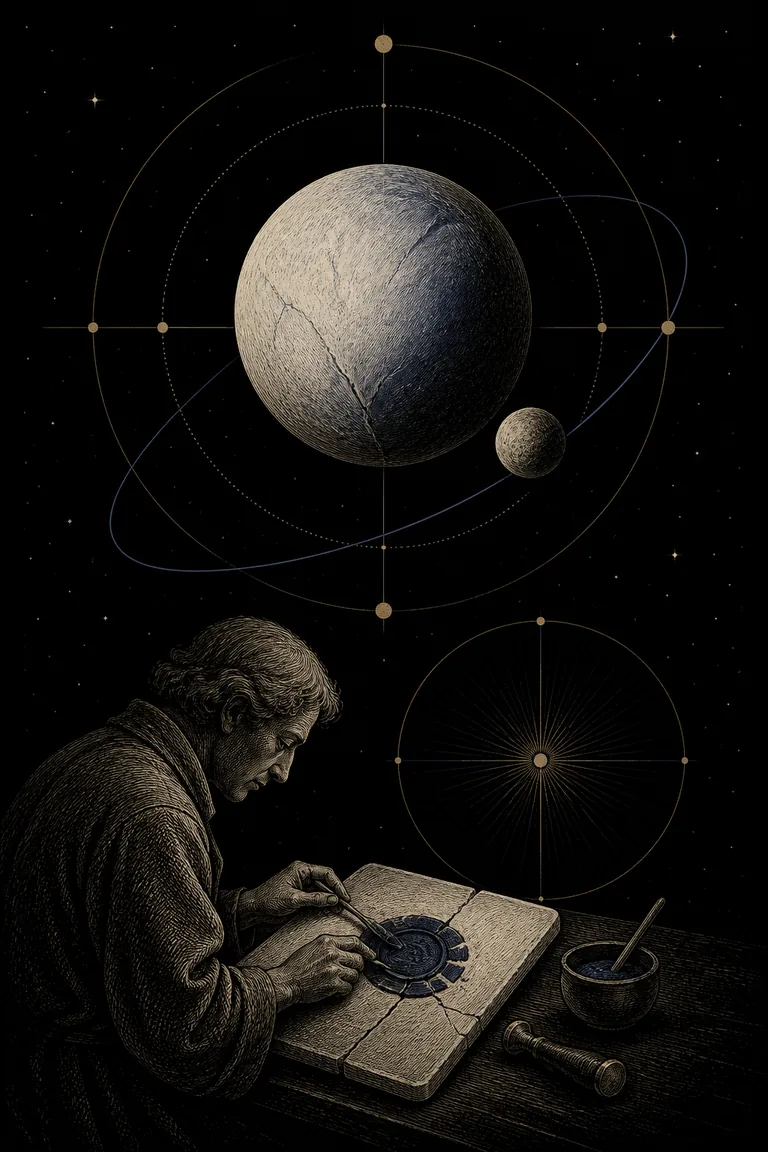
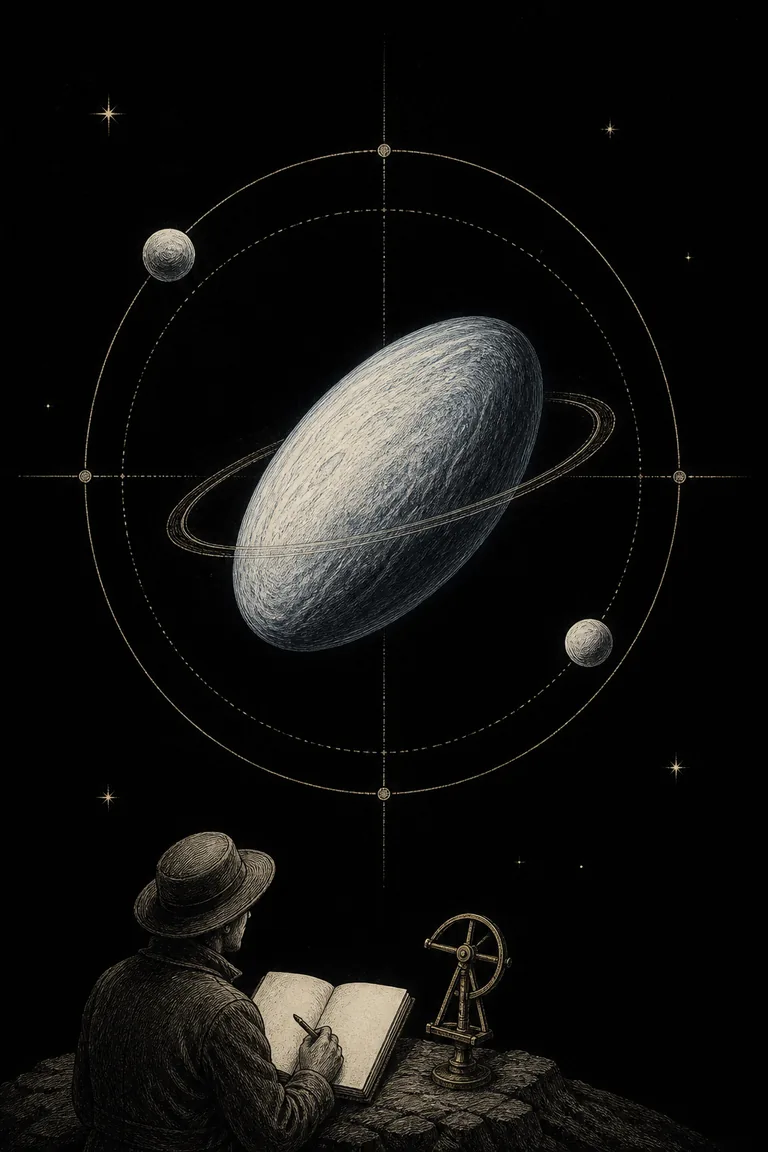
Orcus in astrology refers to minor planet 90482, a trans-Neptunian object discovered in 2004. It travels in a 2:3 resonance with Neptune, has a large moon named Vanth, and is sometimes called an anti-Pluto because its orbit resembles Pluto's while occupying a different phase. Modern astrologers often connect Orcus with oaths, accountability, punishment, integrity, and the consequences of breaking a binding word.
These meanings are recent, variable, and not scientifically validated. The astronomical object does not prove character, guilt, fate, or punishment. Orcus moves slowly, so its sign is generational. Personal interpretation needs an exact contact, dependable birth data for houses and angles, support from established chart factors, and evidence from lived experience. Use it as a secondary question about agreements, not a moral sentence.
Take the next insight with you
Explore personalized Astrology guidance in Veritas, available for iOS and Android.
 Scan with your phone
What Orcus means in astrology
A careful Orcus interpretation focuses on the relationship between a stated commitment and conduct under pressure. Constructively, it can describe fidelity to a chosen principle, willingness to accept consequences, and repair after a broken agreement. Its shadow can become rigid moralism, retaliatory punishment, hidden resentment, or impossible vows. The placement is most useful when it names a real agreement and a proportionate response.
Keep the distant object in proportion
Use Veritas to compare Orcus with major planets, angles, houses, and exact aspects before assigning it personal weight.
Orcus astronomy and interpretive limits
The Minor Planet Center lists Orcus as 90482, provisionally 2004 DW, discovered at Palomar on February 17, 2004 by Michael Brown, Chad Trujillo, and David Rabinowitz. It is a Kuiper Belt object in a 2:3 resonance with Neptune and has one known moon, Vanth. Astronomy establishes the object and orbit. It does not establish themes of oaths, punishment, personality, or events.
Why Orcus is linked with oaths
The modern symbolism largely follows the object's name. Orcus was an underworld figure associated in Roman tradition with punishment of broken oaths. Astrologers extend that naming context into questions about binding words and consequences. This is symbolic interpretation, not evidence that a placement makes someone honest, punitive, cursed, or destined to betray. Avoid inventing precise ancient astrological doctrine for a body discovered in 2004.
Orcus sign meaning
Orcus by sign may describe how a broad cohort frames loyalty, obligation, enforcement, and the cost of violated agreements. Because Orcus remains in a sign for many years, sign alone is not a personal identity marker. Verify the position with an ephemeris that includes object 90482, then look for a close aspect to a major planet or angle before treating the sign as individually relevant.
Orcus house meaning
The house may locate the life area where promises, accountability, and consequences become concrete. Accurate birth time matters because house and angle positions can change while Orcus barely moves. Without reliable time, omit the house. The placement cannot prove criminality, betrayal, punishment, or legal outcomes. Ask instead which commitments operate in that area and how repair would be measured.
Orcus through the twelve houses
In the first house, Orcus can raise questions about promises tied to identity; in the second, agreements about money and values; in the third, the reliability of words; and in the fourth, family obligations. The fifth may concern creative or parental commitments, the sixth duties and labor, the seventh contracts, and the eighth shared consequences. The ninth can involve belief, the tenth public responsibility, the eleventh group covenants, and the twelfth hidden vows.
Orcus aspects and orbs
Use narrow orbs, usually about one degree and no more than two for a conjunction or opposition to a major planet or angle. A conjunction concentrates the agreement theme; an opposition can place it in negotiation; a square may expose conflict between word and action; and a trine or sextile can show an available pattern of consistency. Exactness and repetition elsewhere matter more than many loose contacts.
Orcus with planets and angles
With the Sun, Orcus may connect identity with a binding principle. The Moon can emphasize inherited obligations; Mercury, promises and testimony; Venus, relational agreements; Mars, enforcement and conflict; Jupiter, law or large claims; Saturn, durable duty and consequence; Uranus, rupture of old contracts; Neptune, blurred terms or ideals; and Pluto, power behind an oath. None of these contacts proves behavior.
Orcus in synastry
In synastry, an exact Orcus contact can provide language for how two people experience promises, accountability, or the fear of broken trust. It cannot prove fidelity, karmic debt, punishment, or permanent bonds. Orcus-Venus might highlight relationship terms, while Orcus-Saturn can emphasize duty and consequences. Explicit agreements, consent, safety, communication, and observed behavior remain more important than any distant-object contact.
Orcus transits
Orcus transits unfold slowly and work best as background periods. An exact pass may coincide with a long review of a promise, institutional rule, moral position, or breach of trust. Track exact contacts alongside faster transits and actual decisions. Do not use Orcus to predict arrest, lawsuits, revenge, illness, death, relationship betrayal, or divine punishment. Consequences should be identified through facts.
Orcus, Pluto, Saturn, and Nessus
Orcus can focus narrowly on vows, integrity, breach, and consequence. Saturn remains the established planet of limits, duty, structure, and accountability. Pluto addresses power, compulsion, crisis, and transformation. Nessus is often used for harmful cycles, boundary violations, and the choice to interrupt them. Keeping these functions distinct prevents every difficult placement from becoming a vague prediction of punishment.
Repair without moral absolutism
Not every promise should be kept unchanged. An agreement made under coercion, misinformation, or unsafe conditions may need to be challenged or ended. Accountability is not identical to shame, retaliation, or permanent exclusion. A responsible Orcus reading asks what was freely agreed, who was affected, which consequence is already real, and what repair is possible without demanding continued harm.
Turn the oath theme into an audit
Use Veritas to record the exact Orcus contact, the real agreement involved, the evidence of impact, and one proportionate repair step.
A responsible Orcus worksheet
- Verify the position
Use a minor-planet ephemeris and record object 90482, zodiac degree, date, and source.
- Limit the claim
Prioritize one exact major contact and omit houses when birth time is uncertain.
- Name the agreement
State what was promised, by whom, under which conditions, and whether consent was free.
- Define accountability
Separate facts, impact, boundaries, repair, and proportionate consequences from symbolic judgment.
Common Orcus interpretation mistakes
Do not claim that Orcus exposes liars, predicts punishment, proves karmic debt, or guarantees revenge after betrayal. Avoid broad orbs, precise personal claims from a generational sign, and invented ancient astrological rules. Orcus is most useful as a modest secondary lens on promises, integrity, breach, consequences, and repair, always subordinate to evidence and the established chart.