Astrology Journal
Out-of-Bounds Planets in Astrology: Meaning and Calculation
A planet is out of bounds when its geocentric declination lies north or south beyond the Sun's maximum declination, using a stated threshold for the date.
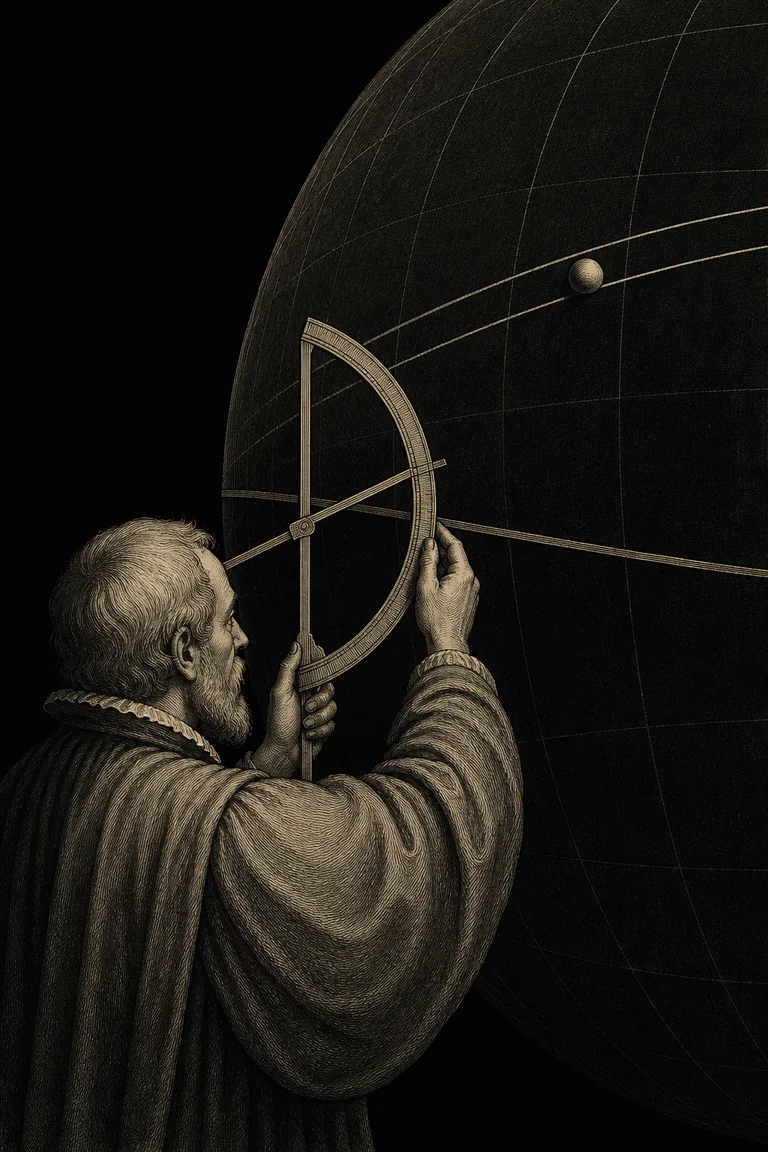
In astrology, an out-of-bounds planet has a declination farther north or south of the celestial equator than the Sun can reach. Declination is an equatorial coordinate measured in degrees north or south. A common fixed rule marks a body out of bounds beyond about 23 degrees 26 minutes, but Earth's obliquity changes slowly, so precise work should use the date-specific value or disclose the fixed threshold used.
Out of bounds is not a zodiac sign, house, aspect in longitude, retrograde condition, or speed category. It answers one coordinate question: does the body's absolute geocentric declination exceed the selected solar limit? Record the timestamp, viewpoint, declination source, direction, and threshold before adding any interpretation.
Take the next insight with you
Explore personalized Astrology guidance in Veritas, available for iOS and Android.
 Scan with your phone
What does out of bounds mean in astrology?
The celestial equator projects Earth's equator into the sky. Declination measures angular distance from it: north is positive and south is negative in many ephemerides. Because the Sun follows the ecliptic, its declination stays between limits set by Earth's axial tilt. The Moon and planets can have ecliptic latitude as well as longitude, allowing their declination to cross beyond that solar range. Astrologers call that condition out of bounds, often abbreviated OOB.
Save the coordinate behind OOB
Use Veritas to record the body, timestamp, geocentric declination, north or south direction, solar threshold, ephemeris, and chart context.
Declination is not zodiac longitude
Longitude places a body around the ecliptic in signs and degrees. Declination measures distance north or south of the celestial equator. Two planets can share a zodiac degree while having different declinations, or share a declination while occupying different signs. Changing from tropical to sidereal longitude does not by itself decide OOB status because the test uses an equatorial coordinate. Software settings still matter, so confirm that you are reading declination rather than celestial latitude.
What threshold should you use?
The often quoted boundary of 23 degrees 26 minutes approximates Earth's obliquity for modern dates. The true mean or apparent obliquity varies with date and definition. A body near the boundary can therefore be classified differently by a fixed conventional rule and a date-specific astronomical rule. Either approach can be documented, but do not claim minute-level precision while leaving the boundary unstated. The Sun itself reaches the boundary seasonally and does not exceed its own date-specific limit.
How to calculate an out-of-bounds planet
- Fix the moment
Use the exact date, time, and time zone for the natal event or transit being studied.
- Choose the viewpoint
Use geocentric declination unless a different method is explicitly intended and documented.
- Read the declination
Record the body's degrees and minutes plus N or S, or preserve the sign of a decimal value.
- Set the solar boundary
Use a named fixed limit or calculate the selected date-specific obliquity from the same astronomical source.
- Compare absolute values
The body is OOB only when the magnitude of its declination exceeds the boundary; retain north or south for interpretation and verification.
A worked declination example
Suppose an ephemeris gives Mars a geocentric declination of 24 degrees 08 minutes north and the declared boundary is 23 degrees 26 minutes. The absolute declination exceeds the limit by 42 minutes, so Mars is out of bounds north under that rule. If Venus is 23 degrees 20 minutes south, its magnitude remains inside the same boundary. The signs containing Mars and Venus do not change this comparison.
Which planets can go out of bounds?
The Moon can exceed the solar limit, and Mercury, Venus, Mars, Jupiter, Uranus, Pluto, and some minor bodies can do so at certain times. Occurrence and duration vary because each orbit has a different inclination and geometry. Saturn and Neptune remain within or very close to the solar declination range in ordinary modern geocentric tables, so do not assume every planet has frequent OOB periods. Check the actual ephemeris rather than a memorized list.
North and south out of bounds
Both directions meet the same magnitude test. A declination of +24 degrees is north OOB and -24 degrees is south OOB under a 23-degree-26-minute threshold. North is not automatically constructive and south is not automatically difficult. Direction is astronomical information, not a moral ranking. Preserve it because two bodies on the same side can form a parallel and bodies at equal opposite declinations can form a contraparallel.
Out-of-bounds planets in a natal chart
Modern astrologers often interpret an OOB planet as operating beyond familiar solar limits, using themes such as independence, exception, excess, unusual expression, or difficulty with convention. Those are symbolic hypotheses, not traits proved by the coordinate. Read the planet's sign, house, rulership, aspects, condition, and lived context. An OOB Mercury cannot diagnose neurodivergence, and an OOB Mars cannot establish aggression, criminality, courage, or exceptional talent.
The Moon out of bounds
Because lunar declination changes quickly, the Moon may cross the boundary and return within a relatively short interval. In natal work, some astrologers emphasize emotional autonomy, strong responses, or unconventional habits. In transit work, the condition is brief and common enough to require restraint. It cannot predict an emotional crisis, accident, market move, public disturbance, or personal breakthrough. Track the precise ingress and egress before attaching a story.
Out-of-bounds transits and return dates
For a transit, find when the body first crosses the selected boundary, reaches maximum declination, and returns inside. If the body later repeats the condition after a retrograde loop, record each interval separately. The OOB window describes declination, while exact aspects in longitude have their own dates. A long interval creates a study period, not a guarantee that the symbolism will dominate every event.
Parallels, contraparallels, and OOB are different tests
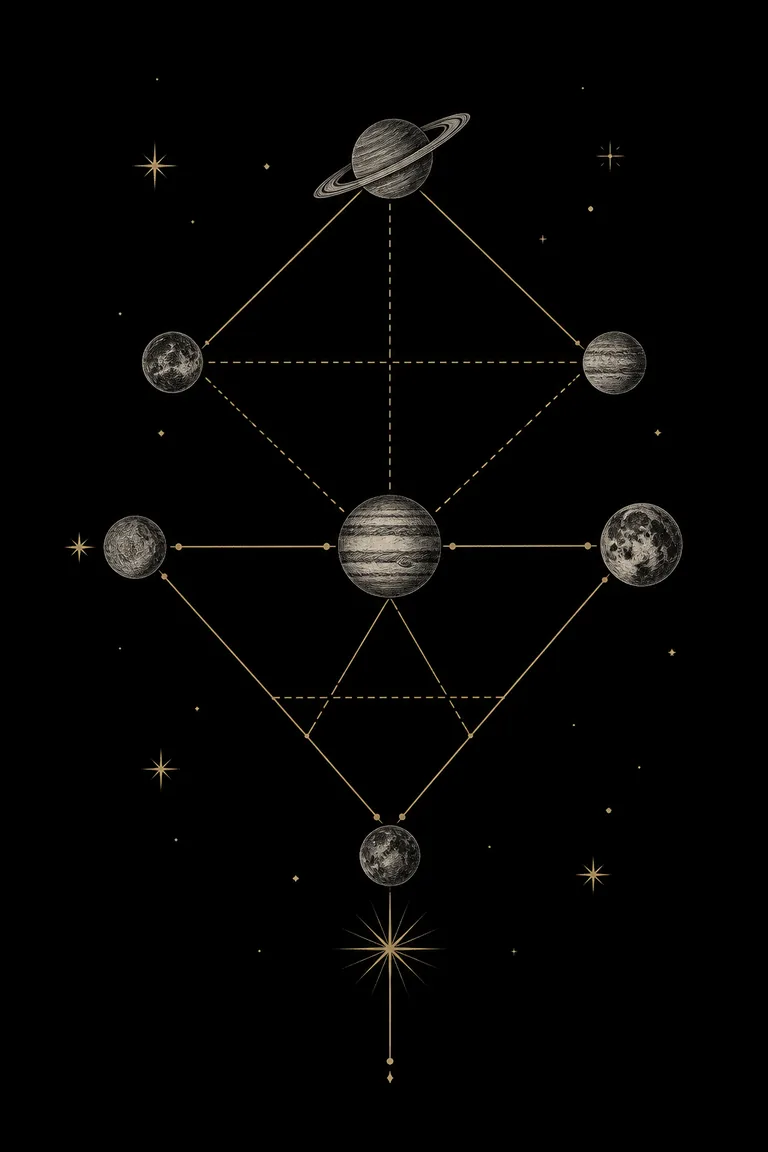
A parallel occurs when two bodies have similar declinations on the same side of the equator; a contraparallel uses similar magnitudes on opposite sides. Either aspect can occur inside or outside the solar boundary. OOB describes one body relative to the solar limit. A declination aspect compares two bodies with a stated orb. Keep those calculations separate even when they appear together.
Why astrology programs disagree
Differences can come from geocentric versus topocentric coordinates, true versus mean positions, ephemeris version, timestamp conversion, rounding, or use of a fixed rather than date-specific boundary. Compare the raw declination and threshold before comparing labels. A one-minute rounding difference matters only for a body almost exactly on the line. If the raw coordinates match, the disagreement is probably definitional rather than astronomical.
Build a declination timeline
In Veritas, log boundary entry, maximum north or south declination, boundary return, nearby parallels, longitude aspects, observations, and non-events.
OOB is not retrograde, stationary, or peregrine
Retrograde and stationary describe apparent longitudinal motion and its reversal. Planetary speed compares motion over time. Peregrine is a traditional essential-dignity test by sign and degree. Out of bounds uses declination relative to a solar boundary. A planet may hold several conditions at once, but one does not imply another. Name each calculation instead of compressing them into a general label of “unusual.”
Limits of out-of-bounds interpretation
Out-of-bounds declination is a real astronomical coordinate condition, while its astrological meaning is interpretive. It cannot establish diagnosis, identity, genius, danger, relationship fate, career success, legal outcome, disaster, or financial movement. Use it as one documented chart factor and do not replace medical, legal, financial, or mental health guidance with a declination label.