Astrology Journal
Planetary Speed in Astrology: Fast, Slow, and Stationary
Planetary speed in astrology usually means apparent geocentric motion in zodiacal longitude over time. It shows whether a planet is moving direct, slowing, stationary, or retrograde.
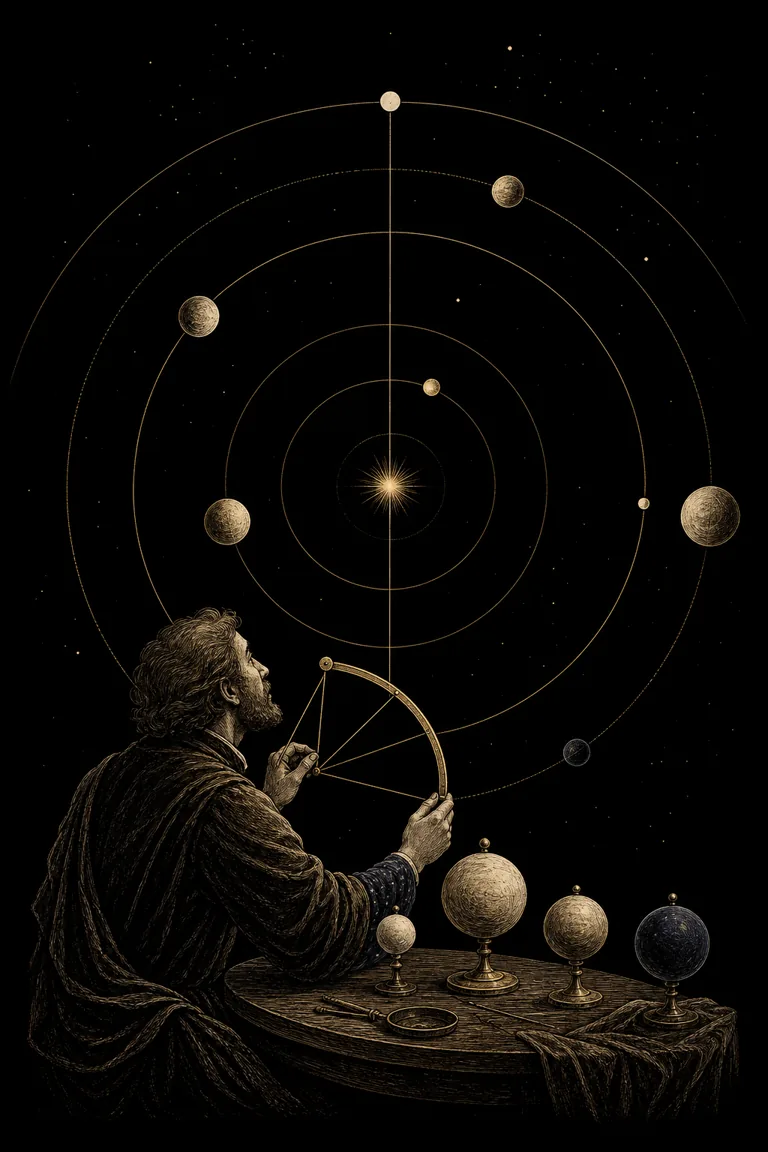
In most astrology software, planetary speed is the signed change in a body's apparent geocentric ecliptic longitude, commonly reported in degrees per day. A positive value usually indicates direct motion, a negative value retrograde motion, and a value near zero a station. Always confirm the software convention because coordinates, units, and station thresholds can differ.
Speed is descriptive, not a verdict. A fast planet is not automatically better, more successful, or more intelligent, and a slow planet is not defective. The value becomes meaningful only in relation to that planet's usual range, the chart date, the technique being used, and the rest of the chart.
Take the next insight with you
Explore personalized Astrology guidance in Veritas, available for iOS and Android.
 Scan with your phone
What planetary speed means
An ephemeris calculates where a body appears against a chosen coordinate system at successive times. The difference between those positions produces a rate of motion. Astrologers most often use geocentric tropical or sidereal longitude, but a program may also show latitude, declination, right ascension, topocentric position, or physical orbital velocity. Those are different measurements and should not be mixed.
Direct, retrograde, and stationary motion
A station is not a literal stop
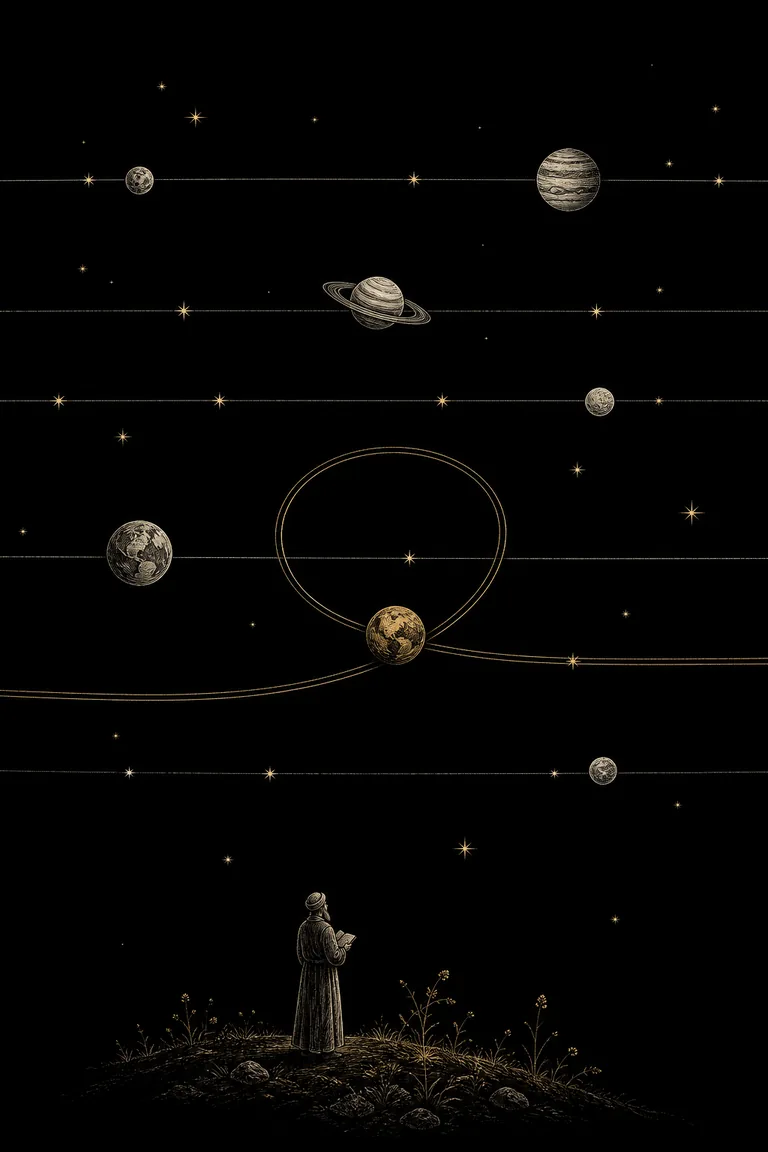
A planet does not halt in space. Its apparent longitudinal motion reaches a local turning region when viewed from Earth. Software may label the station at the exact mathematical reversal, within a selected speed threshold, or for an entire calendar day. This is why two programs can assign slightly different station times while using sound calculations.
Why planets need separate baselines
The Moon normally crosses far more zodiacal longitude per day than Saturn. Comparing their raw values does not tell you which is unusually fast. Evaluate a planet against its own typical or current-cycle range. The Sun and Moon do not station retrograde in ordinary geocentric longitude, while Mercury through Pluto show apparent retrograde cycles with very different durations and speed profiles.
Mean speed versus contextual speed
Some traditional methods compare a planet with a conventional mean daily motion. Modern software may compare the value with an empirical minimum and maximum or display a percentage of range. Both approaches can be reproducible if named. Do not copy a threshold from one table into another coordinate system without checking its assumptions.
How to check a speed value
- Identify the body and timestamp
Record the planet, date, exact time, time zone, and whether the chart is natal, event-based, or current.
- Name the coordinate system
Confirm geocentric or topocentric, tropical or sidereal, and longitude rather than another coordinate.
- Confirm units and sign
Check whether motion is degrees per day and how the program marks direct and retrograde values.
- Declare the comparison
Use the named traditional mean, the planet's cycle range, or another documented baseline.
- Inspect nearby dates
An ephemeris sequence shows whether the planet is accelerating, slowing, or crossing a station.
- Interpret in context
Add sign, house, rulerships, dignity, aspects, sect, and the purpose of the reading.
Planetary speed in a natal chart
A natal speed records one moment in a longer synodic cycle. Some astrologers read unusual speed as emphasis on pace, availability, urgency, revision, or concentration in the planet's topics. Keep the claim modest. Mercury moving slowly near a station cannot diagnose cognition, and Saturn moving quickly cannot guarantee efficient work or early achievement.
Planetary speed in traditional astrology
Traditional authors often treat swiftness, slowness, directness, retrogradation, and station as accidental conditions, especially in electional and horary work. The judgment depends on the named tradition and question. Speed may modify a planet's capacity to act, but it does not erase essential dignity, house placement, reception, aspects, or the condition of relevant significators.
Planetary speed in transits
A slow transit can remain within an aspect orb longer and may perfect the same aspect more than once around a retrograde loop. That increases duration and opportunities for observation, not certainty or severity. A fast pass can still coincide with an important event if the broader timing picture and real conditions support it. Track entry, exact contacts, station, and final exit rather than treating one label as the event.
Example: Mercury approaches a station
Suppose Mercury remains direct but its daily longitude change becomes smaller across several dates. Calling it slow or stationing depends on the selected threshold. An astrologer might use the period to review communication or logistics, but the speed cannot prove that a contract will fail, travel will be disrupted, or someone is withholding information. Verify the actual documents and plans.
Example: an outer planet repeats an aspect
An outer planet may approach a natal point, turn retrograde, and cross it again before a final direct pass. Its slow speed extends the interval. Record each exact contact and the months inside the chosen orb, then compare events and decisions. Do not manufacture a crisis to match the long transit or ignore changes caused by ordinary circumstances.
Keep the calculation attached to the claim
Use Veritas to record the source, timestamp, coordinate, signed speed, comparison rule, nearby dates, and chart context before interpreting.
Why astrology programs disagree
Differences can come from ephemeris data, time scale, interpolation, coordinate frame, ayanamsa, observer location, rounding, or the definition of stationary. First compare raw longitude and signed speed at the same timestamp. A label mismatch may disappear once both programs use the same settings. Preserve the disagreement if the remaining difference could change the interpretation.
A responsible interpretation checklist
State what was measured, compare the planet only with an appropriate baseline, and separate mathematical motion from symbolic language. Check the whole chart and name a contrary interpretation. For health, law, finance, safety, politics, or public events, use domain evidence and qualified expertise rather than converting slow or fast motion into a prediction.
Limits of planetary speed
Planetary speed cannot establish personality, intelligence, morality, diagnosis, relationship fate, wealth, or public outcomes by itself. Astrology is a symbolic interpretive practice rather than a scientifically validated prediction system. Accurate calculation improves honesty, but it does not turn symbolism into proof.