Astrology Journal
Salacia in Astrology: Signs, Houses, Aspects, and Meaning
Salacia is an optional modern chart factor for examining consent, retreat, negotiated closeness, calm depth, and the boundary between privacy and participation.
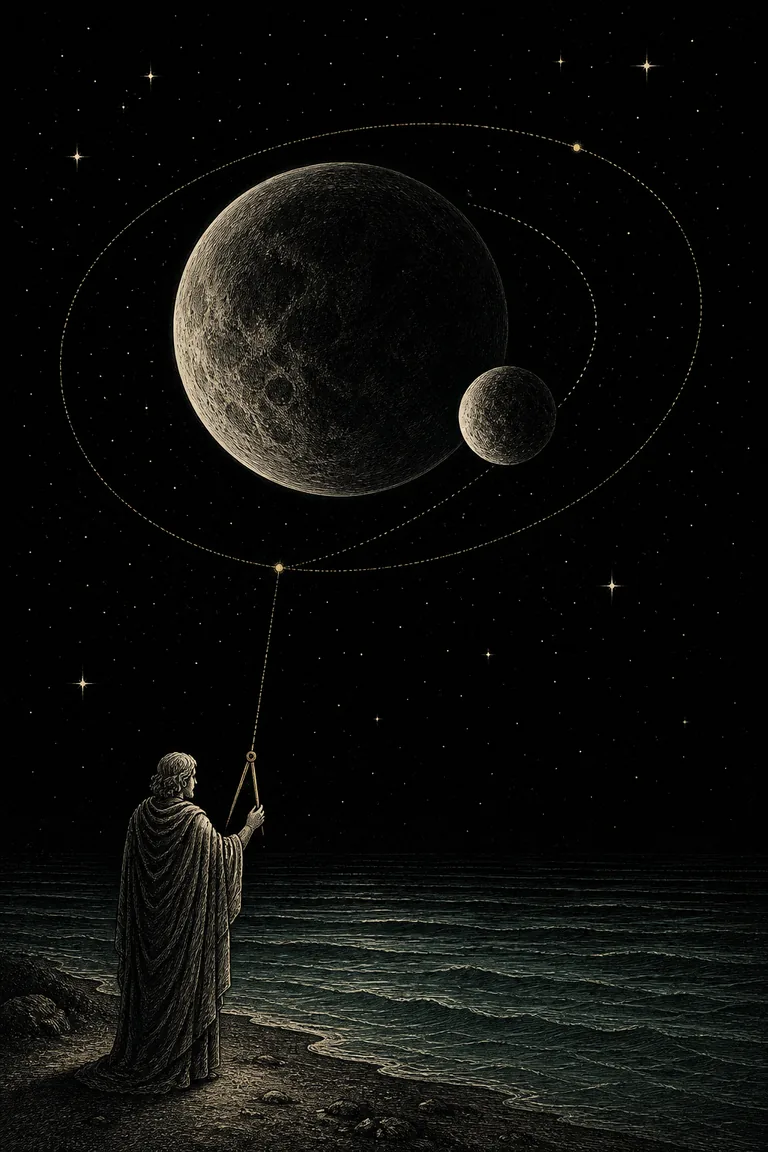
Salacia in astrology refers to minor planet 120347, a large trans-Neptunian object discovered in 2004. It has one known moon, Actaea, and is named for the Roman goddess associated with salt water and Neptune. Some modern astrologers use Salacia as a secondary symbol for deep feeling, withdrawal, consent, relational negotiation, and the choice to enter or leave an overwhelming situation.
These astrological meanings are recent, variable, and not scientifically validated. Astronomy establishes the distant binary system, not a personality trait or relationship outcome. Salacia moves slowly, so its sign is generational. Personal interpretation needs a close contact, reliable birth data for houses and angles, support from established chart factors, and evidence from lived experience. Use it as a question, not a diagnosis or prediction.
Take the next insight with you
Explore personalized Astrology guidance in Veritas, available for iOS and Android.
 Scan with your phone
What Salacia means in astrology
A careful Salacia interpretation focuses on the boundary between inward depth and chosen participation. Constructively, it can describe privacy, emotional steadiness, clear consent, and closeness negotiated without pressure. Its shadow can become disappearance, passivity, unspoken resentment, or idealization of being rescued. The placement is most useful when it points to a real choice, relationship, or boundary that can be discussed directly.
Keep the distant object in context
Use Veritas to compare Salacia with major planets, houses, angles, and exact aspects before assigning it personal weight.
Salacia astronomy and interpretive limits
The Minor Planet Center identifies Salacia as 120347, provisionally 2004 SB60, discovered at Palomar on September 22, 2004 by Henry Roe, Michael Brown, and Kristina Barkume. It is a trans-Neptunian object with one known moon, Actaea. Research describes the pair as a close binary system with a mutual orbital period of about 5.49 days. These facts do not establish astrological meaning.
Why Salacia is linked with consent and retreat
The modern symbolism largely follows the naming story. In Roman myth, Salacia is a sea goddess and consort of Neptune; later retellings emphasize her retreat from his pursuit and eventual agreement to marriage. Astrologers may translate this into questions about distance, persuasion, consent, and chosen union. This is a contemporary symbolic extension, not evidence of an ancient Salacia placement doctrine.
Salacia sign meaning
Salacia by sign may describe how a broad generation negotiates privacy, emotional depth, consent, and participation. Fire signs can make the choice visible, earth signs concrete, air signs verbal, and water signs protective or permeable. Because Salacia remains in one sign for years, sign alone is not a personal identity marker. Look for an exact major contact before giving it individual emphasis.
Salacia house meaning
The house may locate the life area where retreat, privacy, invitation, or negotiated closeness becomes concrete. Accurate birth time matters because houses and angles move while Salacia barely does. Without dependable time, omit the house. The placement cannot prove avoidance, trauma, secret relationships, or coercion. Ask which choices and boundaries are observable in that area.
Salacia through the twelve houses
In the first house, Salacia can raise questions about visibility and self-protection; in the second, consent around money and values; in the third, silence and speech; and in the fourth, private family space. The fifth may concern chosen creative exposure, the sixth daily boundaries, the seventh relationship agreements, and the eighth trust in shared matters. The ninth can involve belief, the tenth public participation, the eleventh groups, and the twelfth retreat and restoration.
Salacia aspects and orbs
Use narrow orbs, usually about one degree and no more than two for a conjunction or opposition to a major planet or angle. A conjunction concentrates the theme; an opposition can place it in negotiation; a square may expose pressure between privacy and participation; and a trine or sextile can show an available pattern of calm engagement. Exactness and repetition elsewhere matter more than numerous loose aspects.
Salacia with planets and angles
With the Sun, Salacia may connect visibility with chosen privacy. The Moon can emphasize emotional shelter; Mercury, the decision to speak or remain quiet; Venus, relational invitation; Mars, pursuit and refusal; Jupiter, broad permission or excess; Saturn, durable boundaries; Uranus, sudden withdrawal; Neptune, porous limits or idealization; and Pluto, power within intimacy. None of these contacts proves behavior.
Salacia in synastry
In synastry, an exact Salacia contact can provide language for how two people experience approach, distance, privacy, and consent. It cannot prove soulmates, rejection, coercion, marriage, or a permanent bond. Salacia-Venus may highlight how affection is invited, while Salacia-Mars can expose differences in pace. Explicit consent, safety, communication, and observed conduct remain more important than a distant-object contact.
Salacia transits
Salacia transits unfold slowly and work best as background periods. An exact pass may coincide with a long review of privacy, relationship terms, emotional exposure, or the conditions required for participation. Track exact contacts alongside faster transits and actual decisions. Do not use Salacia to predict disappearance, assault, marriage, pregnancy, illness, drowning, or another person's consent.
Salacia, Neptune, Venus, and the Moon
Salacia can focus narrowly on retreat, consent, calm depth, and chosen closeness. Neptune remains the established planet of imagination, permeability, devotion, confusion, and dissolution. Venus describes attraction, values, exchange, and relationship style, while the Moon describes needs, memory, regulation, and belonging. Keeping these functions distinct prevents one minor body from replacing the chart's primary relationship and emotional indicators.
Birth time and calculation limits
A date-only chart can usually support Salacia's sign and degree because the object moves slowly, but it cannot establish a reliable house or angle contact. Confirm object 120347 in an ephemeris that includes minor planets. Record the zodiac system, date, time, location, and source. If software disagrees, resolve the calculation before interpreting symbolism.
Turn symbolism into a clear boundary question
Use Veritas to record one exact Salacia contact, the real choice or agreement it evokes, and the evidence that consent and participation remain freely given.
A responsible Salacia worksheet
- Verify the position
Use a minor-planet ephemeris and record object 120347, zodiac degree, date, and source.
- Limit the claim
Prioritize one exact contact and omit houses or angles when birth time is uncertain.
- Name the choice
Describe what is being approached, declined, delayed, or entered without assuming another person's motives.
- Check free agreement
Identify the boundary, response, and practical condition that demonstrate consent rather than pressure.
Common Salacia interpretation mistakes
Do not claim Salacia proves victimhood, avoidance, sexual compatibility, marriage, hidden desire, or karmic union. Avoid broad orbs, exact personal claims from a generational sign, and invented ancient rules for an object discovered in 2004. Salacia is most useful as a modest secondary lens on retreat, privacy, calm depth, consent, and negotiated closeness, subordinate to evidence and the established chart.