Astrology Journal
Sect in Astrology: Day and Night Charts Explained
Sect divides a chart into day or night and places the seven traditional planets into diurnal and nocturnal teams. It modifies planetary condition without replacing the rest of the chart.
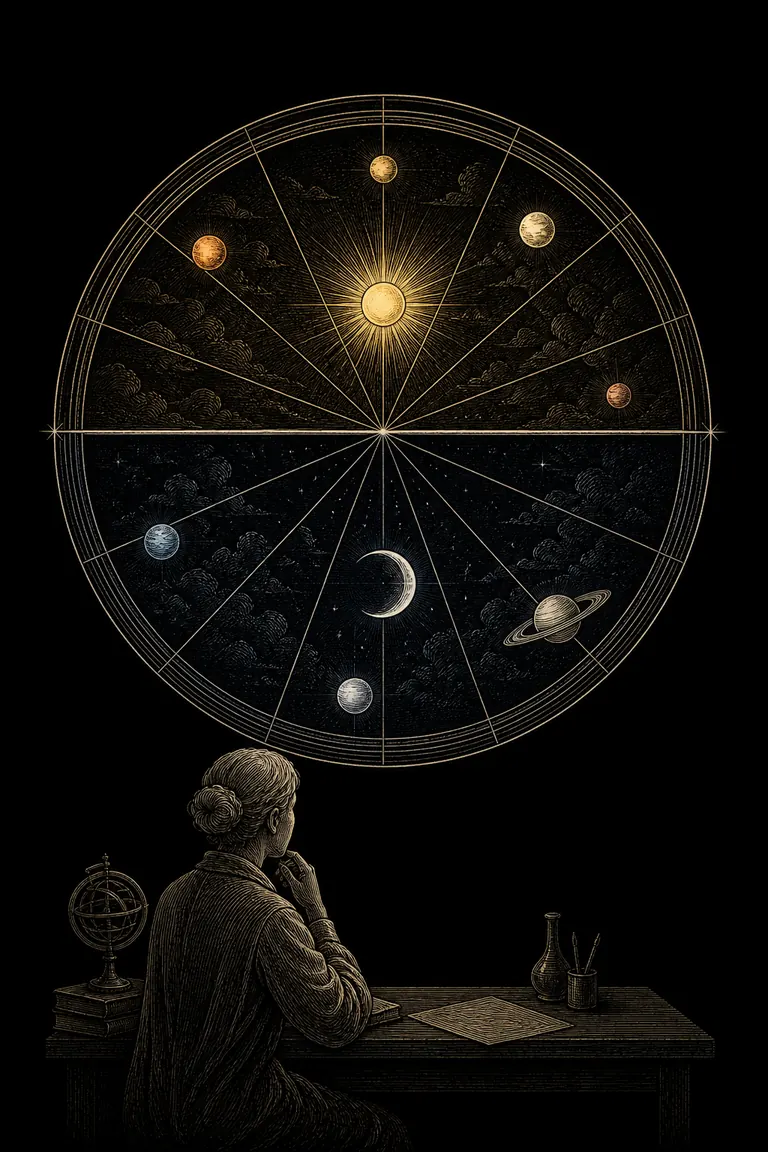
Sect in astrology is a traditional doctrine that begins with one practical question: was the Sun above or below the local horizon at the chart moment? A Sun above the horizon makes a diurnal, or day, chart. A Sun below the horizon makes a nocturnal, or night, chart.
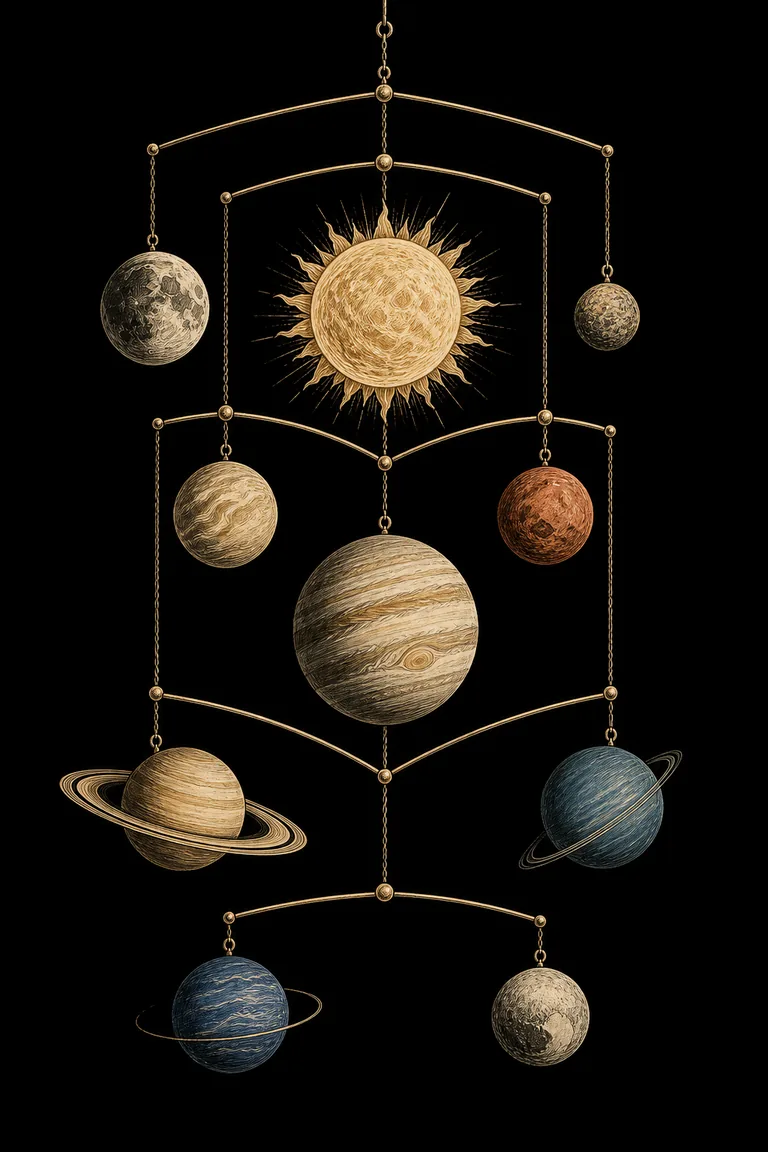
The Sun, Jupiter, and Saturn belong to the diurnal sect. The Moon, Venus, and Mars belong to the nocturnal sect. Mercury is variable and is commonly assigned by its relationship to the Sun as a morning or evening star. Sect helps describe how comfortably a planet operates within the chart's overall light conditions, but it does not make a planet good, bad, powerful, or powerless by itself.
Take the next insight with you
Explore personalized Astrology guidance in Veritas, available for iOS and Android.
 Scan with your phone
What does sect mean in astrology?
Sect translates a traditional idea of faction or affiliation. Hellenistic astrologers grouped the seven visible planets into two teams led by the two luminaries. The day team contains the Sun as sect light, Jupiter as benefic, and Saturn as malefic. The night team contains the Moon as sect light, Venus as benefic, and Mars as malefic. Mercury is common to both and changes affiliation according to the method used.
How to tell whether a chart is day or night
Find the Ascendant and Descendant degrees, which form the local horizon. If the Sun is physically above that axis, the chart is diurnal. If it is below, the chart is nocturnal. Do not decide from clock time alone. Sunrise and sunset vary by date and location, and daylight-saving or time-zone errors can move the Sun across the horizon.
Whole-sign houses and the actual horizon
In a quadrant display, houses seven through twelve are generally above the horizon and houses one through six below it. Whole-sign houses require more care because the Ascendant can fall anywhere inside the first sign. A Sun in the whole-sign first or seventh house may sit on either side of the degree-based horizon. Use the Ascendant and Descendant degrees, not the house number alone.
Births near sunrise or sunset
When the Sun is very close to the horizon, a small birth-time error can change the sect. Verify the recorded time, location, time zone, and daylight-saving rule. If the time remains uncertain, calculate the range of possible positions and interpret both cases. Do not rectify a chart into the preferred sect because one description seems more flattering.
The diurnal sect: Sun, Jupiter, and Saturn
The Sun leads the day sect, Jupiter is its benefic, and Saturn is its malefic. In traditional reasoning, daylight supports the Sun's visibility and Jupiter's expansive, ordering qualities, while moderating Saturn's cold and restrictive extremes. In a day chart these planets are in sect. In a night chart they are contrary to sect, but they still retain their signs, houses, aspects, motion, and topics.
The nocturnal sect: Moon, Venus, and Mars
The Moon leads the night sect, Venus is its benefic, and Mars is its malefic. Traditional authors associated night with moisture, cooling, receptivity, and change. These conditions were said to support Venus and temper the heat and dryness of Mars. In a night chart these planets are in sect. In a day chart they are contrary to sect, which can make their less regulated expressions more noticeable without guaranteeing harm.
Establish the chart's light condition first
Open Veritas, compare the Sun with the local horizon, and label the chart diurnal or nocturnal before scoring individual planets.
The sect light
The sect light is the luminary that leads the active team: the Sun in a day chart and the Moon in a night chart. This gives that luminary special interpretive relevance in traditional methods, including some approaches to planetary periods and Lots. It does not make the other luminary unimportant. Read both lights through sign, house, phase, aspects, rulership, and the topics of the question.
Benefics in and out of sect
Jupiter is usually treated as the benefic of the day sect and Venus as the benefic of the night sect. The benefic of sect may offer support in a way that fits the chart's overall conditions more readily. The contrary benefic can still be highly constructive, especially when essentially dignified, angular, direct, visible, well connected, or ruling an important place. Sect changes the manner and reliability of help rather than switching help off.
Malefics in and out of sect
Saturn is the malefic of the day sect and Mars the malefic of the night sect. Being in sect is often read as a moderating condition. Saturn in a day chart may express limits with more proportion, while Mars in a night chart may direct heat and separation more selectively. Contrary-to-sect Saturn or Mars may require greater attention to excess, but no placement proves cruelty, accident, illness, or failure.
How to determine Mercury's sect
Mercury has no fixed team. A common Hellenistic rule assigns Mercury to the diurnal sect when it is a morning star, rising before the Sun, and to the nocturnal sect when it is an evening star, setting after the Sun. Software labels can differ, especially around conjunctions and retrograde loops. State the source and solar-phase rule you are using rather than mixing several methods in one judgment.
Sect and rejoicing conditions
Some traditional techniques add a hemisphere condition. In a day chart, diurnal planets rejoice above the horizon while nocturnal planets rejoice below it. At night, nocturnal planets rejoice above the horizon while diurnal planets rejoice below. Later authors also considered sign gender and developed the related doctrine often called hayz. These are additional conditions, not substitutes for the chart's basic day or night status.
Sect and planetary joys
Sect helps explain the architecture of the planetary joys. The diurnal Sun, Jupiter, and Saturn joy above the horizon in houses nine, eleven, and twelve. The nocturnal Moon, Venus, and Mars joy below it in houses three, five, and six. Mercury joys in the first house at the horizon. A joy is a house testimony, while sect begins with day or night and planetary affiliation. Do not merge the two into one score.
Sect, essential dignity, and accidental dignity
Essential dignity describes sign- and degree-based resources such as domicile, exaltation, triplicity, bounds, and face. Accidental dignity describes circumstances such as angularity, motion, visibility, and support. Sect adds environmental fit. A planet may be in sect but debilitated by sign, or contrary to sect but strongly placed and well received. Preserve the mixed testimony instead of forcing a single label.
Worked example: Saturn in a day chart
Suppose Saturn is above the horizon in a day chart, placed in Aquarius and ruling the tenth house. Sect, hemisphere, domicile, and topical rulership all support Saturn's capacity for sustained structure, standards, or long-range responsibility. Difficult aspects could still show delay, isolation, fear, or costs. The synthesis should name where disciplined containment is useful and where rigidity needs correction.
Worked example: Mars in a night chart
Imagine Mars in a night chart in the sixth house, applying to a trine with Venus. Mars is in sect and occupies its planetary joy, which may help direct effort toward repair, craft, training, or the management of recurring demands. The sixth house still carries strain and unequal obligations in many traditional systems. Sect does not erase conflict, health realities, or labor conditions.
Can sect be used in transits or synastry?
Sect is most securely rooted in the natal or event chart being judged. A transit can activate a natal planet, but the transiting sky's day or night condition should not casually replace that planet's natal context. In synastry, compare how each person's planets operate in their own chart before treating sect differences as compatibility. Sect does not measure relationship quality or consent.
A practical sect workflow
- Verify the chart data
Confirm date, exact local time, location, time zone, and the degree-based horizon.
- Name day or night
Mark the chart diurnal when the Sun is above the horizon and nocturnal when it is below.
- Assign the planets
Tag the fixed sects and determine Mercury from one declared solar-phase method.
- Synthesize full condition
Add dignity, house, aspects, motion, visibility, reception, rulership, and the actual question.
Keep sect as one visible testimony
Use Veritas to note sect beside essential condition, house, aspects, and ruled topics, then write a synthesis that preserves conflicting evidence.
Common sect mistakes
Avoid using AM or PM instead of the local horizon, assigning sect from whole-sign house number near sunrise or sunset, or treating in-sect planets as virtuous and contrary planets as doomed. Do not give Uranus, Neptune, or Pluto invented membership in the ancient seven-planet system without naming a modern method. Sect is most useful when it adds precision to a complete traditional judgment.