Astrology Journal
Sedna in Astrology: Signs, Houses, Aspects, and Meaning
Sedna is a very distant modern chart factor used to explore deep time, survival, violated trust, withdrawal, and the slow conditions of repair.
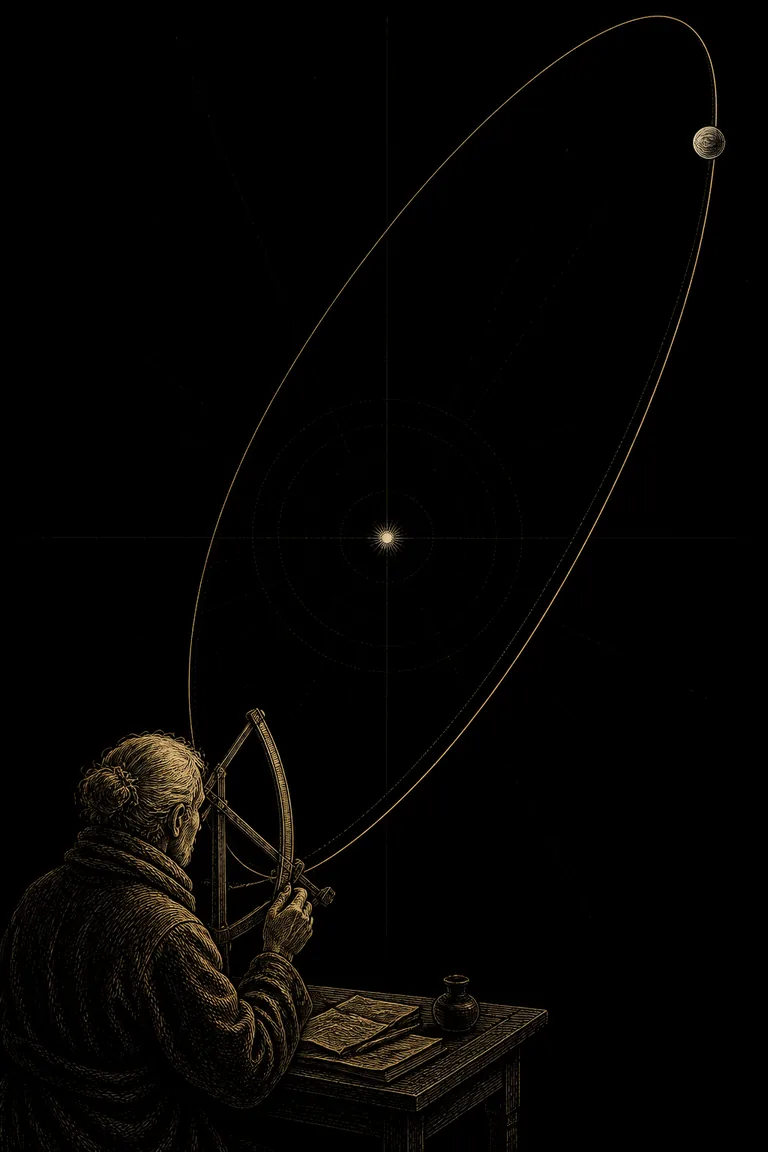
Sedna in astrology refers to the distant trans-Neptunian object numbered 90377 and named for the Inuit sea being Sedna. It was identified in images taken in November 2003 and announced in March 2004. Its extremely long, elongated orbit makes it a collective placement. Modern astrologers use it as an optional symbol for survival, severed trust, exile, resource protection, and forms of repair that cannot be rushed.
This astrological tradition is young and not scientifically validated. Sedna does not diagnose trauma, prove betrayal, predict abandonment, or assign victim and perpetrator roles. Its sign is shared across generations, so personal interpretation needs a close aspect, a house or angle based on a reliable birth time, repeated chart themes, and lived evidence. Use it to ask better questions about safety and repair, not to turn mythology into a verdict.
Take the next insight with you
Explore personalized Astrology guidance in Veritas, available for iOS and Android.
 Scan with your phone
What Sedna means in astrology
Astrologically, Sedna can be used as a lens on survival after a bond, promise, or protective system has failed. Its symbolism often includes withdrawal, cold distance, inaccessible resources, long memory, and the question of whether trust can be rebuilt under new conditions. A responsible reading does not demand forgiveness or return. It distinguishes present danger from remembered danger, respects protective distance, and asks what material support makes choice possible.
Place Sedna in the whole chart
Use Veritas to compare Sedna with planets, angles, houses, and close aspects before giving one distant object personal authority.
Sedna astronomy and discovery
Sedna was found by Mike Brown, Chad Trujillo, and David Rabinowitz in images taken at Palomar Observatory on November 14, 2003. NASA's early discovery material described an orbit of roughly 10,500 years, while current orbital solutions can vary as observations improve. JPL identifies the body as 90377 Sedna, provisional designation 2003 VB12. Those are astronomical facts. Meanings about trust, survival, and repair come from modern astrological interpretation and should be labeled accordingly.
How to find Sedna in a birth chart
Use software that includes 90377 Sedna or accepts a numbered minor-body lookup. Record its exact degree, zodiac sign, house system, aspects, and the source quality of the birth time. Sedna moves so slowly that its sign cannot describe an individual personality. If the birth time is unknown, the house and angle contacts may be unreliable. Prioritize very close contacts to the Sun, Moon, personal planets, Ascendant, or Midheaven and compare them with the rest of the chart.
Sedna through all 12 signs
Sedna by sign describes a broad cohort's symbolic language of survival and repair. Aries may emphasize autonomy and force; Taurus, land, food, ownership, and material continuity; Gemini, testimony and information; Cancer, kinship and protection; Leo, dignity and recognition; Virgo, labor and maintenance; Libra, agreements and justice; Scorpio, secrecy and shared power; Sagittarius, belief and cultural memory; Capricorn, institutions and duty; Aquarius, networks and collective access; and Pisces, compassion, sacrifice, or porous boundaries. Personalize only through closer chart factors.
Sedna by house
The house can suggest where safety, distance, and slow repair become personally visible. The first concerns embodiment and self-protection; second, resources and survival value; third, voice and testimony; fourth, family and belonging; fifth, creative dignity; sixth, labor and care systems; seventh, trust and agreements; eighth, dependence, consent, and shared assets; ninth, belief and inherited narratives; tenth, authority and public responsibility; eleventh, community protection; and twelfth, hidden loss, retreat, or unacknowledged support needs.
Sedna aspects in the birth chart
A conjunction concentrates Sedna themes around a planet or angle. An opposition may make questions of trust or distance visible through relationship and projection. A square can describe friction between protection and participation, while a trine or sextile may make survival knowledge easier to integrate without erasing its cost. Contacts between Sedna and other slow bodies apply to cohorts. Use narrow orbs and give the contacted planet the primary role.
Sedna with the Sun, Moon, Mercury, Venus, and Mars
With the Sun, questions of dignity and identity may gather around endurance or withdrawal. The Moon can focus family memory, care, and conditions of emotional safety. Mercury may concern testimony, silence, or who controls a story. Venus can bring value, alliance, and reciprocity into the repair process. Mars may sharpen protection, anger, and the right to act. None of these contacts proves trauma or betrayal. Read the aspect, house, orb, and actual history together.
Sedna in synastry
In synastry, a close Sedna contact can be used to examine where a relationship activates strong needs for safety, distance, witness, or trustworthy repair. It does not identify an abuser, victim, soulmate, or inevitable rupture. Do not use the symbol to pressure someone into disclosure or reconciliation. Evaluate present conduct, consent, material dependence, accountability, and access to support. Where harm is occurring, qualified legal, medical, or mental-health help matters more than chart symbolism.
Sedna transits
Sedna transits are exceptionally slow. A close contact to a natal planet or angle may frame a long period of reviewing protection, trust, access, and the sustainability of existing arrangements. Faster transits can mark shorter developments inside that period, but astrology cannot establish cause or guarantee an event. Track exact passes, observable changes, decisions, and available resources. Avoid retrofitting every painful experience to a slow transit after the fact.
Sedna compared with Eris, Pluto, and Neptune
Eris is often used for discord, exclusion, rivalry, and the rule a conflict exposes. Pluto concerns power, compulsion, elimination, and regeneration. Neptune concerns ideals, imagination, permeability, and disillusionment. Sedna is narrower: it highlights survival across deep time, protective distance, violated trust, and the conditions under which resources or relationship can return. These symbols may overlap, but combining them into one catastrophic story removes useful distinctions.
Birth time, orbs, and generational limits
Without a reliable birth time, avoid confident house and angle statements. Astrologers have no universally accepted Sedna orb, so state your method and begin narrow. A sign-only reading is highly collective because the body moves through the zodiac over many generations. A personal interpretation should survive comparison with stronger chart factors and with real events. If removing Sedna leaves the same story intact, the object may be adding language rather than evidence.
Map repair at a human pace
Use Veritas to separate present conditions from old alarms, name the support available now, and define one boundary or repair step you can review.
A practical Sedna repair map
- Describe present conditions
List what is happening now without forcing it to repeat the myth or the past.
- Identify protection
Name the boundary, resource, distance, or ally that currently supports choice.
- Define trustworthy evidence
Specify what consistent behavior or material change would make repair credible.
- Set the pace
Choose a review point that does not require premature disclosure, reunion, or forgiveness.
Common Sedna interpretation mistakes
Do not diagnose trauma, predict betrayal, assign moral roles, or tell someone that suffering is spiritually required. Do not present one modern retelling as the only Inuit account or use a living cultural tradition as decorative proof for a chart claim. Avoid making a generation-wide placement sound personally unique. Sedna is most useful when its symbolism remains optional, culturally careful, and answerable to current facts, consent, resources, and time.