Astrology Journal
Stationary Planets in Astrology: Meaning and Calculation
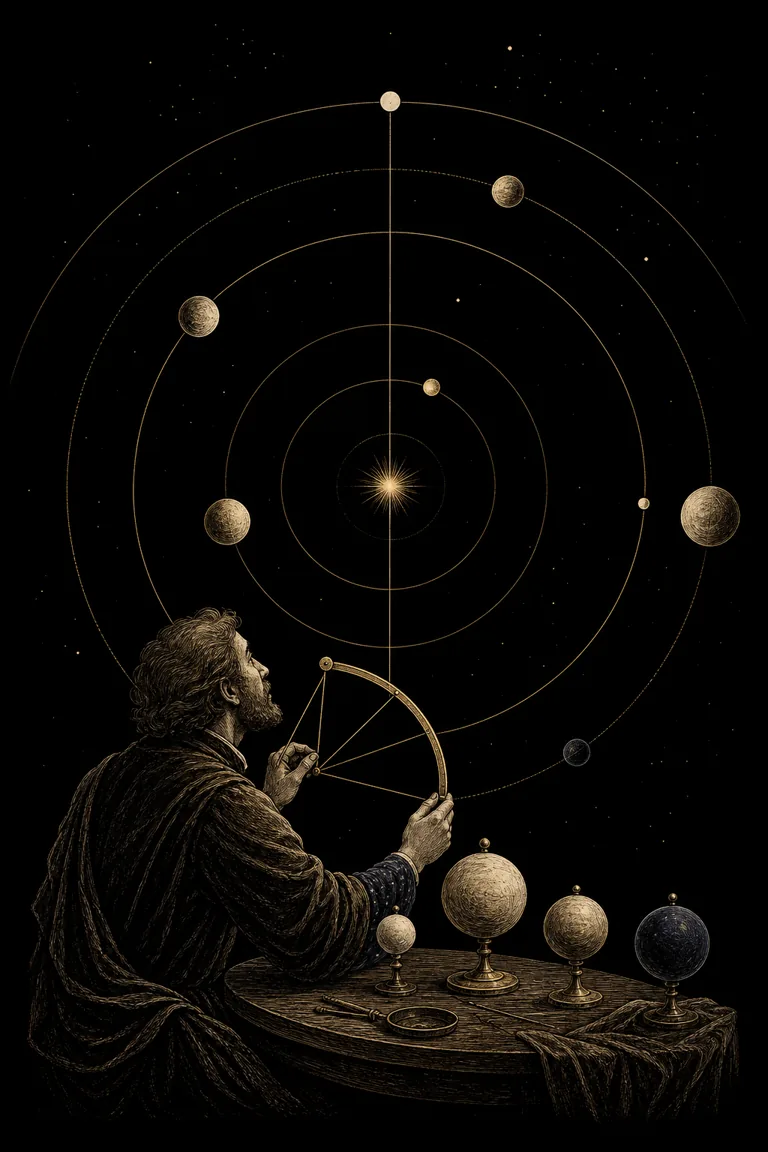
A stationary planet is at or near a reversal in apparent geocentric motion. The exact station is a moment; the wider stationary phase depends on a declared speed rule.
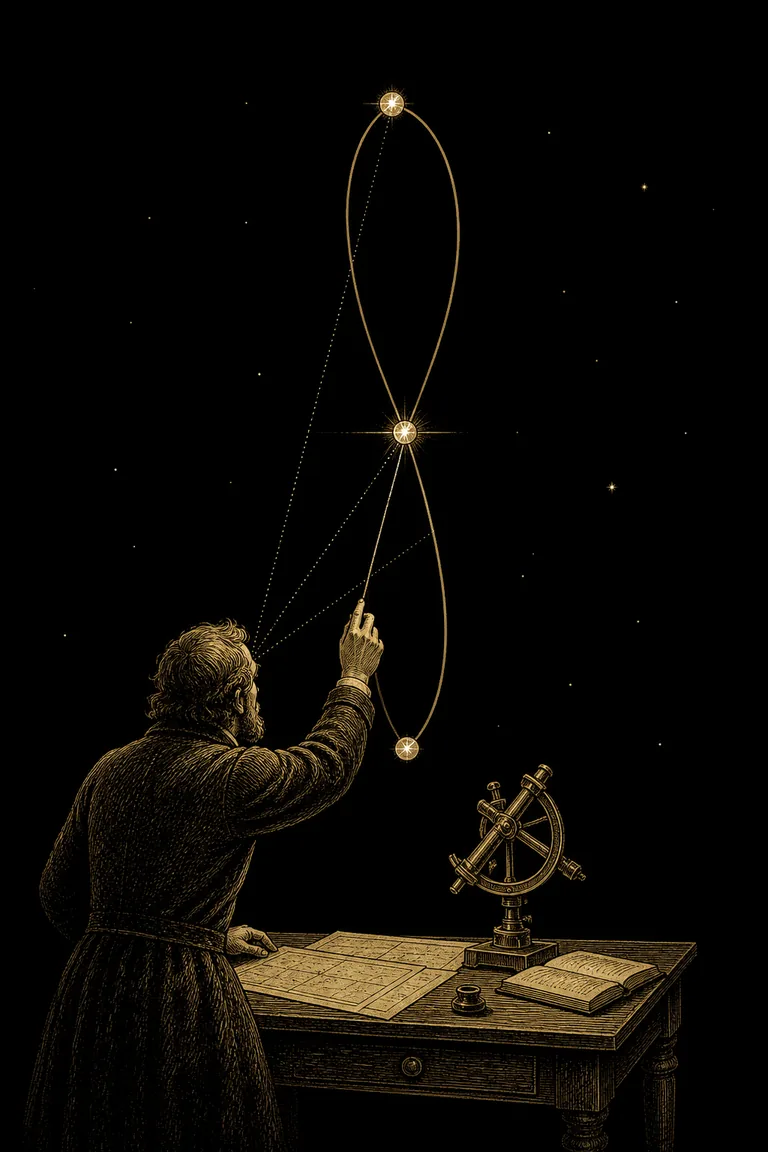
In astrology, a planet is stationary when its apparent motion through zodiacal longitude reaches a turning point between direct and retrograde motion. Mathematically, the exact station occurs when signed geocentric longitude speed crosses zero. In an ephemeris, the planet moves less each day, reaches the reversal, and then begins moving in the opposite direction.
The label “stationary” is also used for a wider period around that instant. There is no single universal duration for this phase. Software may use a fixed time window, a planet-specific speed limit, or a percentage of typical speed. A sound interpretation therefore records the exact station time and the threshold used for any broader stationary window.
Take the next insight with you
Explore personalized Astrology guidance in Veritas, available for iOS and Android.
 Scan with your phone
What is a stationary planet in astrology?
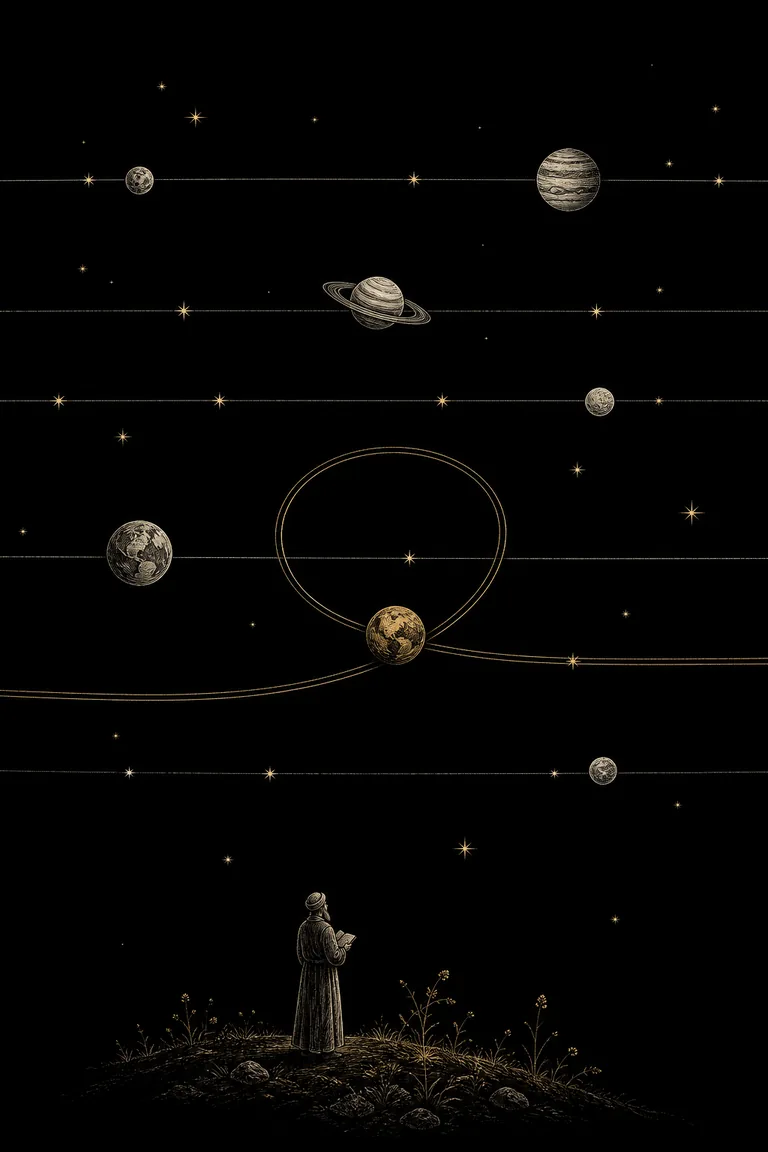
A stationary planet appears to pause against the zodiac as viewed from Earth before changing direction. It has not stopped in its physical orbit. The effect comes from changing geometry between Earth and the other body. In ordinary geocentric longitude, Mercury through Pluto have direct-to-retrograde and retrograde-to-direct stations. The Sun and Moon do not reverse this way.
Save the calculation behind the label
Use Veritas to record the ephemeris, timestamp, zodiac and reference frame, signed speed, zero crossing, station threshold, and nearby aspect contacts.
Exact station versus stationary phase
Why the planet only appears to stop
An ephemeris describes apparent position from a selected viewpoint. Near a station, successive geocentric longitudes become almost equal because the line of sight is at a turning region. The planet continues along its orbit. NASA and astronomical almanac terminology similarly treats a stationary point as a moment when the rate of change of an apparent coordinate reaches zero. Astrology usually applies the idea to ecliptic longitude rather than right ascension, so the coordinate must be named.
How to find a station in an ephemeris
- Match the settings
Choose geocentric or topocentric, tropical or sidereal, the ephemeris, and one exact time standard.
- Read signed longitude speed
Positive values usually mark direct motion and negative values retrograde motion, but confirm the program convention.
- Bracket the reversal
Find adjacent times where the signed speed changes sign. The exact station lies between them.
- Refine the timestamp
Use software interpolation or smaller time steps until the zero crossing is precise enough for the task.
- Apply a phase rule separately
If you need a stationary window, state the speed or time threshold rather than treating the exact instant as several days long.
There is no universal stationary orb
Astrodienst publishes pragmatic planet-specific speed limits and also discusses percentage-of-maximum-speed methods. Other astrologers use a percentage of mean motion or a set number of hours or days. These choices produce different windows, especially for slow outer planets. A label is reproducible only when the rule is attached to it. Avoid saying a planet is “within one degree of station,” because station is a condition of speed, not distance from a zodiacal point.
Why duration differs by planet
Mercury can move quickly through its turning region, while an outer planet may remain below a small speed threshold for much longer. A single raw limit also treats planets unevenly because their ordinary speeds differ. Planet-specific limits or percentage methods reduce that mismatch, but they remain conventions. The exact zero crossing is computational; the length of the interpretive phase is chosen.
Stationary planets in a natal chart
Some astrologers give a natal stationary planet extra emphasis because its apparent motion is unusually concentrated at birth. Symbolic readings may focus on deliberation, intensity, revision, persistence, or a topic that changes direction over time. The chart does not justify a personality verdict by itself. A stationary Mercury cannot diagnose cognition, and a stationary Saturn cannot prove delay, hardship, expertise, or achievement.
Stationary retrograde and stationary direct
The two turns describe opposite changes in signed motion, not simple negative and positive meanings. An SR planet is entering a retrograde loop; an SD planet is leaving one. Traditional and modern schools interpret these conditions differently. Read the planet's sign, house, rulerships, dignity, sect, aspects, and role in the question before adding a directional metaphor.
Stations in transit work
A transiting planet near station remains close to the same zodiacal degree, so an aspect to a natal or mundane point can persist and repeat. Track the first entry into the chosen aspect orb, each exact contact, the station, and the final exit. The long contact creates more observation time, not a guaranteed event or greater harm. Real circumstances and other timing factors still matter.
A station close to an exact aspect
Suppose Jupiter stations one tenth of a degree from an exact trine to a natal planet. Record whether the aspect perfects before the turn, separates without perfection, or perfects after a later direct station. Those are different sequences. Do not round the positions until a near miss becomes an exact contact, and do not infer promotion, money, travel, or protection solely from the trine.
A worked speed example
Imagine a program reports Mars at +0.01 degrees per day on Monday, +0.002 on Tuesday, zero on Wednesday, and -0.003 on Thursday. Wednesday contains the exact direct-to-retrograde station under those settings. A broader SR phase might begin earlier and end later under a declared threshold. The raw sequence should remain in the notes so another reader can reproduce the label.
Why software station times disagree
Programs can differ because of ephemeris version, interpolation, time scale, coordinate frame, topocentric correction, ayanamsa, rounding, and the displayed time zone. First compare signed speed at the same instant with identical settings. A date difference may be only a local-time conversion. If exact zero times match but stationary labels differ, the programs probably use different phase thresholds.
Build the station as a timeline
In Veritas, log the slowing dates, exact zero crossing, direction after the turn, threshold window, aspect entries, exact contacts, and final exit.
Stationary is not the same as slow
A planet can be slow without being close to a reversal under the selected rule. “Slow” compares the magnitude of current motion with a baseline; “stationary” connects near-zero motion to a directional turn. The planetary speed guide explains broader fast and slow conditions, while natal retrograde planets covers the meaning and mechanics of the retrograde phase itself.
Limits of stationary-planet interpretation
A station cannot establish character, diagnosis, relationship fate, market direction, legal outcome, disaster, or public event by itself. Astrology is a symbolic interpretive practice rather than a scientifically validated prediction system. Precise ephemeris work prevents category errors, but calculation alone does not make a symbolic claim factual.