Astrology Journal
Varuna in Astrology: Signs, Houses, Aspects, and Meaning
Varuna is an optional modern chart factor for examining order, promises, witness, and accountability. Its meaning is experimental and should remain secondary to established chart factors.
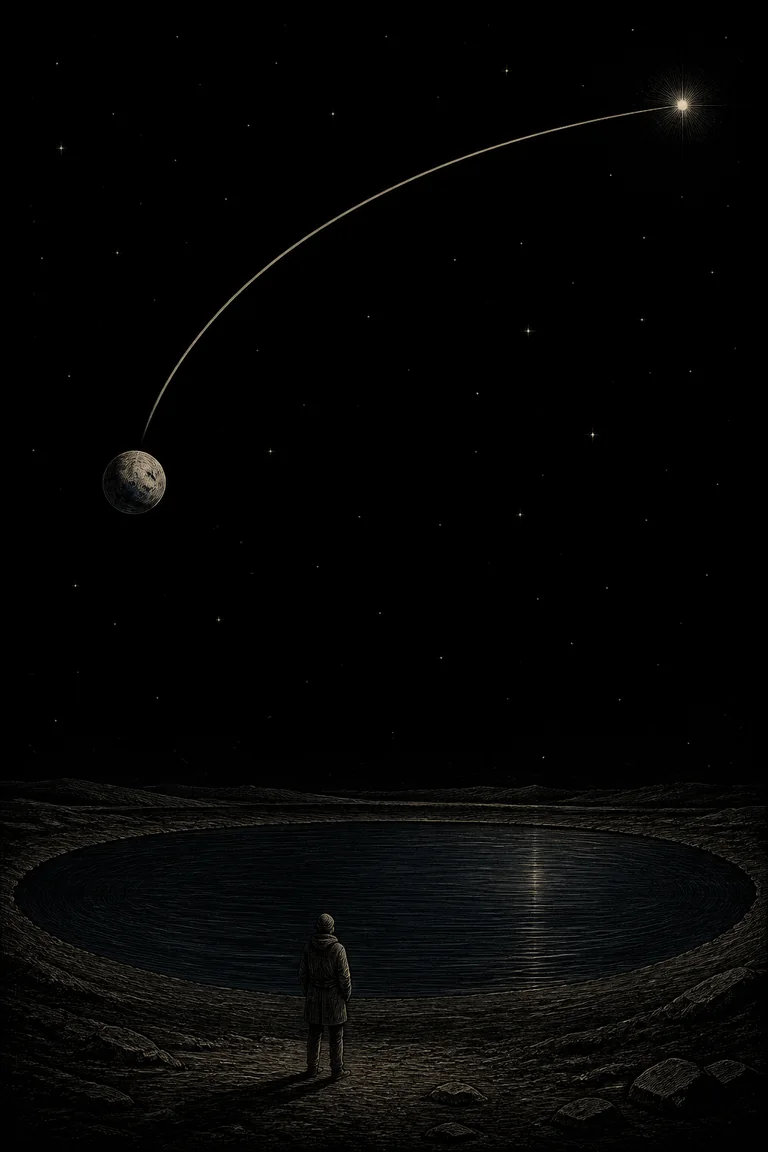
Varuna in astrology refers to minor planet 20000, a large trans-Neptunian object in the Kuiper belt discovered by Spacewatch in 2000. Modern astrologers sometimes connect it with order, truthfulness, promises, public responsibility, and the consequences of breaking an agreement. These themes come largely from the Vedic deity for whom the object was named, not from an ancient astrological tradition involving this body.
Varuna's astrological meaning is recent, variable, and not scientifically validated. Astronomy establishes an orbit, not a personality trait, moral status, or future event. The object takes about 284 years to orbit the Sun, so its zodiac sign is broadly generational. Personal interpretation needs a close aspect, dependable birth data for houses and angles, support from established chart factors, and evidence from lived experience.
Take the next insight with you
Explore personalized Astrology guidance in Veritas, available for iOS and Android.
 Scan with your phone
What Varuna means in astrology
A careful Varuna interpretation focuses on the relationship between stated order and observable conduct. Constructively, it can prompt integrity, stewardship, accurate records, and responsibility to people affected by a decision. Its shadow can become moral grandiosity, rigid judgment, reputation management, or rules applied unevenly. The placement is most useful when it identifies a real agreement, institution, or standard that can be examined.
Keep a distant object in proportion
Use Veritas to compare Varuna with major planets, houses, angles, and exact aspects before giving it personal weight.
Varuna astronomy and interpretive limits
The Minor Planet Center lists 20000 Varuna, provisionally 2000 WR106, as discovered by Spacewatch at Kitt Peak on November 28, 2000. Current orbital data place it beyond Neptune with a period of roughly 284 years. It is a trans-Neptunian object, not an IAU-recognized dwarf planet, and calling it an asteroid can obscure that classification. None of these facts establishes astrological effects.
Why Varuna is linked with order and promises
The proposed symbolism follows the name. Varuna is an early Vedic deity associated with cosmic and social order, truth, oaths, knowledge, and waters. Modern astrologers may translate those associations into questions about contracts, witness, authority, reputation, and accountability. This is a contemporary symbolic practice. It should not be presented as a recovered ancient rule for a celestial object unknown to historical astrologers.
Varuna sign meaning
Varuna by sign may describe how a broad cohort encounters rules, promises, public truth, and institutional responsibility. Fire signs may make standards active and visible, earth signs material and procedural, air signs verbal and social, and water signs relational or protective. Because one sign can contain Varuna for decades, sign alone cannot describe an individual character or prove integrity.
Varuna house meaning
The house may locate the life area where agreements and accountability become concrete. Accurate birth time matters because houses and angles move while Varuna barely does. Without dependable time, omit the house. The placement cannot prove criminal conduct, punishment, fame, divine favor, or moral superiority. Ask what is promised, who is affected, and which evidence shows whether the standard is being kept.
Varuna through the twelve houses
In the first house, Varuna can raise questions about identity and personal accountability; in the second, ethical use of resources; in the third, accurate speech and records; and in the fourth, household rules and inherited obligations. The fifth may concern creative responsibility, the sixth procedures, the seventh agreements, and the eighth shared liabilities. The ninth can involve doctrine and law, the tenth public office, the eleventh group governance, and the twelfth hidden systems.
Varuna aspects and orbs
Use narrow orbs, usually about one degree and no more than two for a conjunction or opposition to a major planet or angle. A conjunction concentrates the question of responsibility; an opposition may place it across a relationship or institution; a square can expose conflict between a claim and its implementation; and a trine or sextile may show an available path toward coherent practice. Exactness matters more than collecting many loose contacts.
Varuna with planets and angles
With the Sun, Varuna may connect identity with a visible standard. The Moon can emphasize family promises; Mercury, testimony and records; Venus, fairness in exchange; Mars, enforcement and consequence; Jupiter, law or excess; Saturn, durable systems; Uranus, reform; Neptune, ideals and ambiguity; and Pluto, power within institutions. Contacts to the Ascendant or Midheaven may make the theme more public, but none proves behavior.
Varuna in synastry
In synastry, an exact Varuna contact can provide language for promises, standards, public responsibility, or disagreement about who has authority. It cannot prove a karmic contract, soulmate bond, betrayal, guilt, marriage, or legal outcome. Varuna-Mercury may foreground wording and testimony, while Varuna-Venus may highlight fairness in exchange. Explicit agreements and observed conduct remain more important than a distant-object contact.
Varuna transits
Varuna transits unfold slowly and work best as background periods. An exact pass may coincide with a long review of institutional rules, personal commitments, public claims, or the repair required after a standard fails. Track exact contacts alongside faster transits and real events. Do not use Varuna to predict prosecution, scandal, promotion, disaster, death, or divine punishment.
Varuna, Saturn, Jupiter, and Neptune
Varuna can be used narrowly for the symbolic relationship among promise, witness, and wider order. Saturn remains the established planet of limits, duty, structure, and time. Jupiter concerns meaning, law, confidence, and expansion, while Neptune concerns ideals, permeability, imagination, and confusion. Keeping these functions distinct prevents an experimental body from replacing the chart's primary indicators.
Birth time and calculation limits
A date-only chart can usually support Varuna's sign and degree because the object moves slowly, but it cannot establish a reliable house or angle contact. Confirm object 20000 in an ephemeris that includes minor planets. Record the zodiac system, date, time, location, and source. If software returns a different degree or object, resolve the calculation before interpreting symbolism.
Make accountability specific
Use Veritas to record one exact Varuna contact, the real promise or system it evokes, who is affected, and the evidence that words and conduct agree.
A responsible Varuna worksheet
- Verify the object
Use a minor-planet ephemeris and record object 20000, zodiac degree, date, and source.
- Limit the claim
Prioritize one exact contact and omit houses or angles when birth time is uncertain.
- Name the agreement
Describe the actual promise, policy, record, or standard without inventing guilt or fate.
- Check the evidence
Identify who can verify the claim and what repair is possible when practice differs from the stated rule.
Common Varuna interpretation mistakes
Do not claim Varuna proves fame, moral authority, legal trouble, betrayal, divine protection, or inevitable consequences. Avoid broad orbs, personal verdicts from a generational sign, and invented ancient placement rules. Varuna is most useful as a modest secondary lens on order, promises, witness, and accountability, subordinate to established chart factors, evidence, and ethical judgment.