Tarot Journal
Career Tarot Spread: Questions for Work and Direction
A career Tarot spread can separate work facts, values, skills, constraints, support, and the next useful experiment so that direction becomes easier to choose.
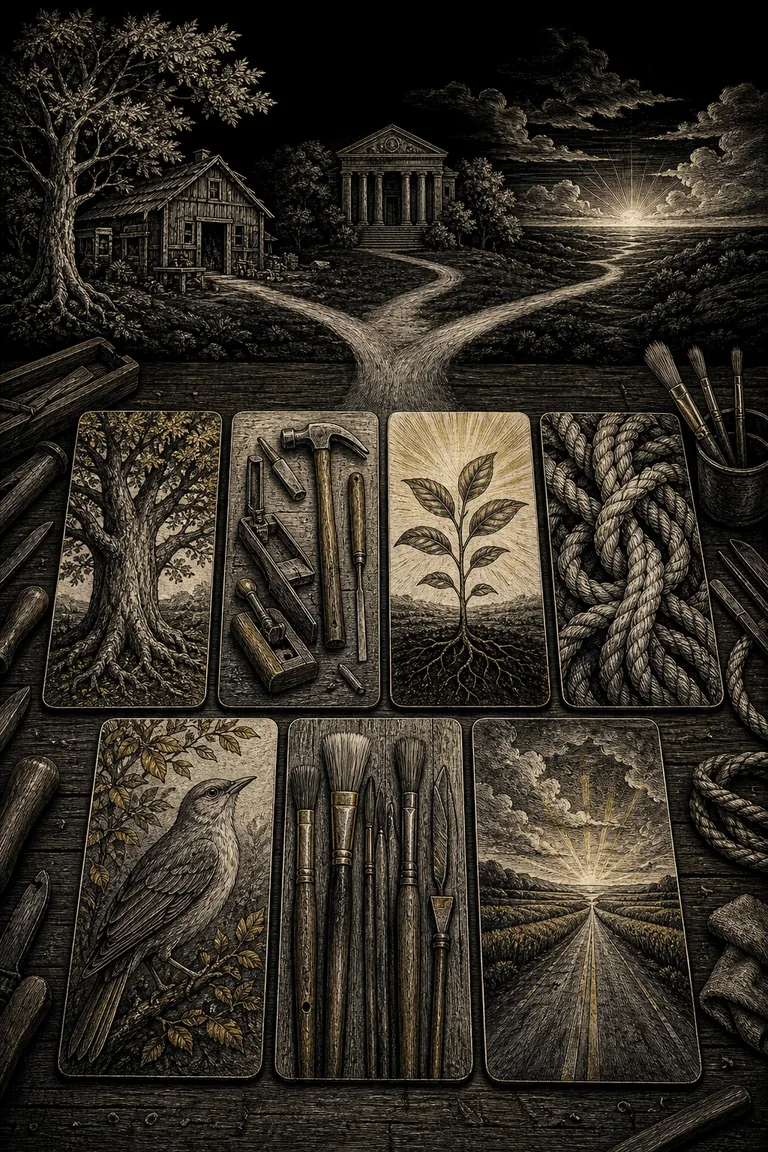
Career questions rarely have one hidden answer. They combine money, energy, identity, opportunity, timing, and obligations. A useful career Tarot spread separates those threads instead of asking one card to decide whether you should stay, leave, apply, or change direction.
The seven-card layout below is designed for reflection and planning. It cannot predict an offer, replace labor-market research, or tell you what an employer will decide. Use each card to form a testable question, then compare the reading with your finances, health, responsibilities, and available evidence.
Take the next insight with you
Explore personalized Tarot guidance in Veritas, available for iOS and Android.
 Scan with your phone
The seven career Tarot spread positions
Current reality
The condition of your work now, including facts you may be minimizing or overemphasizing.
Value to protect
What must remain present for a choice to be sustainable, such as stability, learning, autonomy, or time.
Skill to use
A developed ability or transferable strength that can help you move.
Real constraint
A limit, tradeoff, habit, or external condition that deserves direct planning.
Available support
A person, system, resource, routine, or source of information you can actually access.
Small experiment
A reversible action that can produce evidence before you make a larger commitment.
Direction to explore
The quality of movement worth developing next, rather than a guaranteed destination.
Turn a career question into a workable reading
Open Veritas, choose a focused Tarot question, and record the evidence and next action that each position reveals.
Ask about direction, not a verdict
A strong prompt is specific enough to guide action but open enough to reveal alternatives. Try “What should I understand before pursuing a new role?” or “What would make my current work more sustainable over the next three months?” Avoid “Will I get the job?” because hiring depends on people and conditions the cards cannot verify.
Lay out the cards as a path
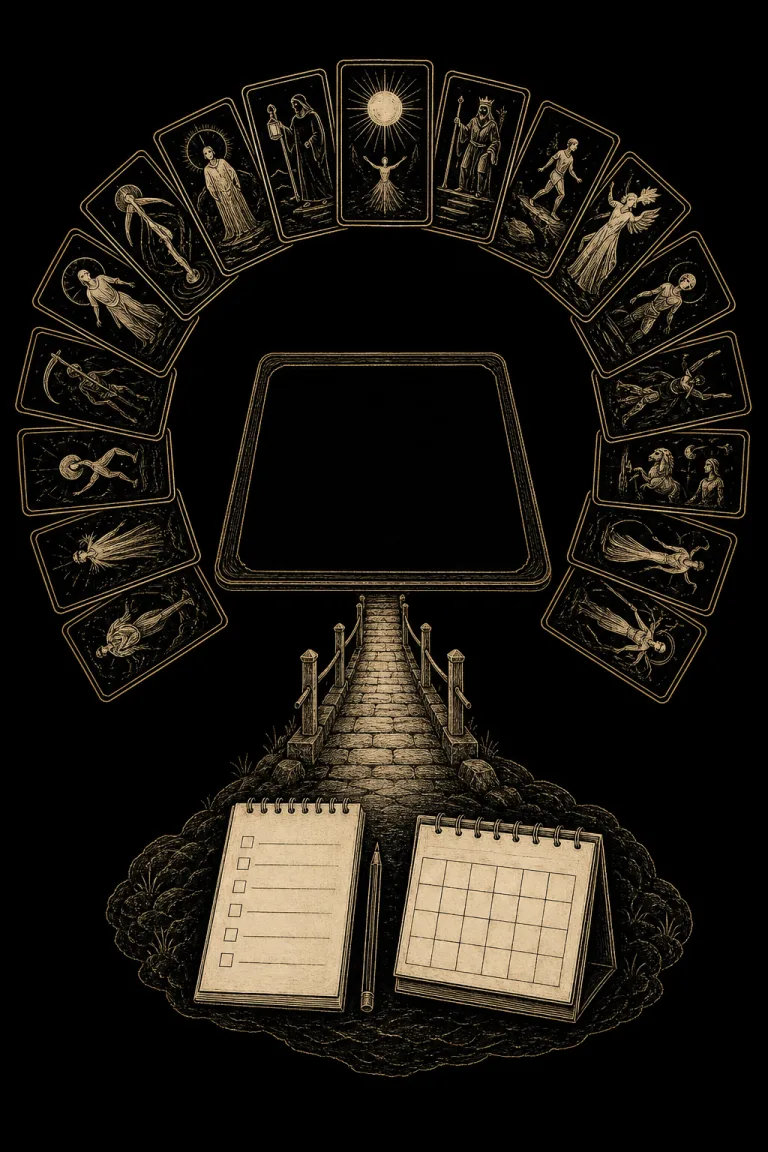
Place cards one through seven from left to right, with the fourth card slightly above the line. That physical pause marks the constraint. Cards one through three describe what you are working with, cards four through six turn reflection into planning, and card seven names the direction opened by that work.
Start with the present facts
Card one should be read beside a short factual inventory: compensation, workload, schedule, learning, management, health impact, and realistic alternatives. The Ten of Wands may echo overload, but ask what can be measured. How many hours are being worked? Which responsibility can be renegotiated? Symbol and evidence should point at the same problem.
Separate values from preferences
Card two identifies what a viable choice must protect. The Four of Pentacles might indicate financial security, but it could also reveal fear that keeps every option closed. The Star might prioritize meaningful contribution and renewal. Translate the card into a sentence beginning, “For this choice to be sustainable, I need...”
Turn a card into a transferable skill
Card three is not limited to your job title. The Magician can point to assembling tools and communicating an idea. The Queen of Swords may suggest analysis, boundaries, or clear editing. The Three of Pentacles can indicate collaboration and receiving feedback. Name a skill that another person could observe, then write one example of when you used it well.
Treat the constraint as planning information
Card four is not an enemy. The Two of Pentacles may show limited capacity; Justice may make contracts, qualifications, or fairness central; the Eight of Swords may identify assumptions that require testing. Divide constraints into fixed for now, negotiable, and unknown. Research unknowns before calling them permanent.
Make support concrete
Card five should produce a resource you can name. The Hierophant might be a course, professional standard, mentor, or established process. The Six of Pentacles may suggest funding, reciprocal help, or a fair exchange. “The universe will support me” is too vague to plan around; a person to contact or a document to request is useful.
Use the experiment card before a leap
Card six converts uncertainty into a low-risk test. The Page of Wands could suggest an informational interview, a weekend prototype, or one application outside your usual field. The Eight of Pentacles may favor a short skills project. Decide what you will do, when you will do it, and what evidence would make you continue, adjust, or stop.
Read direction as a quality of movement
Card seven does not promise a title or salary. The Chariot may recommend coordinated effort and firmer priorities. Temperance may favor a gradual transition rather than an abrupt exit. The Hermit may point toward specialization or independent study. Ask how to embody the card during the next decision window.
A short career spread example
Suppose the current reality is the Ten of Wands, the protected value is the Queen of Pentacles, the skill is the Magician, and the constraint is the Two of Pentacles. Support appears as the Hierophant, the experiment as the Page of Wands, and direction as Temperance. The story is not “quit now.” It is: reduce overload, protect material stability, use communication and tool-building skills, ask an experienced person for guidance, test one new path, and transition in stages.
If you are choosing between two jobs
Run the same seven positions once for each option instead of assigning one card to Job A and one to Job B. Use the same question and compare values, constraints, and experiments. For a compact comparison, the existing three-card Tarot spread can also examine what each option offers, costs, and requires.
Know when practical help comes first
If work involves harassment, discrimination, unsafe conditions, unpaid wages, or a serious health impact, document facts and seek qualified legal, medical, union, or workplace support as appropriate. Tarot can help you articulate a concern, but it cannot determine your rights or make a dangerous situation safe.
Tarot is a symbolic reflective practice, not a scientifically validated forecasting or career-assessment method. Use the spread to improve questions and actions, while decisions remain grounded in evidence, professional advice, and your real circumstances.