Tarot Journal
Celtic Cross Tarot Spread: Positions and Interpretation
The Celtic Cross Tarot spread uses ten positions to examine a situation, its tension, foundations, influences, possibilities, environment, and likely direction.
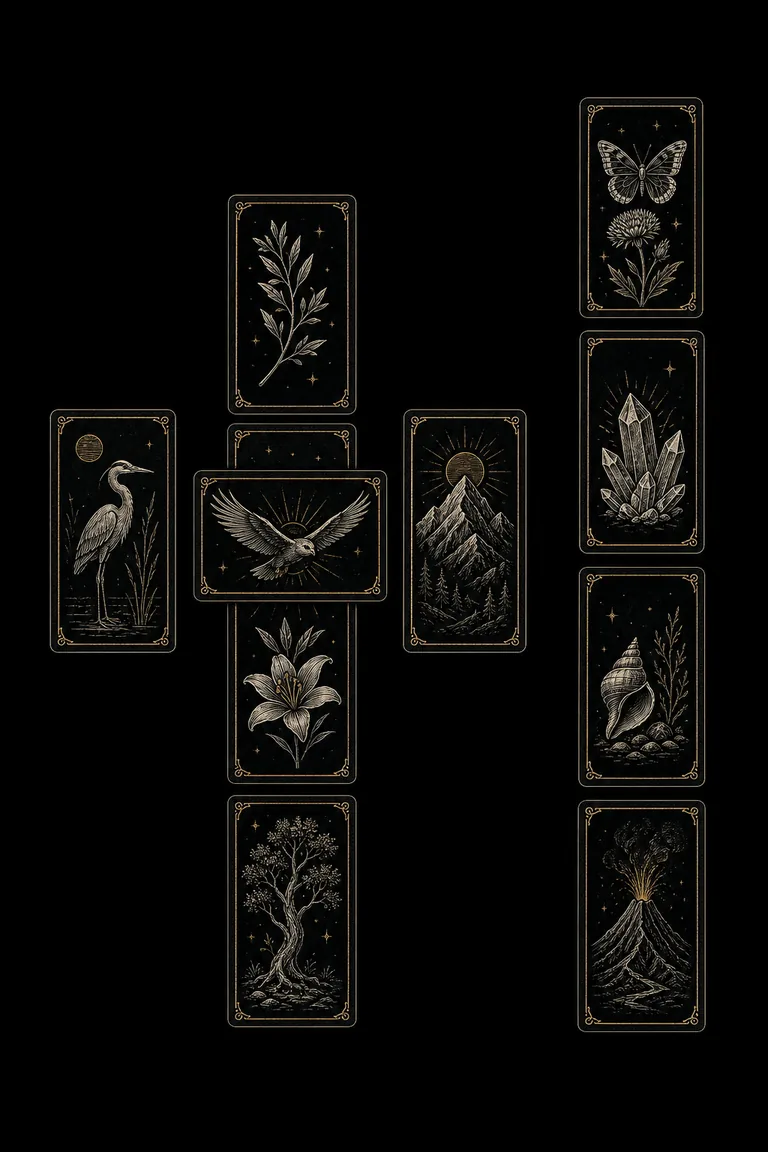
The Celtic Cross is a ten-card Tarot spread for questions that need more context than a short reading can hold. Six cards form a central cross and four form a vertical staff. Together they describe the present issue, what complicates it, how it developed, and where current patterns may lead.
The spread works best for one substantial question, not ten unrelated predictions. Its value comes from relationships between positions. Read the central pair first, build the timeline, then use the staff to compare personal stance with the surrounding environment.
Take the next insight with you
Explore personalized Tarot guidance in Veritas, available for iOS and Android.
 Scan with your phone
When to use the Celtic Cross
Use this spread when a situation has history, competing pressures, and several people or conditions to consider. It suits questions about a career transition, a complicated relationship dynamic, or a project that has reached a turning point.
For a daily focus or one clear next step, a one-card or three-card spread is usually better. More positions do not guarantee more accuracy. They increase the amount of context you must organize.
The ten Celtic Cross positions
Present situation
The central energy, fact, role, or pattern defining the question now.
Crossing influence
What challenges, intensifies, supports, or complicates the central card.
Foundation
The underlying cause, need, history, or less conscious pattern beneath the issue.
Recent past
An influence that shaped the present and is now receding or being integrated.
Conscious aim
What is known, intended, feared, imagined, or held as the best available outcome.
Developing future
The next phase likely to emerge if current conditions continue.
Your stance
How the querent participates, sees themselves, or can choose to respond.
Environment
Other people, visible conditions, resources, institutions, or external pressures.
Hopes and fears
Expectations that attract attention or distort interpretation, often containing both desire and anxiety.
Likely direction
Where the full pattern tends under current choices, not an unchangeable final fate.
Explore a complex question in layers
Open a Tarot reading in Veritas, define one substantial question, and follow how the cards connect across position, time, and context.
How to lay out the spread
Place card one at the center and card two across it horizontally. Put card three below, four to the left, five above, and six to the right. Build the staff on the far right from bottom to top with cards seven through ten.
Position names vary between books. Some swap foundation and conscious aim, or call the past “what is behind.” Choose one version before shuffling and record it. A consistent layout matters more than claiming one historical wording is universally correct.
Start with the central pair
Read cards one and two as a sentence. If the Eight of Pentacles is crossed by the Four of Cups, steady work may be meeting disengagement or a loss of meaning. The crossing card is not automatically hostile; it can supply a necessary pressure or resource.
Build the vertical and horizontal stories
Cards three and five compare underlying foundation with conscious intention. Cards four, one, and six form a timeline from recent past through present to the next developing phase. Look for movement in suit, number, posture, and level of agency.
Read the staff as a conversation
Compare card seven with card eight. A confident inner stance beside a restrictive environment tells a different story from self-doubt surrounded by real support. Card nine reveals expectation, and card ten shows how all these conditions tend to combine.
How to interpret card ten
The outcome is conditional. Phrase it as “If the current pattern continues...” and name which earlier cards feed it. If the outcome is difficult, return to cards seven and two for available choices. If it is welcome, identify what conduct and support help sustain it.
Look for patterns across the spread
Repeated suits show where attention concentrates. Many Major Arcana cards can signal a chapter with broader identity or value questions. Court cards may show roles or participants. Repeated numbers and facing figures help connect positions, but the assigned position still leads.
A compact reading example
For a career question, the central Three of Pentacles crossed by the Emperor may show collaboration constrained by hierarchy. The Page of Swords in position seven suggests the querent can research and ask precise questions. The Six of Swords in position ten suggests a gradual move toward a calmer structure if information becomes action.
Reversals and clarifiers
If you use reversals, apply one consistent lens such as blocked, internal, delayed, excessive, or redirected energy. Avoid clarifying every position. Draw an extra card only when you can state the exact ambiguity, then keep it subordinate to the original position.
Common Celtic Cross mistakes
Common mistakes include asking several questions, reading every card in isolation, treating position two as an enemy, and turning card ten into destiny. Another is forgetting the original question by the time the staff is reached. Repeat the question as you synthesize each layer.
Tarot is a symbolic reflective practice, not a scientifically validated forecasting method. Do not use the Celtic Cross to diagnose illness, establish guilt, expose private thoughts, or replace medical, legal, financial, or mental health guidance.