Tarot Journal
Death Tarot Card Meaning: Endings, Transition, and Renewal
Death represents an ending that changes the shape of what follows. It asks what has completed, what must be released, and what transition needs honest participation.
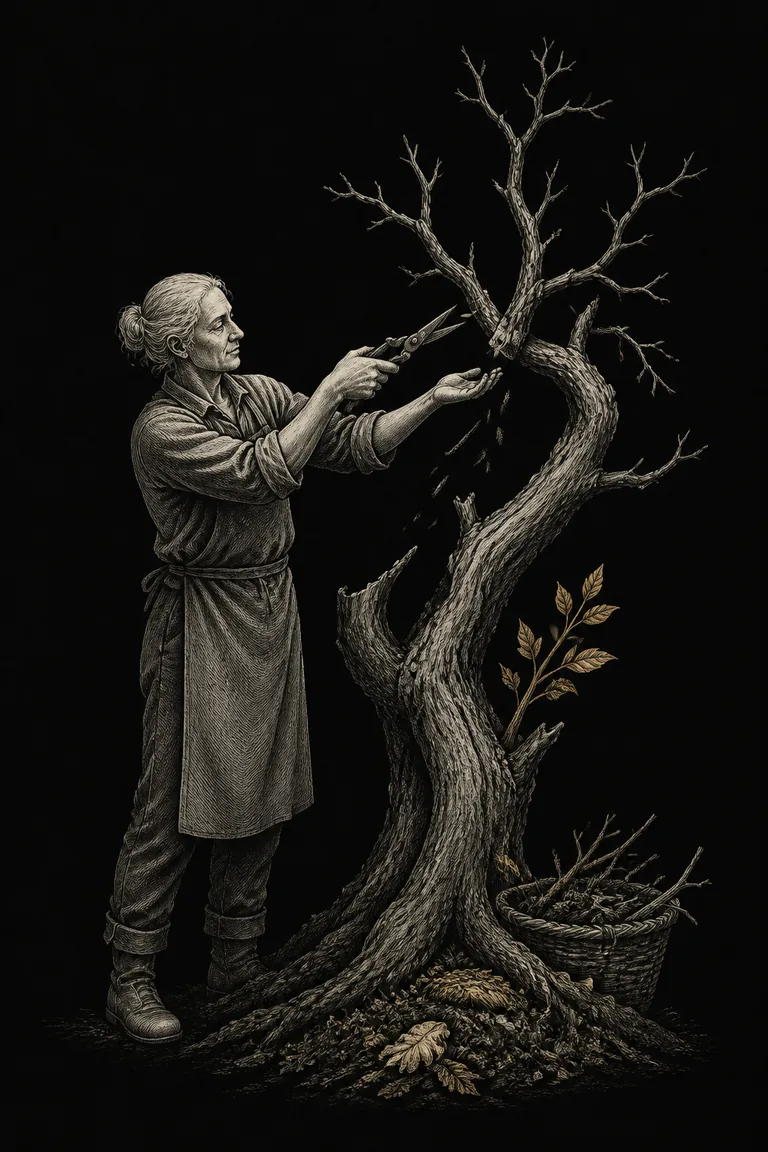
Death is Major Arcana XIII. Despite its name, the card usually speaks to transition, closure, shedding, and irreversible change rather than physical death. It can appear when a role, habit, relationship pattern, plan, or identity has reached the end of its useful form.
A responsible reading does not soften every ending into instant positivity. Grief, uncertainty, and practical disruption can belong to transition. Renewal becomes possible because something is no longer being maintained, not because loss must feel pleasant or spiritually necessary.
Take the next insight with you
Explore personalized Tarot guidance in Veritas, available for iOS and Android.
 Scan with your phone
Death Tarot meaning at a glance
Upright, Death often points to completion, release, transition, transformation, and a necessary change of form. Its shadow includes resisting an ending, clinging to an expired role, rushing grief, or destroying something merely to feel movement. The card does not predict literal death.
Read the transition without forcing it
Open a Tarot reading in Veritas, place Death in its exact spread position, and separate what is ending from what still needs care, closure, or a next step.
Why Death is numbered thirteen
Thirteen follows the Hanged Man’s suspension and precedes Temperance’s integration. The sequence suggests that a changed perspective eventually requires a changed form. After the ending, Temperance combines what remains into a workable new arrangement. Transformation is therefore a process, not a dramatic single moment.
Key symbols in the Death card
The moving figure
Change continues regardless of status, preference, or attempts to keep the old arrangement fixed.
The fallen forms
Roles and structures can finish, making humility and an honest inventory necessary.
The horizon
A future exists beyond the transition, although its exact form may not yet be visible.
The witnesses
People respond differently to endings through resistance, grief, acceptance, negotiation, or practical care.
Death upright
An upright Death can mark a clear ending, a decisive transition, or recognition that the previous form cannot continue. It favors truthful closure and the release of resources tied to what is finished. The card does not require a reckless break; some endings need documents, conversations, mourning, and careful handover.
Death reversed
Reversed, Death may show resistance, prolonged limbo, fear of loss, incomplete closure, or repeated attempts to revive what has ended. It can also describe a slow internal transition rather than a visible external one. Reversal does not mean an ending is cancelled or that a feared event is certain.
Death in love readings
In love, Death can describe the end of a relationship, but it may also mark the end of an old pattern within one: secrecy, avoidance, an unequal agreement, or a shared phase of life. Look at the question and position. The card cannot prove separation, betrayal, reconciliation, or another person’s intentions.
Death when you are single
For a single person, the card may point to releasing an old attachment, identity, or dating pattern. Closure is not the same as erasing memory, and a new relationship is not required to validate the transition. Notice what standard, boundary, or daily practice can change now.
Death in career readings
At work, Death may indicate a role ending, a restructure, retirement, retraining, or a profession changing form. Distinguish a symbolic prompt from confirmed facts. Before resigning or accepting major change, examine written terms, income, benefits, notice periods, transferable skills, and qualified advice.
Death in money readings
Financially, the card can highlight the end of an income source, expense, debt phase, or unsustainable habit. It favors a sober transition plan rather than panic selling or magical thinking. Review cash flow, obligations, emergency reserves, tax effects, and professional guidance where stakes are high.
Death as a person
As a person description, Death may symbolize someone undergoing significant change, helping systems transition, or refusing to preserve a false continuity. Avoid labeling a person dangerous, doomed, or responsible for every ending. Their actual behavior and stated choices remain the relevant evidence.
Death as advice
As advice, stop negotiating with a fact that has already become clear. Name the ending, complete the necessary handover, and decide what should not be carried forward. If the situation is still uncertain, gather evidence before performing an irreversible gesture simply to match the card.
Death as an obstacle
In an obstacle position, fear of loss may keep an expired arrangement alive, or fascination with reinvention may prevent patient repair. The difficulty can also be demanding immediate meaning from grief. Ask whether the next task is release, preservation, repair, or simply allowing time.
Endings, grief, and renewal
Not every ending is chosen, and not every loss produces a welcome lesson. A humane reading makes room for grief without turning pain into proof of destiny. Renewal may begin as rest, paperwork, support, or a smaller routine long before it feels inspiring.
Card combinations with Death
With The Hermit, transition may need private reflection and patient study. With The Tower, an ending can arrive through disruptive truth or structural failure. With The Star, repair follows release. With Judgement, closure meets accountability and a call to respond. Read positions before assigning a fixed pair meaning.
A question Death asks
Ask: “What has completed in reality, what am I still maintaining from habit, and what respectful act would help this transition move?” Name one thing to close, one thing to preserve, and one source of practical support.
Tarot is a symbolic reflective practice, not a scientifically validated forecasting method. Death does not predict physical death, diagnose illness, prove an outcome, or replace medical, mental health, legal, financial, grief, or safety guidance.