Tarot Journal
Four of Swords Tarot Meaning: Rest and Recovery
The Four of Swords calls for a deliberate pause that protects recovery, reduces noise, and prepares a responsible return rather than an endless retreat.
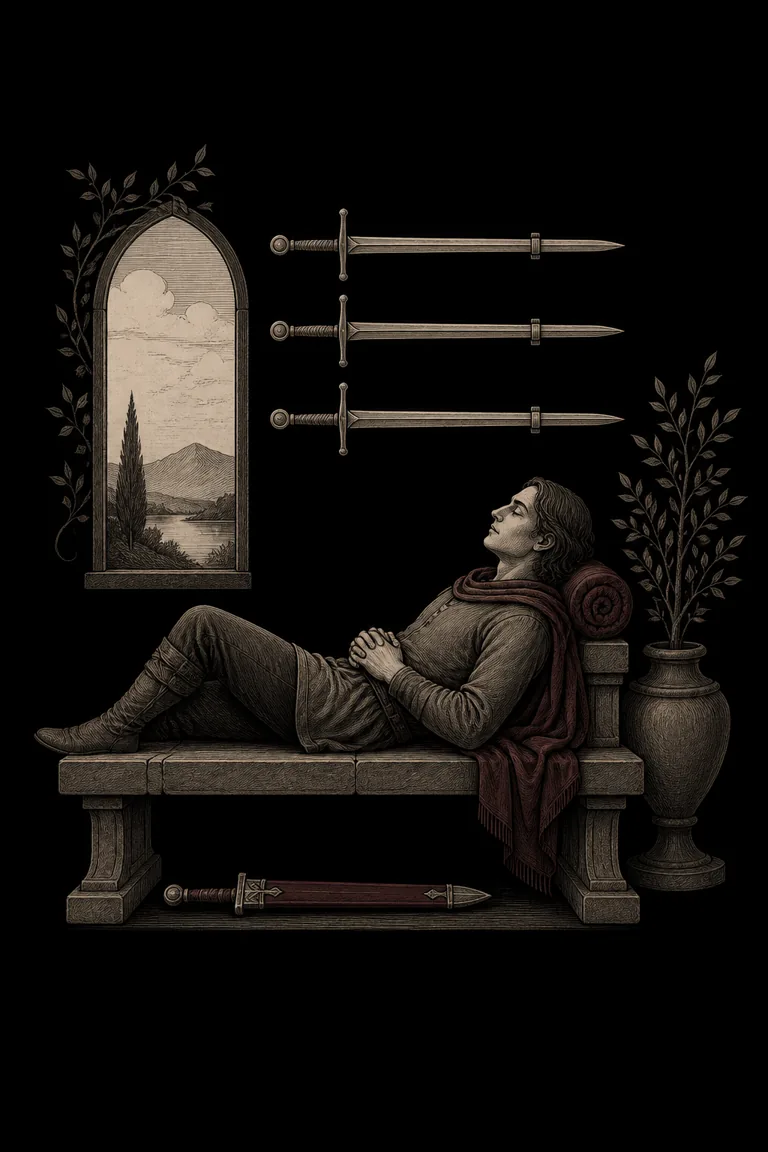
The Four of Swords is a Tarot card of rest, retreat, recovery, and mental quiet. In the Rider-Waite-Smith image, a recumbent figure lies beneath three mounted swords while a fourth rests below. The stillness follows the difficulty of the Three of Swords. It suggests that a strained mind or situation may need fewer demands before the next decision can be useful.
This card does not diagnose illness, prescribe bed rest, or predict death. It also does not make every delay wise. Its practical question is whether a pause has a clear purpose and enough structure to restore capacity. Spread position, surrounding cards, actual obligations, and a realistic return point distinguish recovery from avoidance.
Take the next insight with you
Explore personalized Tarot guidance in Veritas, available for iOS and Android.
 Scan with your phone
Four of Swords meaning at a glance
Upright, the Four of Swords can indicate rest, temporary withdrawal, reflection, convalescence, silence, sanctuary, or a strategic pause. Reversed, it may describe restlessness, premature return, exhaustion that can no longer be ignored, isolation, or gradual re-entry after recovery. Neither orientation is automatically passive. A short pause can be an active part of repair when it has a purpose, boundary, and review point.
Read the pause in context
Open a Tarot reading in Veritas and compare the Four of Swords with its spread position and neighboring cards before deciding what should stop, continue, or resume.
Symbols in the Four of Swords
The resting figure resembles an effigy in a quiet sanctuary, an image historically linked with retreat and repose. Three swords hang above, keeping recent conflict or thought visible without placing it in the figure's hands. The fourth lies apart, suggesting a tool set down rather than destroyed. The folded hands and stained glass in many decks add reflection, prayer, or protected attention. In another deck, notice what has been suspended and what remains ready for later use.
Upright Four of Swords
Upright, the card often recommends reducing stimulation before demanding an answer. That may mean sleeping, taking leave, postponing a nonurgent conversation, ending a research session, or creating a quiet interval after conflict. The goal is not to solve everything while resting. It is to restore enough attention to distinguish signal from pressure. Define the smallest responsibilities that must continue and let optional activity wait.
Reversed Four of Swords
Reversed, the Four of Swords can show a person unable to settle, returning before capacity has recovered, or remaining withdrawn after the original need has changed. It may also mark a careful reawakening: contact resumes, a decision becomes possible, or energy begins to return. Look for behavior rather than forcing one meaning. A useful reversal question is whether the next step is a measured re-entry or another attempt to outrun depletion.
Four of Swords in love and relationships
In relationships, this card can describe cooling down after conflict, protected personal space, a temporary communication pause, or a bond receiving little active attention. It does not prove a breakup or a lack of feeling. A healthy pause names its purpose, duration, urgent contact rules, and the conversation that follows. Silence used to punish, control, or avoid every repair is different from mutually agreed space that helps both people return more regulated.
Four of Swords as feelings
As feelings, the card may suggest emotional quiet, fatigue, guarded reflection, relief, or a wish not to act yet. Someone may care and still lack capacity for a new demand. Tarot cannot verify another person's private state. Respect direct statements, observe whether communication and behavior are consistent, and avoid treating a symbolic pause as permission to wait indefinitely without an agreement.
Four of Swords for career
At work, the Four of Swords can point to leave, a project hold, a review period, meeting reduction, or recovery after sustained pressure. It may advise protecting deep work from constant interruption. It can also reveal a stalled decision that no amount of extra thinking will improve. Separate tasks that prevent harm from tasks maintained only by habit, document the handoff, and choose a specific date to reassess scope and capacity.
Four of Swords for money
For money, the card may favor a temporary spending pause, a cooling-off period before a purchase, or reviewing accounts without making a rushed move. It does not guarantee safety or recommend ignoring bills, debt, tax, or deadlines. Keep essential payments and protections visible while suspending optional decisions. For consequential financial choices, use current figures and qualified advice instead of relying on Tarot.
Four of Swords as advice
Stop adding input for long enough to learn what recovery requires. Name one demand to pause, one essential duty to maintain, and one sign that capacity is returning. If complete rest is impossible, use a smaller intervention such as a quiet hour, fewer decisions, a delayed reply, or one protected evening. Rest becomes practical when it reduces load without hiding the commitments that still need an honest response.
Give the pause a return point
Use Veritas to ask what restores capacity, what still requires care, and which observable sign should trigger a gentle return to action.
Four of Swords in a yes or no reading
The Four of Swords usually answers not now when the question demands immediate action, confrontation, or a final commitment. It can lean yes for taking a break, postponing a nonurgent choice, or protecting recovery. Reversed, it may indicate that re-entry is beginning, but the answer still depends on readiness and consequences. A binary label is less useful than asking what information or capacity is missing.
Important card combinations
With the Two of Swords, the pause may protect a decision until necessary evidence arrives. With the Three of Swords, recovery follows painful information or grief. With the Hermit, solitude supports a focused search, though isolation needs a limit. With Temperance, restoration is gradual and measured. With the Chariot, the contrast between stopping and driving forward asks whether momentum can be rebuilt sustainably. With the Eight of Wands, news or activity may end the quiet interval quickly.
A practical recovery plan
- Name the strain
Identify the specific demand, conflict, decision, or overload from which the pause is meant to create distance.
- Protect the minimum
Keep essential care, deadlines, safety, and agreed communication visible while suspending optional effort.
- Choose restoration
Select one action that actually returns capacity rather than merely replacing one form of stimulation with another.
- Set the return signal
Use a date or observable sign to reassess, and return in a smaller step if full intensity would recreate the problem.
Common Four of Swords mistakes
Do not turn the tomb-like image into a prediction of death, use the card to diagnose burnout or depression, or assume silence proves rejection. Avoid romanticizing withdrawal when urgent safety, medical care, legal response, or direct communication is needed. The card can support a pause, but real-world risk determines what cannot wait. Its strongest reading combines restoration with a clear boundary and accountable return.