Tarot Journal
How to Lay Out Tarot Cards: Positions and Order
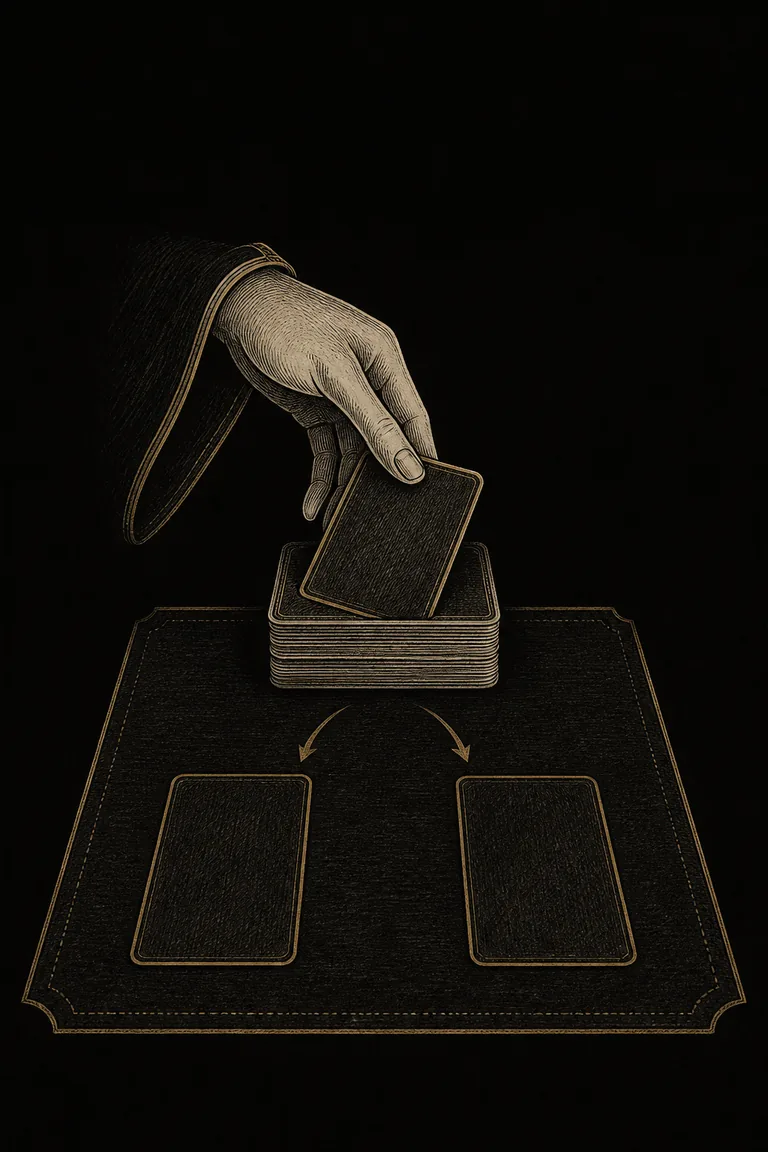
Lay out Tarot cards by assigning every position a meaning before you reveal it, then place the cards in draw order while preserving orientation. A clear map makes the reading easier to follow and record.
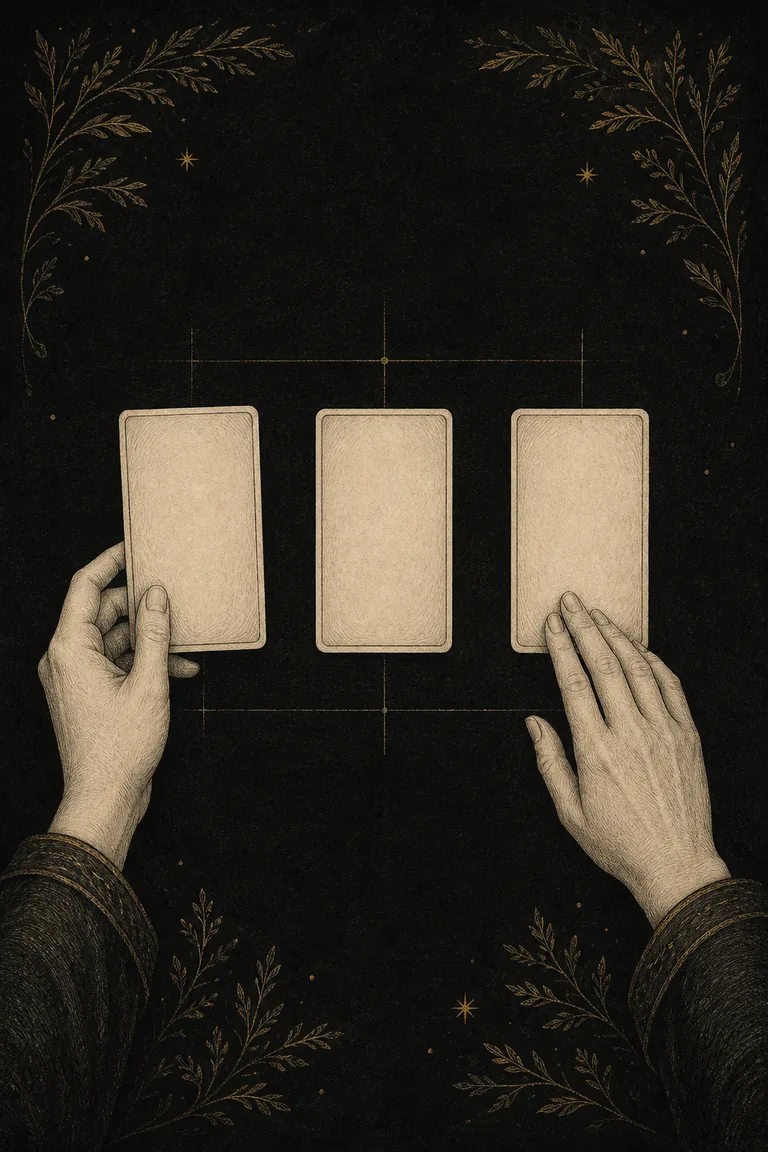
To lay out Tarot cards, prepare a stable surface, write or say the question, name each spread position, and decide where card one will go. Draw hidden cards one at a time and place them into those positions in a fixed order. Keep the top edge of every card facing the same direction unless you intentionally read reversals.
The layout is not decoration. It is a map that connects a card to a specific job, such as situation, obstacle, advice, or likely development. A neat map prevents a powerful image from taking over the whole reading and helps you distinguish what the card shows from where it shows it. You do not need a special cloth, compass direction, or ritual arrangement.
Take the next insight with you
Explore personalized Tarot guidance in Veritas, available for iOS and Android.
 Scan with your phone
What do you need before laying out Tarot cards?
Use a complete deck, a clean surface large enough for the chosen spread, and a written position map. A notebook or phone note can hold the question and position meanings. If the surface is slippery, place a plain cloth or nonslip mat beneath the cards. Remove drinks, candles, grit, and objects that could bend or stain the deck. Good light matters more than atmosphere because you need to see the images and orientation clearly.
Save the map before the first card turns
In Veritas, record the question, spread name, position meanings, placement order, reversal rule, and stopping point so the layout stays consistent.
Name every Tarot spread position first
A position is a question assigned to one place in the layout. In a three-card spread, the positions might be situation, pressure, and useful response. Write those exact meanings before drawing. Avoid vague labels that overlap, such as energy, message, and what to know, because the same card could answer all three. Specific positions create useful boundaries and reduce the temptation to change a meaning after an uncomfortable card appears.
Choose a clear placement order
The simplest order follows the way you plan to read: left to right, top to bottom, or center first and then outward. Number the positions on a sketch if the shape is complex. Place card one in position one even if another empty space feels more attractive. For a known spread such as the Celtic Cross, keep a reference nearby until the sequence is familiar. Consistency matters more than copying a reader who uses a different numbering system.
Keep draw order and layout order separate
Draw order is the sequence in which hidden cards leave the deck. Layout order is the sequence of positions you fill. They usually match, which makes the process easy to audit. If you draw all cards into a face-down stack before placing them, decide whether the first drawn card is on top or at the bottom. Ambiguity here can reverse the entire reading. Beginners are usually better served by drawing and placing one card at a time.
How to preserve upright and reversed cards
Before shuffling, decide whether reversals are active. Hold the deck so its top edge has a known direction, then keep that physical orientation as you draw. Place each card without rotating it for easier viewing. If you read for another person across a table, establish whether upright is judged from your viewpoint or theirs. Mark the choice in your notes. A card is not reversed simply because someone walked around the table or turned the spread later.
Face down first or reveal each card immediately?
Both methods can work. Placing every card face down before the reveal protects the predetermined map from visual influence and lets you check spacing. Revealing one at a time supports a slower narrative and makes it easier to focus on each position. Choose before the draw. If you place cards face down, turn each one sideways like a page rather than spinning it, which preserves the original upright or reversed orientation.
A basic three-card layout
- Write one question
Use a question that can support reflection and action rather than demand certainty.
- Assign three positions
For example: current situation, factor to examine, and practical response.
- Mark the reading direction
Use a left-to-right row with enough space to see every card edge.
- Draw and place in order
Put the first hidden card on the left, the second in the center, and the third on the right.
- Read position before image
Repeat the position meaning, then describe how the card answers that one part of the question.
Laying out the Celtic Cross
The Celtic Cross uses ten positions, but numbering varies among traditions. A common form places card one at the center, card two across it, four cards around that pair, and a vertical staff of four cards to the side. The crossed card should remain visible enough to identify both images. Use the position list from the exact source you chose and do not combine its physical pattern with another source's meanings halfway through.
How much space should you leave?
Leave a small, even gap so cards do not scrape as you move or turn them. Overlap only when the spread convention calls for it, and keep the important image areas visible. Before drawing, test the shape with blank paper or the empty deck box. A ten-card spread that does not fit the table can be adapted into rows without changing position meanings, provided you record the new map. Geometry serves comprehension, not authority.
Tarot layouts for a small table
Use fewer positions, smaller cards, or a compact grid. You can place cards in two rows while keeping their numbers and meanings intact. Another option is to reveal one position at a time, photograph or note it, then return the card to a protected side pile. Do not stack interpreted cards without recording their order. A one-card or three-card reading is a complete reading, not a lesser version of a large spread.
Accessible ways to place cards
Adapt the layout to reach, vision, grip, and attention. A card stand can reduce glare, a high-contrast mat can clarify edges, and larger gaps can help low-vision readers. Someone with limited reach can use a vertical column near the body instead of a wide arc. A trusted assistant may place cards according to spoken position numbers while the reader controls the draw. Accessibility changes the mechanics, not the legitimacy of the reading.
How to read rows, pairs, and diagonals
Read each card in its assigned position before studying visual relationships. Then compare repeated suits, numbers, directions, figures, colors, or actions across neighboring positions. A pair can show tension or support only if the position meanings make that comparison relevant. Diagonals and shapes can offer a secondary observation, but do not invent a new hidden position whenever two images happen to point toward each other. The map remains the primary grammar.
Correcting a placement mistake
If a face-down card was placed in the wrong empty position, move it to the correct position without turning it and note the correction. If several cards were revealed before you discovered that order was lost, stop and assess whether the original sequence can be reconstructed from notes, a photo, or witnesses. If not, end the attempt and start a fresh reading later with a simpler procedure. Do not rearrange revealed cards to create a more satisfying story.
When a card falls outside the layout
Apply the jumper-card rule you chose before shuffling. A fallen card is not automatically an extra position, warning, or clarifier. If your rule excludes jumpers, return it to the deck and continue. If your rule includes one, assign its role in advance and place it in a clearly separate location. Never squeeze an accidental card between named positions and then treat the altered geometry as proof of special importance.
Record the layout before collecting it
Write the date, question, spread source, position list, cards, orientation, and first observations. A quick overhead photo can preserve the physical map if privacy and consent allow it. For client readings, avoid storing identifiable material without permission. Record corrections or unusual handling separately from interpretation. This creates a useful trail for later review and helps you notice whether your reading changed because evidence changed or because the cards moved.
Keep the reading tied to its positions
Use Veritas to save card order, orientation, position meanings, visual links, uncertainties, and one grounded next step before you collect the spread.
A reliable layout workflow
- Prepare the surface
Make the space stable, visible, clean, dry, and large enough for the planned shape.
- Fix the question
Write one bounded question before choosing or adapting the spread.
- Map the positions
Name and number every place, including any optional card.
- Declare handling rules
Choose reversal, jumper, reveal, redraw, and correction rules before seeing a face.
- Place in sequence
Draw hidden cards and fill the numbered positions without rearranging them.
- Read in layers
Interpret each position first, then compare relevant pairs, rows, and patterns.
- Preserve the record
Note or photograph the complete layout before moving any card.
Common Tarot layout mistakes
Avoid choosing position meanings after the cards appear, rotating difficult reversals upright, mixing two numbering systems, drawing extras without a declared role, and rearranging images to improve the story. Do not use a spread too large for the surface or your attention. The best Tarot layout is not the most elaborate shape. It is the smallest clear map that preserves the question, position, order, orientation, and stopping rule.