Tarot Journal
Many Twos in a Tarot Reading: What It Means
Many Twos in a Tarot reading can concentrate attention on pairings, alternatives, boundaries, and balance, but they do not promise a partner or force a choice.
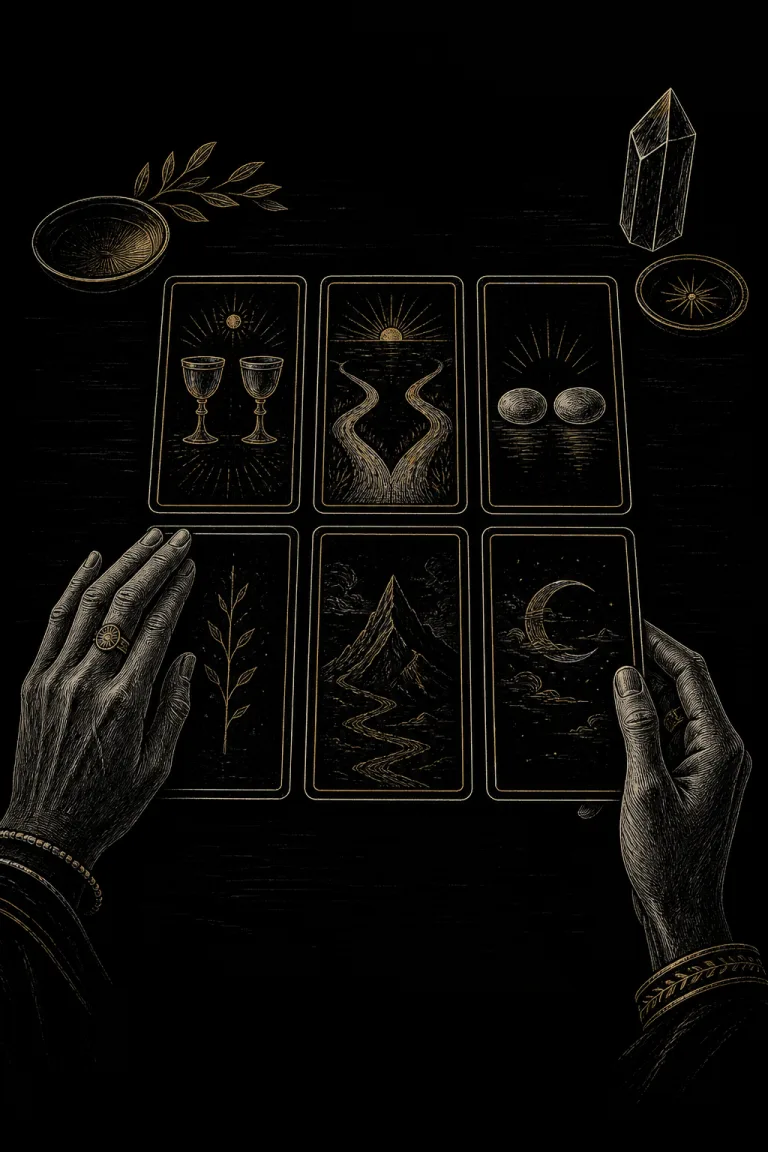
Many Twos in a Tarot reading means that two or more of the four Twos appear in the completed spread. The repeated rank can highlight situations that require comparison, response, coordination, or holding two conditions at once. It does not automatically mean romance, partnership, indecision, or a crossroads. Suit, position, surrounding cards, and the original question decide what each Two is doing.
Record the Two count and total spread size before interpreting. Then name the two things each card places in relation, whether its position asks for cooperation or separation, and what evidence would distinguish the options. Three Twos in four cards carry a different concentration from three in twelve. Neither pattern proves mutual interest, a contract, reconciliation, or a predetermined decision.
Take the next insight with you
Explore personalized Tarot guidance in Veritas, available for iOS and Android.
 Scan with your phone
Many Twos at a glance
Start with the Two count and denominator
Write "three Twos in a six-card spread" rather than only "three Twos." A standard deck has four Twos among seventy-eight cards. Extra cards, renamed ranks, a restricted deck, replacement rules, or a decision to keep pulling until a Two appears all change the baseline. The guide to how many Tarot cards to pull helps preserve the original draw.
A repeated rank is not a whole-spread verdict
The shared rank adds one layer to the reading. It does not erase suit, imagery, position, orientation, or every non-Two. A court card can show the role needed to negotiate a choice. A Ten can expose the capacity consequences. A Major Arcana card can widen the frame. Compare this rank pattern with the broader guide to many Minor Arcana without reducing the spread to one statistic.
Two means relation, not automatically partnership
A Two places something beside, against, between, or in exchange with something else. The pair might be two priorities, versions, people, time windows, budgets, interpretations, duties, or boundaries. Before saying "partnership," write the exact terms on each side. Sometimes the most accurate relation is comparison or separation rather than union.
Two of Wands: compare reach with readiness
The Two of Wands can frame a choice between staying with a known scope and testing a wider one. Ask what access, authority, preparation, and downside each route carries. It does not guarantee travel, business growth, relocation, or success. A useful reading compares one bounded experiment with the current baseline and states what would stop expansion.
Two of Cups: reciprocity needs consent
The Two of Cups can frame mutual recognition, an exchange, an agreement, or the possibility of meeting on comparable terms. It cannot establish another person's feelings, sexuality, fidelity, availability, or consent. Identify what has actually been offered, how each person can refuse or revise it, and whether behavior matches the claimed reciprocity.
Two of Swords: pause needs a decision rule
The Two of Swords can frame incomplete information, protected boundaries, a temporary pause, or two claims that have not been tested. It does not prove deception or command immediate action. Name what is unknown, what cannot safely be inferred, the deadline if one exists, and the minimum evidence required to decide. A pause is useful only if it has a review condition.
Two of Pentacles: balance is active allocation
The Two of Pentacles can frame scheduling, cash flow, workload, or maintaining two changing commitments. It is not proof that unlimited multitasking is possible. Record fixed costs, flexible capacity, deadlines, recovery time, and who absorbs failure. Sustainable balance may require dropping, delaying, or renegotiating one item rather than becoming more efficient.
Positions define the job of each Two
A Two in resources can show an available counterpart or a useful comparison. In obstacle, it can show divided attention, incompatible terms, weak evidence, or an agreement that excludes someone. In advice, it may request a direct conversation or a side-by-side test. In outcome, it remains conditional. Read the position before deciding whether the pair should combine, compete, alternate, or stay separate.
Two Twos may describe separate relationships
Do not blend two Twos into one story too early. The Two of Pentacles in work and the Two of Cups in support may refer to workload allocation and a separate conversation with a collaborator. If both address the same issue, specify the link: terms may need to be mutual before resources are shared. Positions and the question should justify the connection.
Three or four Twos increase coordination load
A larger concentration can mean several relations need definition at once. More Twos do not automatically mean more harmony. List each pair, owner, dependency, boundary, and conflict. Prioritize the relation that affects safety, consent, legal obligations, or scarce resources. The missing suit, if any, can prompt a check, but absence is not proof that its life area is deficient.
Reversed Twos modify the relation
If your method uses reversals, a reversed Two may suggest terms that are unclear, an exchange that is uneven, an option that should remain separate, or balance that costs too much. It does not automatically mean breakup, betrayal, paralysis, or financial collapse. State the reversal rule before reading and compare it with the reversal guide.
A six-step method for a Two-heavy spread
- Preserve the draw
Record the question, spread, stopping rule, deck, Two count, denominator, positions, and orientations.
- Name both sides
For each Two, state the two people, options, claims, duties, resources, or time windows in relation.
- Apply the position
Decide whether the position asks the pair to compare, cooperate, separate, alternate, pause, or negotiate.
- Read counterweights
Use non-Twos and surrounding cards to identify capacity, missing facts, power differences, risk, or support.
- Check reality
Verify consent, authority, terms, evidence, access, cost, deadlines, alternatives, and the right to stop.
- Run one comparison
Choose a bounded side-by-side test or conversation with criteria, owner, stop condition, and review date.
Worked example: several Twos in a work spread
A six-card work spread contains the Two of Wands in opportunity, Two of Pentacles in obstacle, and Two of Swords in advice. The pattern does not say "choose the new job." It shows that expansion should be compared with actual capacity while missing information is resolved. A sensible action is to request written terms, model both schedules and budgets, and set a decision date.
Worked example: Twos in a relationship question
The Two of Cups appears in desire and the Two of Swords in context, with the Eight of Cups in boundary. A grounded reading recognizes a wish for mutual exchange while preserving uncertainty and a possible need for distance. It supports one respectful invitation that can be declined. It does not authorize repeated contact or claim the other person secretly agrees.
Do not pull until the choice looks clear
Repeated clarification pulls can replace a real comparison with a growing pile of preferred evidence. Set the purpose and number of clarifiers before drawing, photograph the original spread, and keep later pulls separate. If the two options concern contracts, health, money, safety, or consent, gather direct information instead of asking the deck to decide.
Separate symbolic tension from an action plan
A Two can help name the relation that needs attention. The next action still depends on ordinary evidence. Compare written terms, ask the relevant person, check eligibility, inspect the budget, or consult a qualified professional. If the evidence rejects the initial interpretation, revise it. The cards do not receive a special exemption from contradiction.
Save each pair and one fair comparison
Use Veritas to record the spread denominator, each Two, both sides, position, strongest counterweight, consent or authority condition, one comparison, and a review date.
A practical journal prompt
For each Two, complete: "This card places __ in relation to __ in the position of __." Add what each side wants, controls, risks, and can decline. Write one alternative explanation and the non-Two that most challenges the pair. Then choose one conversation or comparison that produces evidence without forcing agreement.
Responsible limits
Many Twos in a Tarot reading are a symbolic rank pattern, not scientific evidence or a command. They cannot establish another person's thoughts, consent, identity, love, fidelity, contact, pregnancy, employment, legal duty, diagnosis, financial result, or future choice. Visit the <a href="/tarot">Tarot journal hub</a>, preserve the complete spread, and use records, direct communication, professional guidance, and ordinary safety checks.