Tarot Journal
Many Minor Arcana in a Tarot Reading: What It Means
Many Minor Arcana in a Tarot reading usually keeps attention on daily conditions, choices, resources, and interactions, but the proportion must be read through the spread and its evidence.

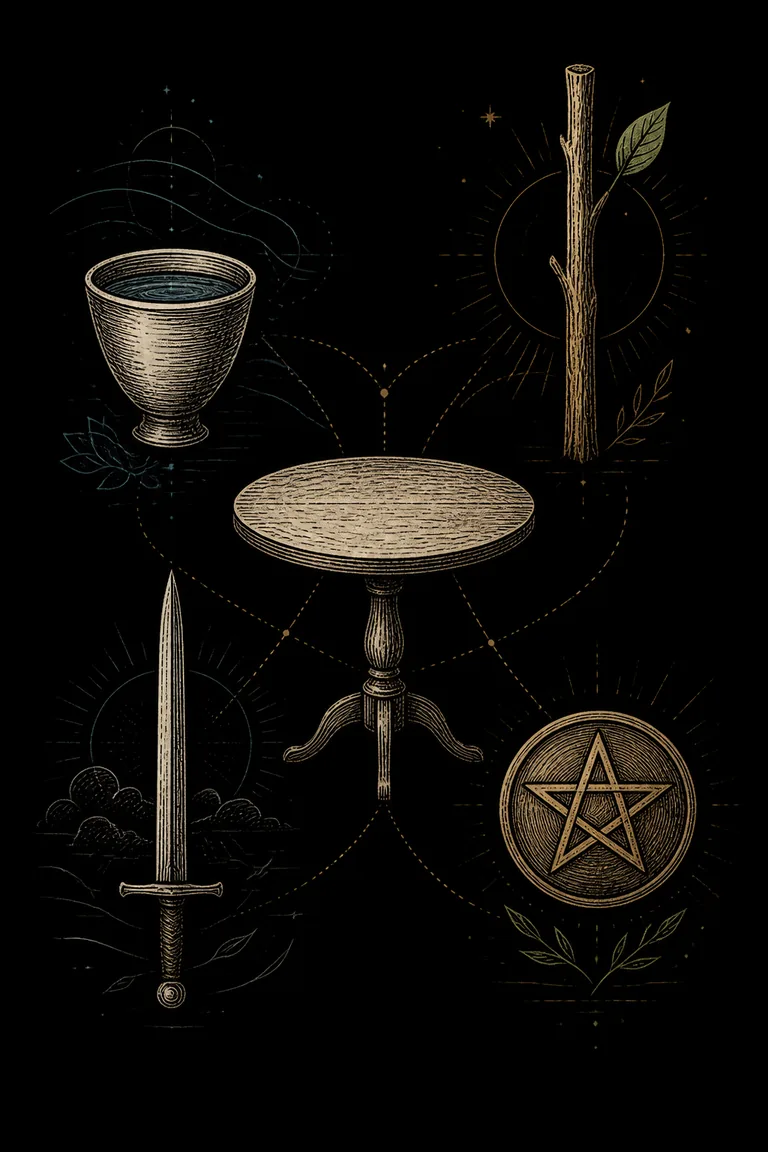
Many Minor Arcana in a Tarot reading means that most or all cards in the completed spread come from the deck's fifty-six suit cards rather than its twenty-two Major Arcana cards. The pattern often brings the reading closer to conversations, routines, feelings, conflicts, work, money, energy, and other conditions that can be observed or changed. It does not make the reading shallow, unimportant, easy, or guaranteed to describe a short-lived issue.
Record the Minor count and total spread size first. Then read every card in its named position, separate suit distribution from arcana proportion, give court cards their own evidence, and preserve any Major card as counterevidence. Six Minors in a six-card spread and six in a ten-card spread are different proportions, while both results still require context, consent, records, and practical verification.
Take the next insight with you
Explore personalized Tarot guidance in Veritas, available for iOS and Android.
 Scan with your phone
Many Minor Arcana at a glance
Start with the standard deck baseline
A standard Tarot deck contains fifty-six Minor Arcana and twenty-two Major Arcana, so a random card is more likely to be Minor than Major. A Minor-heavy spread is therefore not automatically unusual. Expanded decks, missing cards, study decks, and nonstandard selection rules change the pool. Confirm the deck was complete and the stopping rule was fixed before faces were seen. The Minor Arcana guide explains suits and ranks in detail.
Always include the spread denominator
A raw count hides the proportion. Four Minors in a four-card spread fill the whole reading; four in a ten-card spread do not. Write "five of six cards are Minor Arcana" instead of only "there are many Minors." A denominator makes repeated readings comparable and reduces the temptation to dramatize an ordinary result.
Common does not mean meaningless
Because Minors form most of the deck, their numerical dominance may simply reflect deck structure. Meaning comes from the actual cards, positions, question, and observable circumstances. A common pattern can still describe an urgent practical constraint, while a rare-looking pattern may have little relevance. Frequency and importance are separate questions.
Read suit, rank, and position together
A Minor card combines several layers. Suit identifies a field of experience, rank describes a stage or role, and the spread position gives the card its job. A Five of Swords in "missing information" is not equivalent to the same card in "recommended response." Read the printed evidence before summarizing the arcana category.
Suit concentration is a separate measurement
A spread may be Minor-heavy without favoring one suit, or it may contain a strong Wands, Cups, Swords, or Pentacles concentration. The Tarot element imbalance guide owns that suit-distribution question. Keep two tallies: Minor versus Major, then suit distribution within the Minors. One does not prove the other.
Numbered cards show stages, not deadlines
Aces through Tens can help organize emergence, development, tension, adjustment, and completion within a suit. They do not establish calendar units or guarantee that a process will advance in numerical order. Two Sixes may highlight parallel adjustments, but they do not promise an event in six days or months. Use rank as structure, not a hidden clock.
Court cards remain Minor Arcana
Pages, Knights, Queens, and Kings belong to the Minor Arcana, yet they deserve a separate role count. A court card may describe a person, stance, responsibility, skill level, or social function according to the declared method. Do not reduce it to gender, age, appearance, or a guaranteed visitor. The court cards guide offers a role-based method.
One Major card can organize the whole spread
A single Major among many Minors may supply a broad frame while the suits show how it becomes concrete. Its position matters more than category prestige. A Major in background may explain context; one in advice may offer a lens; one in outcome remains conditional. Preserve the individual Major meaning without letting it erase the practical cards.
Do not reverse the meaning of a Major-heavy spread
The companion guide to many Major Arcana examines a high Major proportion. Minor-heavy does not mean the exact opposite of Major-heavy. Broad themes can still be present, and everyday actions can carry lasting consequences. Treat each proportion as a descriptive feature rather than a scale from trivial to fated.
Reversals do not change arcana membership
A reversed Minor stays Minor Arcana and remains in its printed suit. Reversal may describe delay, resistance, internalization, excess, or another convention chosen in advance. It does not remove the card from a count. Record the original orientation and use the reversed cards guide before adding that layer.
A six-step method for a Minor-heavy spread
- Freeze the draw
Save the deck, question, spread, positions, orientation rule, total count, and stopping point before interpretation.
- Count the arcana
State the Minor count and denominator, then list any Major cards and court cards separately.
- Map suits and ranks
Record suit distribution, repeated ranks, sequences, absences, and contradictions without assigning conclusions yet.
- Read every position
Combine each card's suit and rank with its assigned role, question, and neighboring evidence.
- Test rival readings
Write one alternative synthesis and name facts that support, contradict, or leave both versions unresolved.
- Choose a practical check
Turn the result into one reversible action, direct question, record review, or scheduled observation.
Worked example: five Minors and one Major
Imagine six cards for situation, information, resources, obstacle, advice, and review. Five are Minor and one Major appears in the situation position. The Major can frame the broad transition, while a Sword identifies missing terms, a Pentacle shows budget, a Cup describes an emotional agreement, and two Wands show available effort. The actionable claims come from positions and facts, not from declaring the Minors mundane.
Worked example: all Minors in a three-card spread
If all three cards are Minor Arcana, preserve the small sample. Read their positions and ask what concrete conditions could confirm the synthesis. Do not keep drawing until a Major appears to make the reading feel important. A direct conversation, document, schedule, or resource check may provide better clarification than another card.
Card combinations should preserve individual evidence
Several Minors can create a useful sentence, but the combination must not erase suit, rank, or position. For example, a Pentacle in resources beside a Sword in obstacle may suggest checking affordability and terms. That is more defensible than treating the pair as a fixed prediction. See the card combinations guide for an evidence-first sequence.
Do not redraw to find significance
Drawing more cards because the spread feels too ordinary changes the sample and usually adds interpretation debt. Replace a card only under a rule chosen before the draw, such as a genuinely damaged or accidentally exposed card. The guide to how many cards to pull helps set a stopping point.
Compare repeated readings with controls
A journal can compare Minor proportions only when deck, spread size, draw method, and question type are similar. Return and mix all cards according to a consistent method. Record ordinary readings as well as memorable ones. Otherwise selection bias can make a normal run of Minors look like a special pattern.
Turn the suit evidence into one check
Use Veritas to save the Minor count, denominator, suits, ranks, courts, positions, Major counterevidence, supporting facts, alternative reading, practical action, and review date.
Accessibility and card identification
Readers may identify cards through printed titles, large-print decks, tactile markers, accessible digital labels, or a trusted card list. Do not guess suit or rank from color alone. Verify the card identity before counting it. Accessible identification improves the reliability of the record and does not reduce interpretive skill.
Responsible limits
Many Minor Arcana in a Tarot reading is a symbolic pattern, not scientific evidence that an issue is small, temporary, controllable, safe, solvable, or unimportant. It cannot establish health, pregnancy, guilt, compatibility, money, timing, legal status, consent, or future events. Do not use the proportion to diagnose, pressure, accuse, dismiss risk, or make medical, legal, financial, employment, relationship, or safety decisions. Visit the <a href="/tarot">Tarot journal hub</a> and rely on direct evidence, qualified advice, and ordinary safeguards for consequential choices.